‘Botox is basically a subscription,” Pat Phelan, co-founder of Sisu Clinic, says. “If you get Botox on January 1, then you’ve got to get it on March 9. There is no magic Botox that lasts longer. It’s 90 days and it’s gone.”
t’s gone, and you like it so much you want some more. It’s a subscription, and once Sisu CEO Phelan looked at Botox that way, he wanted in on it. He joined two brothers he’d “known forever”, Doctors Brian and James Cotter, in transforming their small Cork clinic, then called Visage, into Sisu, which the three co-founded and which now has 21 clinics across Ireland, the UK and the US.
That mental reframing of Botox happened for Phelan at the right time, he says, shortly after he finished a consultancy role with online fraud prevention firm Trustev, which he founded in 2013 and sold to TransUnion in 2015 for $44m.
“I was in New York wondering what to do next. At the same time I was helping James and Brian with Visage. They’d be ringing me for advice and then I came home to Cork and thought, ‘Jesus, they are doing such an insanely good job but I might be able to help here.’
“I was thinking, ‘Botox is software in reality, so if we can build a structure around it and start acquiring patients on the internet and then get people into the habit of 90 days and then upsell them something else, like filler or a skin booster, then this could be big.’”
And Sisu Clinic is big, with plans to get bigger, »
» focusing on growth in the US and ambitions to establish itself as the biggest in the cosmetics treatments business. The best thing about it, he says, is he doesn’t have to do any of the medical stuff. The clinics are doctor-led, which means he doesn’t have to worry about that side of matters.
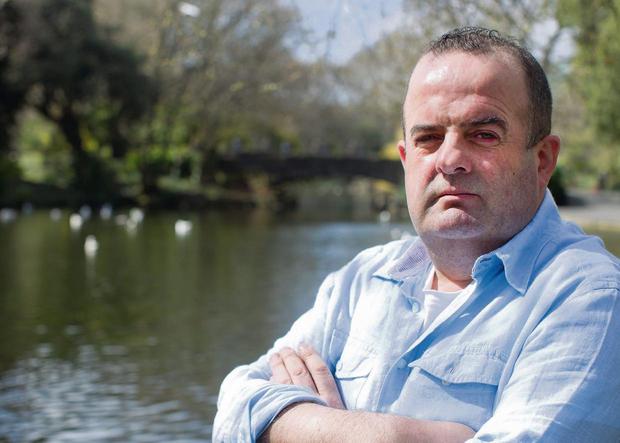
Several years ago, says Pat Phelan, above, he felt unhappy and unhealthy
He is “an ideas man”, and, to date, his ideas have served him well: from Cubic Telecom, which he founded in 2005 as a phone-card business and sold in 2010; then Trustev; Sisu Clinic, founded in 2018; and now Limbo, an app he predicts will change the world of weight loss and the obesity crisis.
Life wasn’t always so golden. Phelan spent the 1990s in alcohol addiction, before giving up drinking in 2000. He credits AA with the success of his sobriety, 23 years of which he celebrated at the end of last year.
“I remember saying to a great friend of mine: “What am I going to do with my time now [I don’t drink]?’ And he said: ‘If you put the same effort into other things that you put into drinking and getting drink, you’ll be fine.’” He has put in the effort, and he has been fine.
Video of the Day
“I’m distractable, but I’ve become better at it.”
Was it the distractable that led him in to drink? I ask.
“No. Look, I’m sitting here with you and I’m grand, but my friends will tell you, I’m the shyest fella you’ll ever meet. I’m grand in ones, but if there were four or five or groups or dinner, it takes the best out of me. I’d say [the addiction to alcohol] was shyness, and also a fair clatter of bullying as a kid.”
Pat Phelan grew up the eldest of three children in Ballyphehane, Cork city, where his father owned and ran the local Harp Bar.
“All that pub scene, I hated it. It never appealed to me. I suppose I was shy and introverted but I was also in this showman world of running discos and nightclubs and it was yin and yang and imbalance. But if I was to look back, I’d say it was always waiting for me.
Phelan “had a pint” in his teens, but it wasn’t until he was 20 that it started to turn into a problem. What flipped the switch from having a pint into addiction? “I wish I knew, then I could unflip it!”
“I think, number one, addictions are genetic. Then you’re set up for this and it could have been anything, but it was [alcohol], and eventually it was fixed.
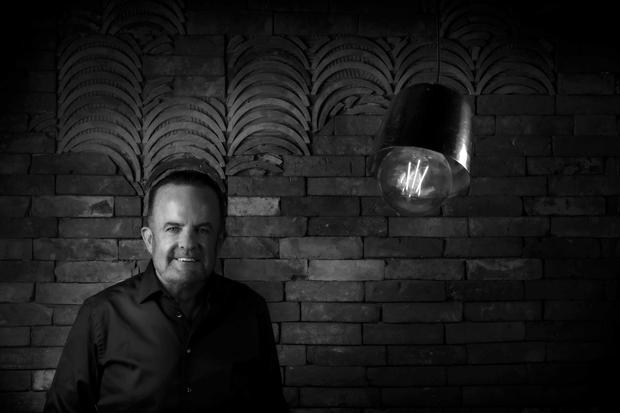
Pat Phelan at Dundrums local ‘Brickyard’ Photo: David Conachy.
“There is no magic trick. It’s really hard. If there was an easier route to sobriety, I’d take it. There isn’t. So I’ve worked and [AA] has worked over time and it continues to work. I don’t think about the past, but if there wasn’t alcoholism, where would I be now?”
In the lockdowns, Sisu Clinic’s doctors went back into the health service and Phelan “kept the lights on” for Sisu. He mobilised an e-commerce element, getting past garda checkpoints on a bicycle he bought, so he could organise the lotions and potions to be delivered to clients. Later, he set up a system for online skin consultations.
Post-Covid, he says, there is more business than ever for Botox and, latterly, Profhilo, a hyaluronic acid-based injectable skin booster that Phelan calls “the wonder drug of the moment”.
“At the start, looking for premises for a clinic, we’d say, ‘This one would be perfect, no one goes past, people can duck out the door to the car park, or it’s near a train station.’ The idea of being spotted was like you were coming out of a sex shop. But since Covid we’ve almost come into the wellness area, like getting your hair done. People got so sick of looking at a reverse mirror of themselves during the lockdowns.”
What he means is some people had their lines and wrinkles smoothed out with Botox before the pandemic — only to see them re-emerge while salons were shut in the lockdowns, and they didn’t like it. “I know where mine are,” the 57-year-old says, pointing at his forehead and telling me he’s nearing the end of his Botox 90 days. “That’s the only area that bothers me.”
He says: “When we started Sisu five years ago, it was about older people wanting to look younger, now it’s changed dramatically to younger people wanting to look better.” Even when they were dreaming of opening in New York, it was about catering to the “wealthy grand dames” of Upper East Side. But now they’re in the trendy SoHo shopping district.
Soon, Phelan predicts, Sisu will have more than 10,000 five-star Google reviews. “That’s people putting their name to it,” he says.
Phelan is a bit like one of the antennae he used to put on his parents’ roof as a teenager. He picks up signals, small snippets that don’t immediately mean anything but which, once expanded out, make complete sense. When he was “keeping the lights on” in Sisu during the lockdowns, cycling every day, he noticed something.
“Five years ago, I was huge. Huge. I’ll show you a picture,” Phelan says and takes out his phone to shows me a photograph. He was 20 stone (127kg) at that point, which, he says, he had gained from “eating shite” and eating on planes, in hotels, grabbing food on the go.
“I was huge. Flying all over the world. TransUnion bought Trustev and then I went on the road, China, India, all over, eating Takis, and I got huge: 42-inch waistline, desperate unhealthy.
“I was very unhappy. But when I came home to Ireland, Covid happened and I bought the bike for going past the checkpoint with the stuff for the couriers; I started to get a bit fit. And then I bought a Peleton and then Tony Martin, who I used to train with when I was a kid, who was, like, Mr Ireland and a sports scientist, I started going in to him and he’d prick my finger at start of every session.
“So he’d go, ‘Your blood’s high, your blood’s low. What have you been doing?’” Through the blood prick, Martin could see how recent eating or stress or activity had an effect on Phelan’s blood sugar.
This got Phelan to thinking about how he’d leave and “have a chicken supper” and he had no way of knowing what that would do to his blood sugar, as that reading would be well gone by the next day when he saw Tony again.
“So I said, ‘I wonder could we put a transmitter [on the gadget taking the blood prick] and it could share the information with you?’ This is during lockdown, so I’m straight down the wormhole, building transmitters and it’s a distraction from doing the e-commerce and social media for Sisu. So I built a transmitter for it.
“The transmitter talks to my phone. The watch gives my SpO2 [blood’s oxygen saturation], movement, blood sugars. We built in that as well. It talks to the phone and all of these combine to share information with each other. So I put in my food, everything I eat, drink, coffees, I can type it in or take a picture, and then the platform gives me feedback.
“It logs my showers. Like, look, that’s my shower this morning.” He shows me the Limbo app on his phone and there’s a spike all right. “That’s AI talking to me. It hates me having hot showers. Cold showers start the fat burning. People know this, but Limbo confirms it. I hate cold showers.
“So it gives me all my food advice. Look, there’s last night. I was starving and I’m not supposed to eat after 6pm, but I’d been spinning and burned whatever, 700 calories, so my body was telling me I needed something. I had a protein yogurt and I can see what that then did to me.” The app shows there was no dramatic blood-sugar spike from the yogurt.
Limbo, he says of the business he co-founded with Tony Martin, as well as Rurik Bradbury and Clinton Sweetman, who were with him at Trustev, doesn’t tell you what to do or to eat. It offers insight and guidance, he explains.
The Limbo website talks about “personalised coaching”, “nudges” and how it’s designed as a “simple-to-play game”. On the app, you see your life in peaks and troughs, with a “zone” that you want to stay in for optimal results. When you get a peak or trough, and you don’t log what was happening around that time, be it food, activity, stress, the app asks you for that information. Then that information is analysed and you get the “nudges” in return.
To date, users of Limbo are reporting — “publicly available numbers” — 2.3pc loss of body weight a month. Basketball great Shaquille O’Neal went public in February on social media about his use of Limbo and they are hoping another major international name will soon go public on their use of it. They raised $6m in funding in late last year and Phelan is a shareholder. There are 19 people on the Limbo team now, with six physical analysts of users’ information.
It has almost 1,500 subscribers in Ireland, he says. I ask about the user profile: is it the Upper East Side grande dame-types, the slim and rich women he imagined when Sisu started?
“No. It’s people who are obese. And this is the tool for them.” He tells me he spoke to a major Irish cardiologist only the night before, who was raving about Limbo and keen to use it himself. “He says he’s never seen anything like it. And he’s a cardiologist and I’m from Ballyphehane. Never went to college, left school at 15.”
Limbo is, obviously, a subscription. “It’s expensive. It’s €639 for three months. But if you think about, all the rest [of the weight-loss methods] fail. Now they’re telling people, ‘Sure just go to Turkey and get a bag for your stomach. Sure that’s four grand. And the next thing is the $50bn drug wave and all that.
“People are so unhealthy and so unhappy. Obesity is costing billions in healthcare and Type-2 diabetes, which is causing mayhem in healthcare. And now with the wonder drugs, it’s another story. The New York Times did a piece on [the weight-loss drugs] where once they [patients] gave up [the drugs] the weight went back on straight away. But Limbo changes your habits because it changes all the things you’re doing wrong.
“A lot of it isn’t a discovery. Look at old photos of your mum and dad. There’s no one fat. They all ate early and they ate three meals a day. When I was young — and not that long ago, it wasn’t Angela’s Ashes — a bar of chocolate was a treat. It wasn’t every night watching the telly with two glasses of wine.”
The beauty of being an ideas man is that ideas are limitless and they’re not something you stop having or have to retire from. Outside of his own businesses, Phelan invests in small ideas he likes from people he likes, and he always has the antennae up for the next big thing. Phelan says he reckons the coffee business has life in it yet. It’s just a question of finding the next angle.
One thing he doesn’t do is work with family. “I’ve seen it go wrong. I wouldn’t recommend it.”
His elder son Andrew lives in Cobh, Co Cork, with his Latvian wife and their three children, Arthur, Thomas and Evelyn. Phelan’s son Scott’s wife is from northern Spain, where they live with their son, born earlier this month. Phelan loves being a grandfather and he is close to his sons.
He lives mainly between New York, Miami and Cork. He looks at me like I’m mad when I ask if he owns properties in all these places. No, he tells me, his only home is in Cork, of course. Not that he’ll be retiring there any time soon.