‘We only take cards,” said the boy in the cinema after I awkwardly tried to hand him a €10 note.
y two popcorns sat on the counter and the family behind me shuffled impatiently as I took up more time than I should taking out my debit card. I said sorry and meekly moved off, the eejit still carrying cash like she’s prepping for doomsday.
I’m going to be forced into following the rest of society though. We have been moving rapidly towards a cashless society for a few years now, whether we want it or not. We’re now at a place where it’s not unheard of for churches to have digital donation boxes at mass and horseboxes selling coffee take contactless payments.
We swipe, tap and are beginning to forget how we used to queue at ATMs. The digital euro is within sight, being in the usual top-down way of these things where the public are mostly ignored, and the debates only happen behind closed doors.
Writing in Politico last month, Public Expenditure Minister Paschal Donohoe said: “This conversation around a digital euro, which began in earnest when the ECB launched its investigation in 2021, has quickly moved from being a possibility to a probability. And while a final decision on whether to launch won’t be made for several years, it’s increasingly looking like a case of not if but when.
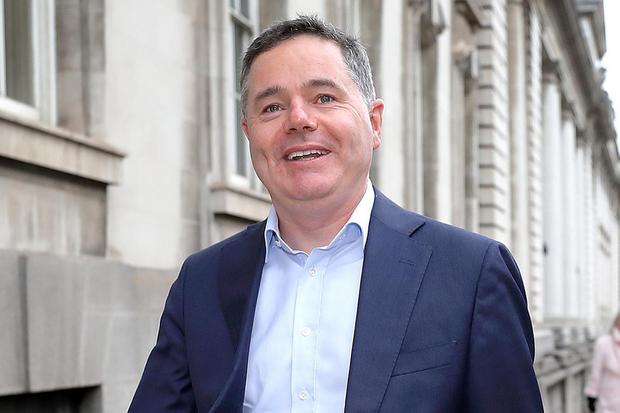
Public Expenditure minister Paschal O’Donohoe
“These are exciting and fast-moving times, and as we embrace the opportunities brought about by digitalisation, we promise that we will continue to engage with citizens. All can rest assured that the key political decisions on the digital euro will be made by elected representatives, and they will be in the best interest of Europeans.”
In the US, libertarians are busy pointing out that slippery slopes can actually be quite slippery
A digital currency would let us pay for items through a virtual wallet on our phone – no bank account required. It’s not quite the same as a cryptocurrency, as it would be backed by a central bank and so wouldn’t carry the same kinds of risks. There are other risks though. In the US, libertarians are busy pointing out that slippery slopes can actually be quite slippery.
In a recent speech, Florida Governor and possible Republican presidential candidate Ron DeSantis suggested it could be used to impose different agendas, such as environmental and social governance ones. “You go and use too much gas, they’re going to stop it. They’re not going to honour the transaction.”
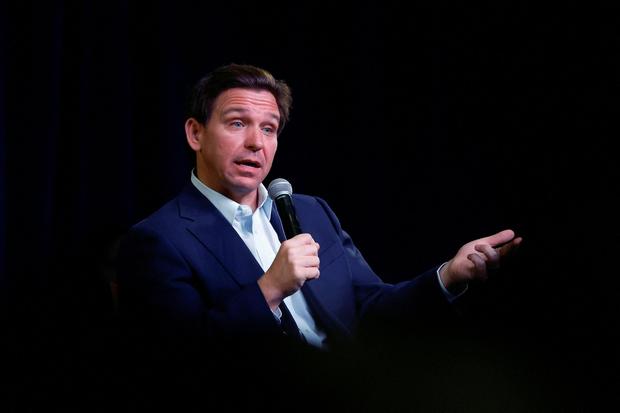
Florida governor Ron DeSantis. Photo: Reuters/Jonathan Ernst
It’s not that outlandish. Digital currencies can be programmed to be spent on certain items and when a government gets a bit of power, it often ends up with a lot more power. And that power can be misused.
You don’t have to be a conspiracy theorist to realise that digital currencies will mean increased surveillance of our financial transactions.
You just have to consider the level of surveillance already going on by companies and the state, how much they know about us, how much data they gather and how they use and monetise that data.
It’s not just about this level of monitoring though. It’s about how people could potentially be controlled
An ECB consultation two years ago found that privacy – one of the best things about cash payments – is what individuals and businesses fear losing most from a digital currency.
A digital euro means everything you buy, eat, drink, every service you pay for, every Uber fare you pay, is recorded digitally, your entire life can be monitored closely by everybody from your controlling partner to the state itself. It’s not just about this level of monitoring though. It’s about how people could potentially be controlled.
I know this isn’t the intention behind the digital euro, but the potential is there. Agustin Carstens of the Bank for International Settlements said at an IMF talk that a centralised digital currency gives the bank “absolute control over the rules and regulations of the use of that expression of central bank liability, and also we will have the technology to enforce that”.
This is a brand-new economic approach that could have unexpected and unanticipated consequences
It’s like something out of Black Mirror. It’s also happening already. China’s Orwellian social credit system can be used to stop dissenting voices from buying things, travelling or even participating in normal life there. But this isn’t something we’d ever dream of doing here in the benign EU, is it?
What about the impact of a digital euro on monetary policy? This is a brand-new economic approach that could have unexpected and unanticipated consequences for individuals and businesses.
Earlier this spring, the Swiss Freedom Movement collected enough signatures to guarantee a referendum on whether cash should continue to be used there. If it passes, the Swiss government will need to ensure that physical money will always be available. Will we get a say in whether banknotes and coins will be available for future generations in Ireland?
We have to consider how a digital euro might develop over time. And I’d be a lot less worried if I felt I had at least some say about it – even if that’s just with politicians and the Government actually asking us what we all think about it.