It may be called a curious coincidence, but the signals were not lost on anyone.
The United States touts India as “indispensable” in its plans to counter China, claims the bilateral relationship is among the “most consequential” in the world, and the “most important for the US in the 21st century”. Prime Minister Narendra Modi has just returned from his maiden official State visit to the US that produced a lot of deliverables, including an agreement on the transfer of jet engine technology. It seems the relationship is in the pink of health, and as Modi said, “sky is not the limit”. Yet Washington’s actions, which speak louder than words, put this narrative persistently to test.
For instance, for all the fire and brimstone that defines America’s relationship with China, in Joe Biden’s words “our most serious competitor”, reconciliatory gestures from Washington are never too far away even at the cost of getting repeatedly snubbed by Beijing. It raises confusing signals for America’s allies and partners.
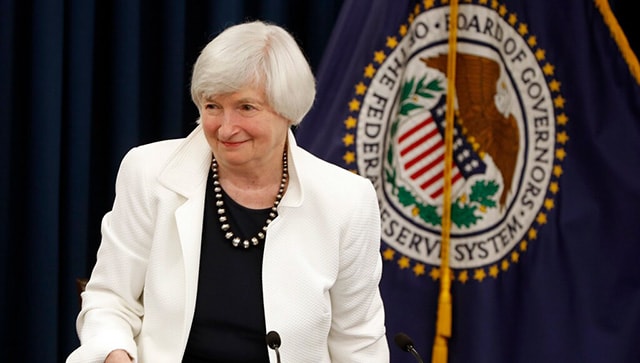
US treasury secretary Janet Yellen, who had said last month that an American “decoupling” from China would be a “disastrous” mistake and is an advocate for the deepening of economic ties between the world’s two largest economies, was sent to Beijing last week. Yellen, the key figure of ‘Bidenomics’, is the second high-ranking official in the Biden administration to fly to China after Secretary of State Antony Blinken’s visit last month. Biden’s climate envoy John Kerry is slated to visit Beijing this week.
These quick successive sojourns indicate that the US is worried to the extent of initiating one-sided reconciliatory moves. To America’s three high-ranking visitors in the space of a month, China has sent none.
Meanwhile, in an escalation of the tech war between the two sides, China has banned the export of two critical components needed for semiconductor chip making. The move was timed just before Yellen’s arrival. The banning of gallium and germanium, of which China is the biggest global source, is Beijing’s way of getting back at Washington that has blocked China’s access to advanced semiconductors, technology and the tools required for manufacturing the chips.
In this atmosphere of action and retaliation, Yellen met top Chinese economic officials in a bid to ‘stabilize’ and ‘ease tensions’ between the two sides in a four-day trip that concluded Sunday. It isn’t clear whether she was successful in her mission, but Yellen evidently tried hard.
She was caught on camera bowing furiously to Chinese vice premier He Lifeng in a major protocol gaffe that raised eyebrows around the world, and did not elicit a reciprocation from her Chinese counterpart. She reportedly held 10 hours of meetings over two days with Chinese officials and declared at the end of it that “the world is big enough for both the US and China to thrive”.
What did she get in return? The Chinese committed nothing beyond a “cordial” reception — the bar has been set so low. Beijing asked the US to address its “major concerns” over sanctions on Chinese firms while letting the rumour swell on social media platforms that Yellen had come “begging”.
Interestingly, around the time that Yellen was in Beijing, which according to Republican presidential candidate Vivek Ramaswamy was a “a disastrous diplomatic trip to China”, the Biden administration sent to New Delhi — its “most consequential partner” — a controversial diplomat with a remit to talk about “freedom of speech” and “human rights” in India. America was sending several messages at once.
The first message was, regardless of India’s geopolitical value and the superlatives spent on describing the relationship, ties will forever remain subject to what Samir Saran calls “America’s bloated sense of virtuosity and entitlement.”
Putting bilateral ties with a fellow democracy (where, some may argue, that the political system is in more robust health than in America where half the population do not accept the electoral results of 2020 elections) through the repeated stress test of a dubious ‘values’ framework when the US is in no position to assume the role of a judge, jury and executioner, or take a moral high ground — owes to America’s delusional self-image as the sole upholder of a moral order that other countries must aspire to attain.
This was rather candidly described by Ashley Tellis, a former US State Department senior adviser and a noted commentator on US-India ties to Hindustan Times in a recent interview. Tellis, who had been one of the key figures behind the US-India civil nuclear agreement, claimed in the interview that if India doesn’t improve its worsening values “trend”, an assessment for which he provided no factual basis, then the US would be in a “disturbing dilemma” over the state of the ties.
According to Tellis, “the Biden administration’s unwillingness to bludgeon India over human rights and religious freedoms” is “rooted strongly in its estimation of India’s importance in the competition with China. But it would be a mistake to assume that the rivalry with China gives India full immunity. Already, the administration itself is divided on giving India a pass…”
The comments indicate that the India-US partnership is an unequal one where India’s rise is dependent on America’s continued altruism, and the US may choose to turn the faucet off if it deems that India is falling out of line with its exceptions. It may seem that even though the American unipolar moment is long over, the Beltway commentariat is still clinging on to the nostalgia.
This sense of moral superiority is prevalent not just in the commentariat but troublingly, also in the administration where Biden is under tremendous pressure from his Democratic Party’s base to pummel “Modi’s Hindu nationalist, majoritarian” government on “democracy and human rights”.
Ergo, Uzra Zeya, the US “under secretary for civilian security, democracy, and human rights and US special coordinator for Tibetan issues” is in India. The American audacity is stunning.
Zeya, whose role in the Devyani Khobragade incident that marked one of the lowest-ever points in bilateral ties is well documented, is visiting both India and Bangladesh during her trip, and among other things, she will meet Indian officials on “democracy” and “engage with civil society organizations on freedom of expression and association,” and “marginalized religious and ethnic minorities”.
The point being made is that for India to ‘benefit’ from the American partnership, it must accede to the rules set by its ‘senior partner’ and give in to its intrusive demands.
Never mind that going by the current state of play, it is New Delhi who should be sending a diplomat on special duty to the US to advise the Americans on handling the human rights of its ethnic racial minorities who have repeatedly voiced their opinion against continued and systemic discrimination in the US, whereas in India the religious minorities are thriving and free to practice their religion.
Bear in mind that the arrival of Zeya follows the avoidable remarks made by US ambassador to India Eric Garcetti, who said last Thursday that the US is ready to help ease the situation in violence-hit Manipur “if asked.” Garcetti’s comments represent explicit interference in an issue on which the Americans have no role to play, and even suggestions of doing so are deeply unwelcome.
Regardless of the situation in Manipur, it is internal to the Indian state and the US ambassador has no business poking his nose into the issue. The remarks reflect two things. One, Garcetti, a career politician, is still cutting his teeth as a diplomat. He would be well advised to curb his enthusiasm for bites in matters that are beyond his remit. Two, the US wants to keep its most “valuable partner” under pressure, or it wouldn’t have sent Garcetti as an envoy who, during his confirmation hearing before the US Senate, had promised that “that human rights, including in the context of the Citizenship Amendment Act, will be a ‘core’ part of his work in India”.
This casual orientalism from America is sure to interfere with the pace and quality of bilateral ties that must be built on the edifice of equality, mutual respect and trust. Tall claims about galvanizing industrial bases, securing digital ecosystems for the next few generations, defence cooperation, co-development and co-production would not fructify if the underlying conditions to boost the relationship are not met.
The signals being given by Washington, in this context, are discouraging. It is seemingly bending over backwards to accommodate China to “put guardrails in the relationship” or whatever other excuses that it may ferret out to justify its actions. At the same time, it is being too clever by half in nurturing its relationship with India. This won’t take us anywhere.
The writer is Deputy Executive Editor, Firstpost.
Read all the Latest News, Trending News, Cricket News, Bollywood News,
India News and Entertainment News here. Follow us on Facebook, Twitter and Instagram.