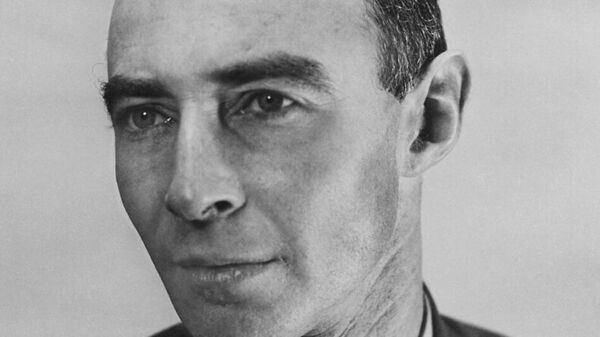
“I am become death, the destroyer of worlds,” said Dr J Robert Oppenheimer, quoting (or misquoting, according to some) the Bhagavad Gita after witnessing the mushroom cloud that marked the success of the Manhattan Project in building the world’s first nuclear bomb. Twenty days later, an American bomber dropped ‘Little Boy’, as the first bomb was named, on Hiroshima. Three days later, ‘Fat Man’ burnt Nagasaki to a cinder. The combined death toll was estimated to be 200,000.
But destruction was not the only possible use for the power of the atom. Charles Oppenheimer, grandson of the father of the atomic bomb, said in an interview with Time that if politicians had decided not to engage in an arms race and build ever-larger nuclear arsenals, the public would have accepted nuclear energy more readily than they have, sparing the world of human-induced climate change.
The distaste for nuclear energy stems from fears of the atom bomb. But the fact is that nuclear power started being generated in the US in 1952 before spreading to other parts of the world until the late 1970s. In 1979, almost 20% of power generated in the US was derived from nuclear reactors.
Then, there was a partial meltdown at one of the reactors at the Three Mile Island plant near Harrisburg, capital of Pennsylvania. This set off a series of vigorous anti-nuclear protests in the US, with celebrities such as Jane Fonda taking the lead. President Jimmy Carter, who had dealt with nuclear power during his stint in the navy, described the accident as minor in private but refused to say that in public and instituted a lengthy review of nuclear safety. Before the review could conclude, Chernobyl happened in 1986. That settled public opinion on the safety of large-scale nuclear power.
Not every country was infected by irrational fears about nuclear radiation. France was not deterred by the and put faith in learning from mistakes by improving design and safety protocols. It proceeded to build a power-generation industry with 80% nuclear energy. Japan, the only country to have experienced the trauma of a nuclear attack, also built nuclear reactors to generate power. In the wake of the Fukushima accident in 2011, the Japanese public’s faith in nuclear power nosedived but has since recovered. But in Germany, the people have stood by their decision, taken in the wake of Fukushima, to phase out nuclear power altogether. Russia and Britain continue to expand nuclear power generation. So does India.
In fact, there is every reason to expand nuclear power and reduce dependence on fossil fuels. Nuclear energy is relatively free of greenhouse gas emissions (they are emitted only during the mining and transport of the radioactive fuel). Unlike wind and solar, nuclear power is continuous and stable. On a large enough scale, it could become cheap as well. For India, with a domestic supply of monazite sands, a rich source of thorium, thorium-based nuclear power offers the most viable route to independence from fossil fuels and associated greenhouse gases.
For countries that lack abundant thorium, conventional uranium-based nuclear energy is an option. New-generation small modular reactors (SMRs) are far cheaper to build and install, and have better safety design and protocols. Conventional nuclear power plants are custom-built and thus costly. SMRs have standardised components, which are built at scale and assembled on site, reducing costs significantly. India, too, has plans to use SMRs with 300 MW capacity.
Continuing research in fission is needed to master nuclear fusion as well. Fusion holds the promise, albeit elusive so far, of limitless supplies of cheap energy with little of the nuclear waste generated by fission reactors.
The world still has a choice to use nuclear power instead of, or in addition to, fossil fuels. But that is a political choice based on public trust in science, evidence, and the integrity and efficacy of government. Societies that can be swayed by social-media campaigns claiming covid spreads through 5G networks, or that vaccines are the work of the devil, will find it hard to trust scientific evidence on the safety of nuclear power.
Science and technology are not just about deepening our understanding of nature and learning to master its forces. As Oppenheimer’s reference to the Bhagavad Gita showed, people’s view of science determines their ability to harness nature.