
Britain’s private sector suffered its worst month in more than two and a half years, a closely-watched survey showed, as a major investment bank predicts the UK is heading for recession.
The pound dropped 0.4pc after the latest S&P Global/CIPS Flash UK purchasing managers’ index data, which showed output in the economy shrank for the first time in six months.
The reading of 47.9, a 31-month low and under the 50 mark which indicates a contraction, comes as Citi said it expects the UK to fall into recession.
The investment bank warned that global growth next year will slow to below 2pc from a lower than expected 2.4pc this year, caused by recessions in the UK and US and a continuing slowdown in China.
Chris Williamson, chief business economist at S&P Global said: “Companies are reporting reduced orders for goods and services as demand is increasingly hit by the cost-of-living crisis, higher interest rates, export losses and concerns about the economic outlook.
“Although cost pressures remain elevated, thanks mainly to rising wages, the deteriorating demand environment is curbing companies’ pricing power.”
Read the latest updates below.
10:02 AM BST
Interest rates to peak at 5.5pc, economists predict
The Bank of England will not raise interest rates past 5.5pc, economists have predicted, as data showed the UK’s private sector suffered its weakest month in more than two years in August.
Traders have slashed bets on the peak for interest rates, with markets pricing in a peak of around 5.75pc.
It comes after the closely followed S&P Global/CIPS flash UK purchasing managers’ index (PMI) fell to 47.9 in August, down from 50.8 in July and its first fall into contraction since January.
Paul Dales, chief UK economist at Capital Economics, said:
The fall in the activity PMI to below the boom-bust level of 50 in August and the further drop in the prices balances probably won’t prevent the Bank of England from raising interest rates from 5.25pc to 5.5pc in September, but it will encourage it that higher rates are working.
Perhaps most encouraging for the Bank of England is that the weakening in activity appears to be weighing more heavily on price inflation.
The fall in the composite output price balance from 57.9 to 55 (the lowest level since February 2021) is, at face value, consistent with core CPI inflation falling from 6.9pc to around 2pc. And the fall in the services output price balance suggests that services CPI inflation should ease from 7.4pc to around 4.5pc.
Overall, the dual signs of weaker activity and easing price pressures give us a bit more confidence in our view that interest rates will peak around 5.5pc rather the 6pc priced into the markets before this release.
09:38 AM BST
UK economy suffers worst hit in two years, survey shows
Britain’s private sector suffered its steepest decline in activity more than two and a half years amid an “increasingly severe” downturn in manufacturing and the people having less money to spend on services.
The closely-watched S&P Global/CIPS Flash UK purchasing managers’ index (PMI) fell into contraction for the first time in six months as it delivered a reading of 47.9, a 31-month low.
Lower levels of activity were recorded in both the manufacturing and service sectors during August. The data follows similarly bleak figures for the eurozone today.
Chris Williamson, chief business economist at S&P Global said:
Companies are reporting reduced orders for goods and services as demand is increasingly hit by the cost-of-living crisis, higher interest rates, export losses and concerns about the economic outlook.
Although cost pressures remain elevated, thanks mainly to rising wages, the deteriorating demand environment is curbing companies’ pricing power.
Prices charged for goods and services are growing at rate commensurate with consumer price inflation cooling to 4pc in the months ahead.
A further pull-back in hiring in August meanwhile indicates that the labour market is losing steam, which should feed through to lower wage pressures.
09:24 AM BST
Eurozone slides into economic gloom, survey shows
It is fair to say that the downturn in eurozone business activity has deepened far more than thought this month in a broad-based fall across the region, particularly in Germany, according to a closely watched survey.
HCOB’s flash composite purchasing managers’ index (PMI) for the bloc, compiled by S&P Global and seen as a good barometer of overall economic health, dropped to 47 in August from July’s 48.6, its lowest since November 2020.
That was well below the 50 mark separating growth from contraction.
The services PMI sank to 48.3 from 50.9, its first time in contraction this year, as indebted consumers feeling the pinch from rising borrowing costs reined in spending.
Cyrus de la Rubia, chief economist at Hamburg Commercial Bank, said:
The service sector of the euro zone is unfortunately showing signs of turning down to match the poor performance of manufacturing.
Indeed, service companies reported shrinking activity for the first time since the end of last year, while output in manufacturing dropped again.
09:14 AM BST
Pound highest against euro in a year amid poor economic data
The pound has pushed to its highest level against the euro in nearly a year after weaker-than-expected economic data from the eurozone.
Sterling has gained 0.1pc today to head close to €1.175 after slumps in closely-watched purchasing managers’ index (PMI) data across Europe.
The eurozone’s figure fell to a 33-month low of 47.0 in August, down from 48.6 in the previous month. A figure below 50 indicates contraction.
France’s August flash services PMI hit 46.7, while manufacturing stood at 46.4 – with a figure below 50 indicating contraction.
In Germany, its manufacturing flash PMI hit 39.1, which was ahead of last month’s figure but still sharply below 50.
Services fell into contraction at 47.3, well below forecasts for 51.5.
09:01 AM BST
Miners boost FTSE 100
The FTSE 100 opened higher as it was helped by mining stocks on the back of gains in metal and gold prices.
The exporter-heavy index has risen 0.3pc in early trade, while mid-cap stocks on the FTSE 250 were up 0.5pc.
Industrial metal miners rose as much as 1.3pc, leading sectoral gains on the back of higher base metal prices.
Shares of personal care, drug and grocery store companies recovered after a sell-off in the previous session, rising as much as 0.7pc, helped by a 0.8pc gain in Reckitt Benckiser .
Reckitt Benckiser said chief financial officer Jeff Carr would retire in March 2024 and be replaced by Nike’s Shannon Eisenhardt.
08:43 AM BST
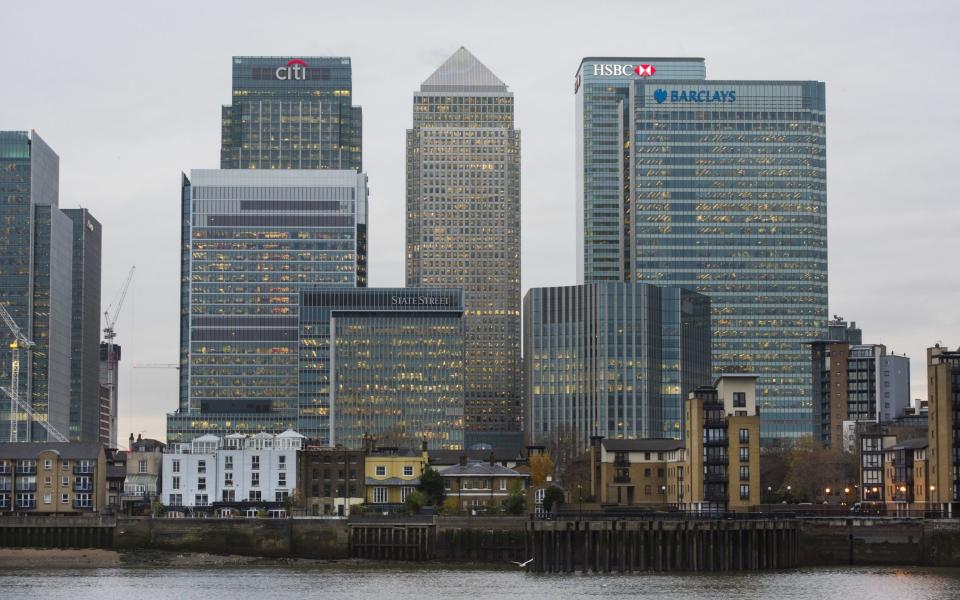
UK to fall into recession, Citi predicts
The UK and the US will fall into recession next year amid weaker than expected global growth, investment bank Citi has predicted.
Global growth this year will come in at 2.4pc, below the 3pc estimated trend, according to analysts.
However this will weaken further, Citi told investors, with growth next year expected to slow to below 2pc.
This will be caused by recessions in the UK and US and a continuing slowdown in China, the bank warned.
Citi’s prediction of a recession in Britain makes it an outlier among investment banks.
Analysts said: “We characterise this outlook as “soft” but still a notch stronger than a full-blown global recession.”
They warned that any changes in the forecast are likely to be “skewed to the downside”.
08:31 AM BST
Hitachi and Thales tie-up edges closer
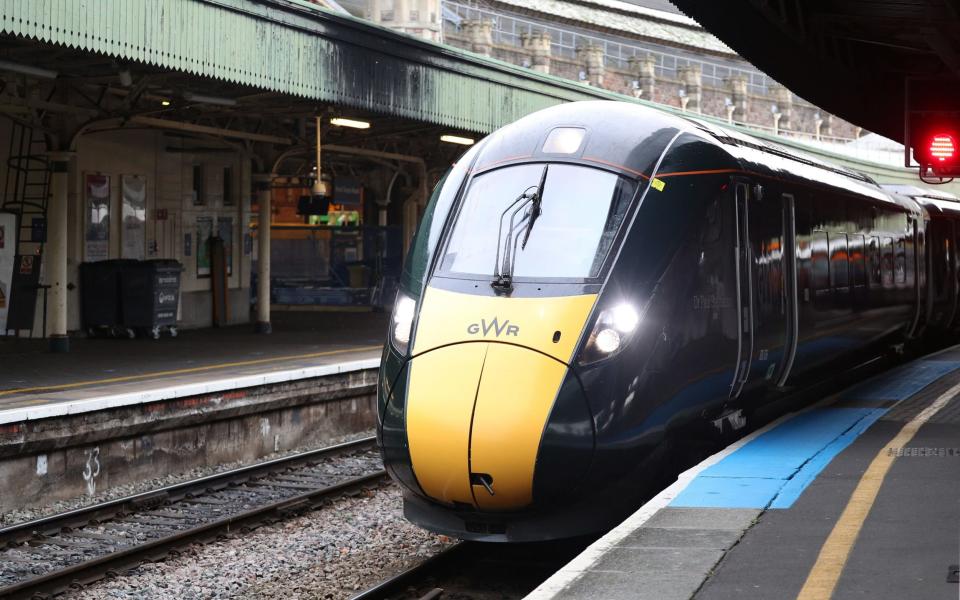
Hitachi has been given the provisional all-clear from regulators to pursue the tie up of its rail unit with the signalling arm of French engineer Thales.
The Competition and Markets Authority said the takeover by the Japanese conglomerate would not substantially lessen competition in the supply of “Communications Based Train Control” signalling systems in the UK.
Regulators said Hitachi is unlikely to be a credible bidder for signalling projects on the London Underground, which is the main user of such systems.
When the deal was unveiled in the summer of 2021 it barely caused a stir despite being billed as a €1.7bn (£1.5bn) alliance that would transform the prospects of two international industrial giants.
Bosses at Hitachi Rail boasted that it would add €1.6bn of turnover to its top line, along with annual savings of €100m, while the chairman of Thales hailed a transaction that would enable it to focus more closely on other areas of the group that were growing more quickly.
08:11 AM BST
Ithaca to cut North Sea investment amid windfall taxes
North Sea operator Ithaca Energy has said it will produce less oil next year as it grapples with the impact of the Government’s windfall taxes.
The company said it will reduce investment “as a direct result of” the levy imposed on excess profits triggered by Russia’s invasion of Ukraine last year.
It said it had taken a $73.7m (£57.8m) hit on operations in its so-called Greater Stella Area, which it blamed on windfall taxes and falling gas prices.
Its adjusted profits before taxes and other charges were 8pc higher at $979.7m (£768.3m) in the first half of the year.
Executive chairman Gilad Myerson said:
The Energy Profits Levy continues to have a direct impact on investment in the UK North Sea and Ithaca Energy’s own investment programme across its diverse high-quality operated and non-operated asset base.
We continue to constructively engage with the UK government to highlight the impact of the current fiscal regime to the industry’s outlook and to the UK government’s stated energy security and Net Zero ambitions.
08:03 AM BST
FTSE 100 opens higher amid wider optimism
The FTSE 100 moved higher at the open amid global stocks optimism ahead of results from the world’s largest chipmaker Nvidia, which could boost hype around the potential for artificial intelligence.
The UK’s blue chip index began the day 0.4pc higher at 7,284.46 after breaking a seven-day losing streak with a slightly higher close on Tuesday.
The midcap FTSE 250 has gained 0.1pc to 18.046.65.
07:49 AM BST
Nike finance chief to join Reckitt in boardroom shake-up
Dettol and Strepsils maker Reckitt Benckiser has announced it is bringing in Nike’s finance boss after its present chief financial officer Jeff Carr decided to retire.
Shannon Eisenhardt will join Reckitt on October 17, as CFO designate to succeed Mr Carr, who will step down on March 31 next year.
Ms Eisenhardt was chief financial officer of Nike Consumer, Brand & Marketplace, and previously spent close to two decades at P&G.
Reckitt chairman Chris Sinclair said:
On behalf of the Board and the entire company, I would like to sincerely thank Jeff for his excellent service to Reckitt.
He has been instrumental in driving our strategic and cultural transformation, embedding a strong capital allocation process and delivering a world-class productivity programme over the past three and a half years.
Shannon brings extensive experience across consumer and retail, having worked with some of the most globally recognised brands, and an impressive and highly relevant international background.
07:27 AM BST
Morgan Stanley fined over traders using WhatsApp
Morgan Stanley has been fined more than £5.4m because its energy traders communicated via their private phones when discussing transactions in the market, regulator Ofgem has said.
The watchdog said traders had used private WhatsApp discussions to talk about their jobs, therefore breaking a rule which requires their employer to hold on to all communications and hand them to Ofgem should the regulator request.
It is the first such fine handed out in Great Britain under the regulation on wholesale energy market integrity and transparency (Remit) rules, Ofgem said.
Cathryn Scott, regulatory director of enforcement and emerging issues at Ofgem, said: “It is unacceptable that MSIP (Morgan Stanley International plc) failed to prevent electronic communications which could not be recorded or retained.
“It risks a significant compromise of the integrity and transparency of wholesale energy markets.”
07:16 AM BST
Nvidia shares hit record ahead of results
Investors are eagerly awaiting results from Nvidia due after US markets close today.
The chip company’s blockbuster report last quarter fuelled a rally in tech stocks and artificial intelligence hopes, propelling the S&P 500 this year.
Shares of Nvidia hit an all-time high of $481.87 overnight, with options data showing traders are expecting a larger-than-usual swing in shares after the quarterly results.
Analysts expect Nvidia to forecast 110pc growth in third-quarter revenue to $12.5bn. Stuart Humphrey, an analyst at JPMorgan, said some are forecasting $14-15bn.
He said: “This kind of number feels a touch high to me, but if it sniffs this – one could argue that into this print, it doesn’t matter if demand will eventually decline next year – (it) still will be rerated higher.”
07:11 AM BST
Good morning
Global investors have been offloading China’s flagship stocks in a record-selling streak, showing the nation’s industry leaders are falling out of favour amid concerns for the economy.
Foreign investors sold 6.2bn yuan (£676m) of Kweichow Moutai from August 7 to 18, making China’s largest spirits maker the most heavily sold stock via trading links with Hong Kong.
It was followed by 4.7bn yuan of selling each for leading renewables stock LONGi Green Energy Technology and major lender China Merchants Bank.
Overseas funds have been fleeing the Chinese market, offloading the equivalent of £7.3bn in a twelve-day run of withdrawals to Tuesday, the longest since Bloomberg began tracking the data in 2016.
The exodus comes after China underwhelmed markets with its latest changes to interest rates earlier this week.
The world’s second-largest economy is dealing with a prolonged housing slump, making its CSI 300 Index among the worst global performers this month with a 7pc loss. It is now trading near the lowest since November.
5 things to start your day
1) Half of all indebted businesses will be struggling by end of this year, Bank of England warns | Calls for additional support grow as Treasury receipts surge
2) Rishi Sunak to woo Elon Musk after Tesla billionaire’s meetings with Macron | Efforts are also underway to attract Jeff Bezos and other ‘A-list investors’ to flagship summit
3) Former Opec president bribed with Cartier jewellery and Louis Vuitton, corruption case claims | Accused former Nigerian government official now lives in St John’s Wood in London
4) Meta claims breakthrough in quest to build Hitchhiker’s Guide-style language translator | Facebook owner reveals free AI tool capable of translating speech from 100 languages
5) Waitrose launches first ever meal deal for £5 | High-end supermarket under pressure to win back cash-strapped customers
What happened overnight
Asian markets were mixed as investors awaited results from tech darling Nvidia to see if the sector’s lofty valuations can withstand a jump in bond yields, while still gloomy factory readings from Japan left sentiment fragile.
MSCI’s broadest index of Asia-Pacific shares outside Japan rose 0.3pc, hovering not far away from its nine-month trough hit just two sessions ago. Japan’s Nikkei also eked out a gain of 0.3pc.
Data on Wednesday showed Japan’s factory activity shrank for a third straight month in August, offering the first glimpse into the health of global manufacturing this month. The United States will also report its flash PMI readings on Wednesday, which is likely to show the factory sector remained in contraction.
The benchmark 10-year Japanese government bond yield advanced to a fresh 9-1/2-year peak of 0.675pc, as investors took the Bank of Japan’s decision to refrain from intervening to buy bonds as a green light for further selling.
In China, bluechips failed to hold onto Tuesday’s gains, falling 0.9pc, while Hong Kong’s Hang Seng Index held up better, up 0.6pc after a 1pc jump.
Wall Street stocks ended lower on Tuesday as higher Treasury bond yields fuelled concerns over whether the Federal Reserve will keep interest rates higher for longer.
The Dow Jones Industrial Average fell 0.5pc to 34,288.83, while the broad-based S&P 500 dropped 0.3pc to 4,387.55.
The tech-centered Nasdaq Composite Index nudged up 0.1pc to finish at 13,505.87.
The benchmark 10-year Treasury yield nearly reached a 16-year high after interest rate fears triggered a selloff in the bond market.