Every Friday, Plain Facts publishes a compilation of data-based insights, complete with easy-to-read charts, to help you delve deeper into the stories reported by Mint in the week gone by. The Indian economy reported a strong performance in the quarter ended June on the back of services sector growth, while the government announced a price cut of ₹200 on LPG gas cylinders. Maruti Suzuki is planning to invest ₹45,000 crore to boost production.
Growth dynamics
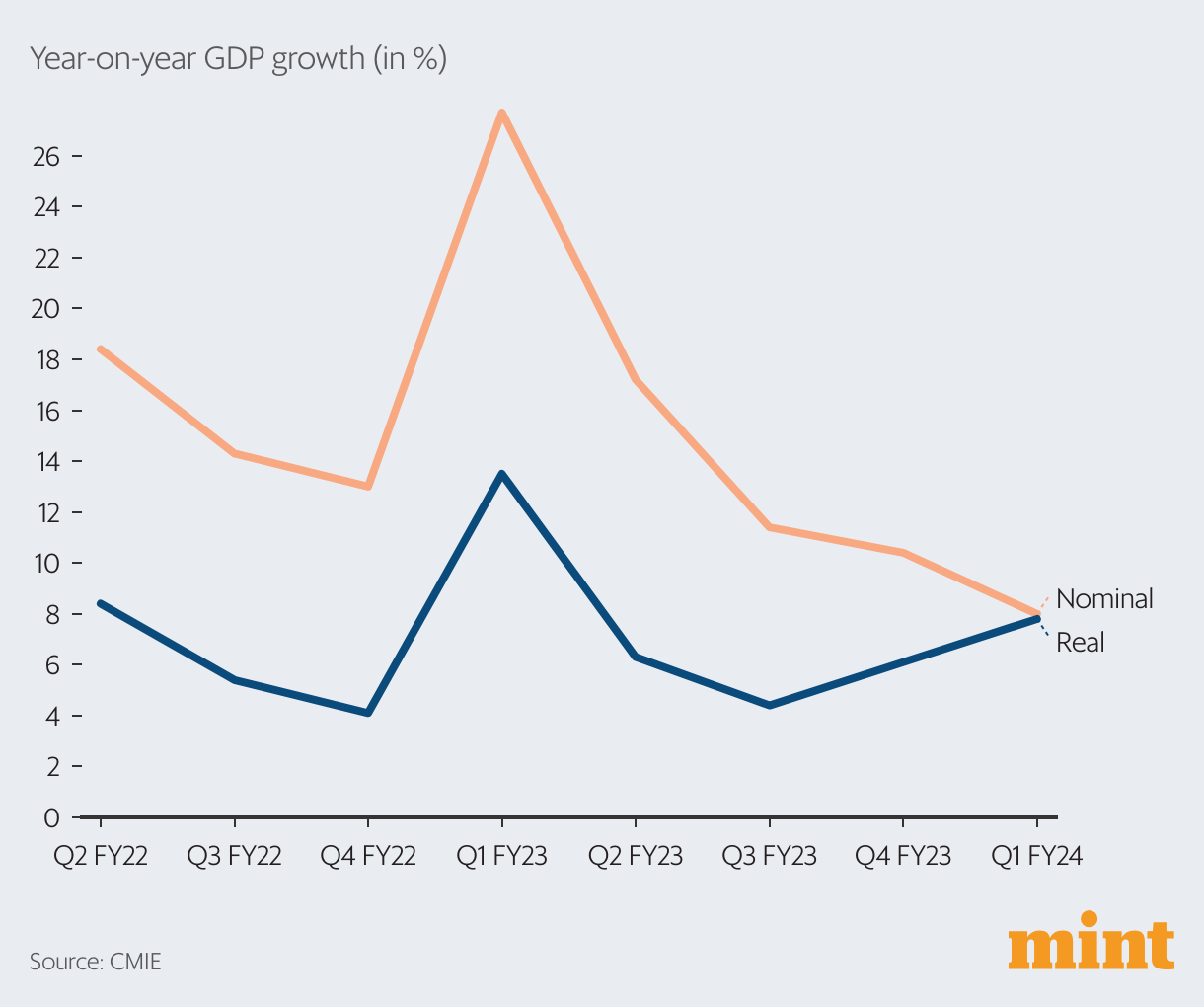
The Indian economy grew 7.8% in the first quarter of the current financial year, signalling resilience amid global slowdown. The fastest growth in four quarters came on the back of an impressive rise in services, 10.3%, while the agricultural sector slowed due to erratic weather conditions. Nominal GDP, or GDP at current prices, grew 8.0%, only 20 bps higher than real GDP, suggesting a sharp decline in wholesale prices pushed real GDP growth upwards in the quarter.
Workers’ woes
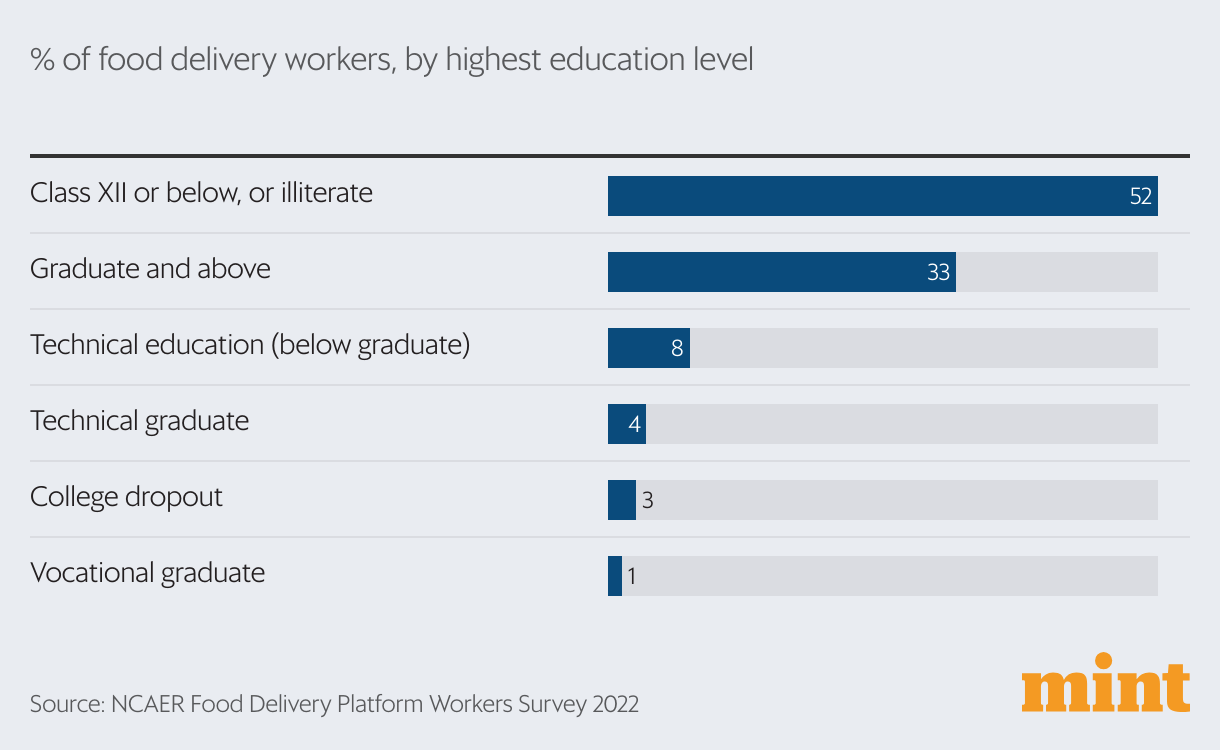
The issue of unemployment and lack of quality jobs isn’t new for India. A new survey has revealed that nearly one in three food delivery workers in India could be “overqualified” for the job. The survey was conducted over telephone by the National Council of Applied Economic Research and covered 924 workers at a food delivery company spread across 28 cities. As many as 32.7% of this sample were graduates or above. This share was the highest in Tier-2 cities, at 39.4%, the survey found.
Price cut
₹200: That’s the amount by which the price of a domestic liquified petroleum gas (LPG) cylinder has been slashed after a Union Cabinet decision this week. The move has come against the backdrop of high inflation, especially for food, and the upcoming elections. The move partially reverses the hikes announced by oil marketing companies (OMCs) since 2021. The OMCs had raised the prices by ₹379 per cylinder between February 2021 and October 2022. Economists expect the reduction in prices to help tame elevated inflation.
Need for reset?
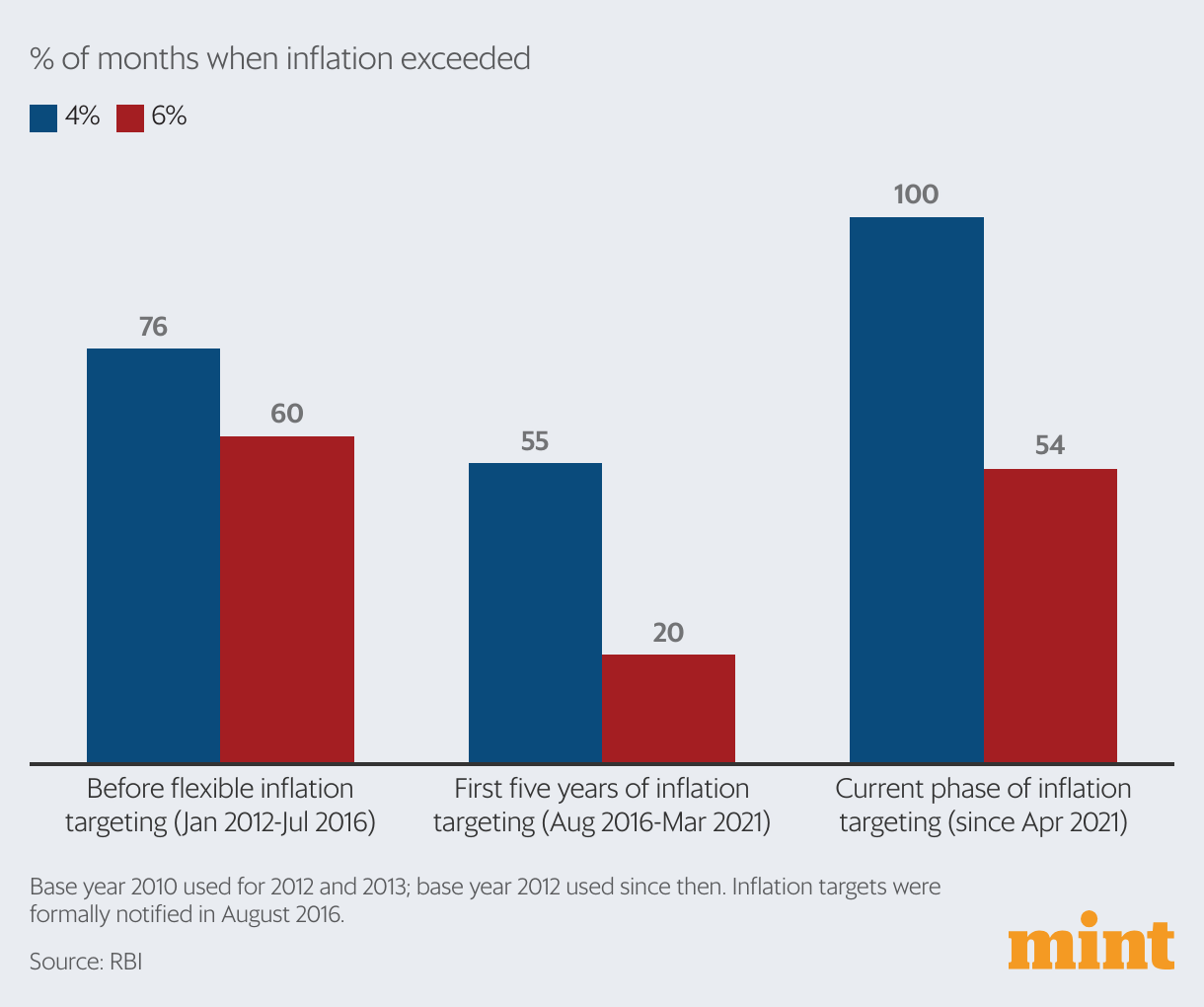
India has been battling high inflation for quite some time now due to disruptions caused by the pandemic, the Russia-Ukraine war, and climate change, among others. While the government has retained 4% as the medium-term inflation target, inflation has breached the 6% mark more often than not in the current phase of the inflation-targeting regime, shows a Mint analysis. This begs the question whether the government should adopt a higher inflation target especially at a time when sharp price rises have become a global problem.
Rising partisanship
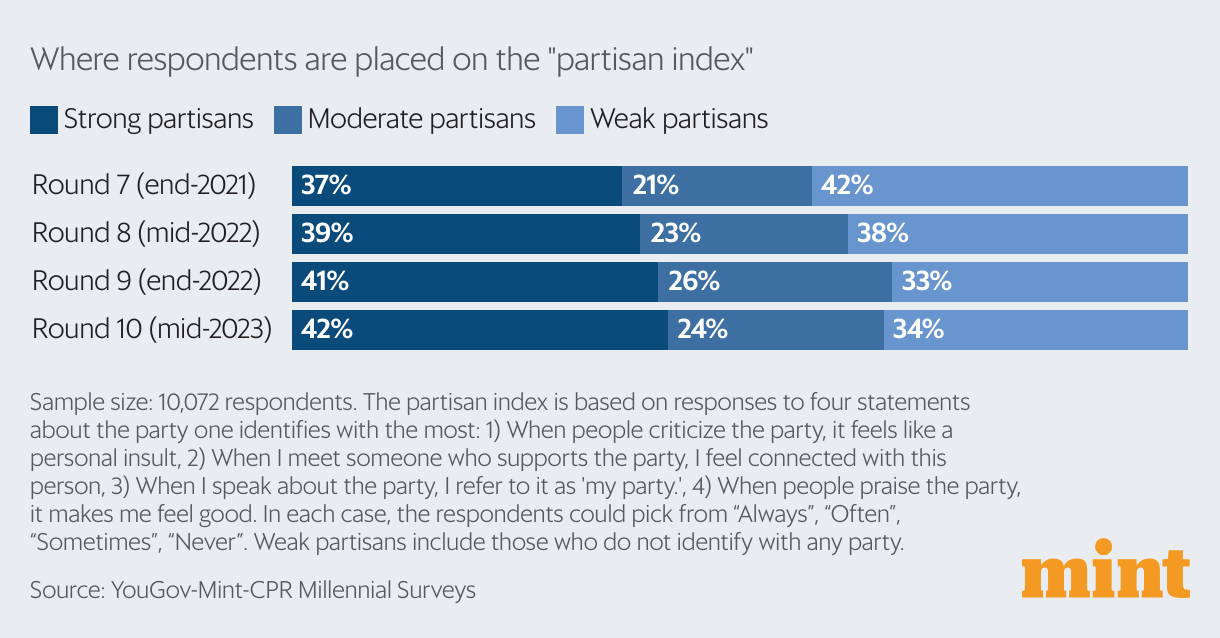
India’s political landscape is increasingly getting more polarized, with 42% of the respondents in the YouGov-Mint-CPR Millennial Survey showing a strong attachment towards the political party they claim to identify with the most. The share of strong partisans has gone up from 37% at the end of 2021. The survey also revealed that the supporters of the ruling party and the newly-formed Opposition alliance have vastly different views on India’s progress relative to China, New Delhi’s G20 presidency and population control.
Production plans
₹45,000 crore: That’s the amount Maruti Suzuki will be investing to nearly double its production capacity to 4 million units a year in the next seven years, the company said at its annual general meeting. The company also plans to set up a new one-million-unit facility in Haryana’s Kharkhoda and another one for which location has not been disclosed yet. The company is investing the money to meet the rising demand outside India, with the company expecting its export volume to rise to 800,000 units by 2030-31.
Debt relief
Despite interest rates having risen sharply in the past one year, Indian companies’ ability to repay debt has improved gradually, thanks to cheaper prices of input goods and improved operating performance. A Mint analysis of 382 companies in the BSE 500 index showed that interest coverage ratio stood at 7.02 times in the June quarter, better than 6.73 times in the March quarter. The figure, however, is still lower than 7.22 times a year earlier.
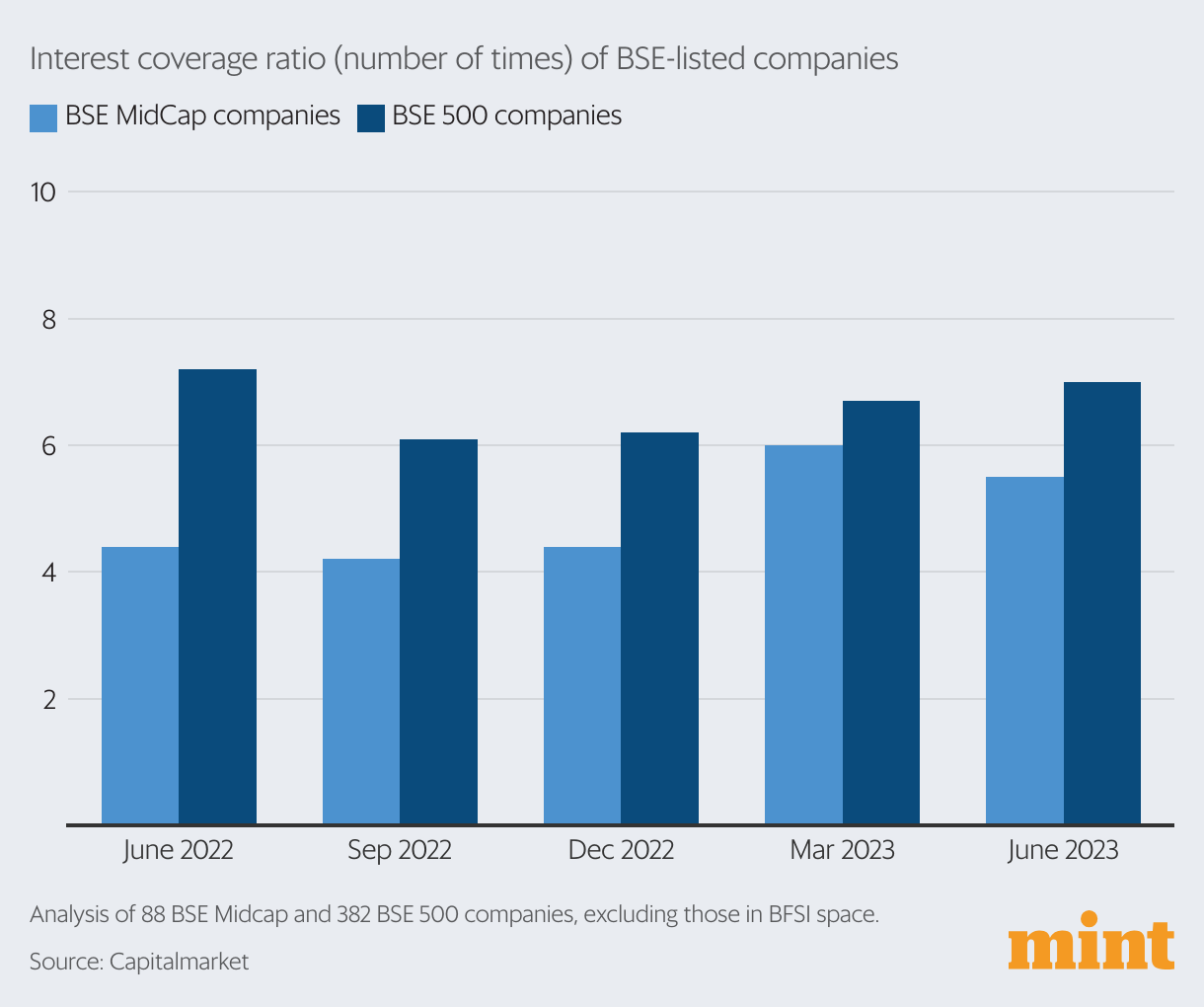
Chart of the week: Gender inequality
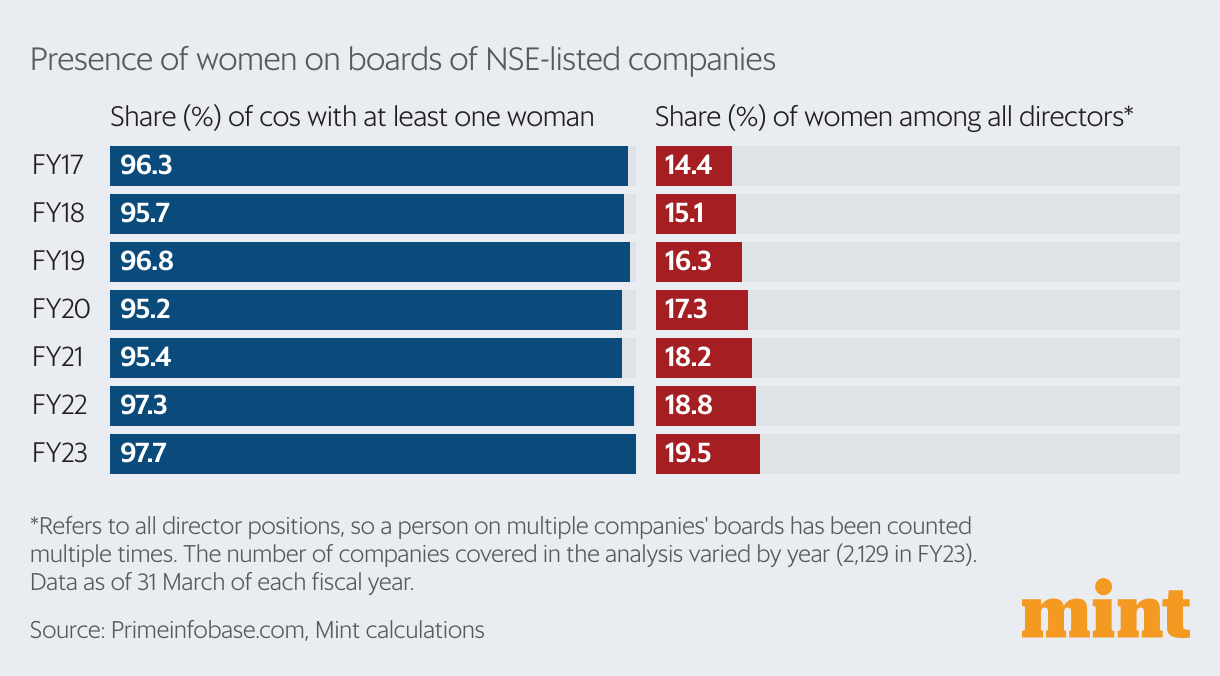
With regulatory intervention, now over 97% of listed companies have at least one woman as board member. However, only a fifth of directors across these companies were women as of March, a primeinfobase.com analysis based on over 2,000 annual reports showed.
Follow us on #MintCharts on our social media handles.