
With bombs and bravado, Trump puts his own stamp on a Reagan strategy
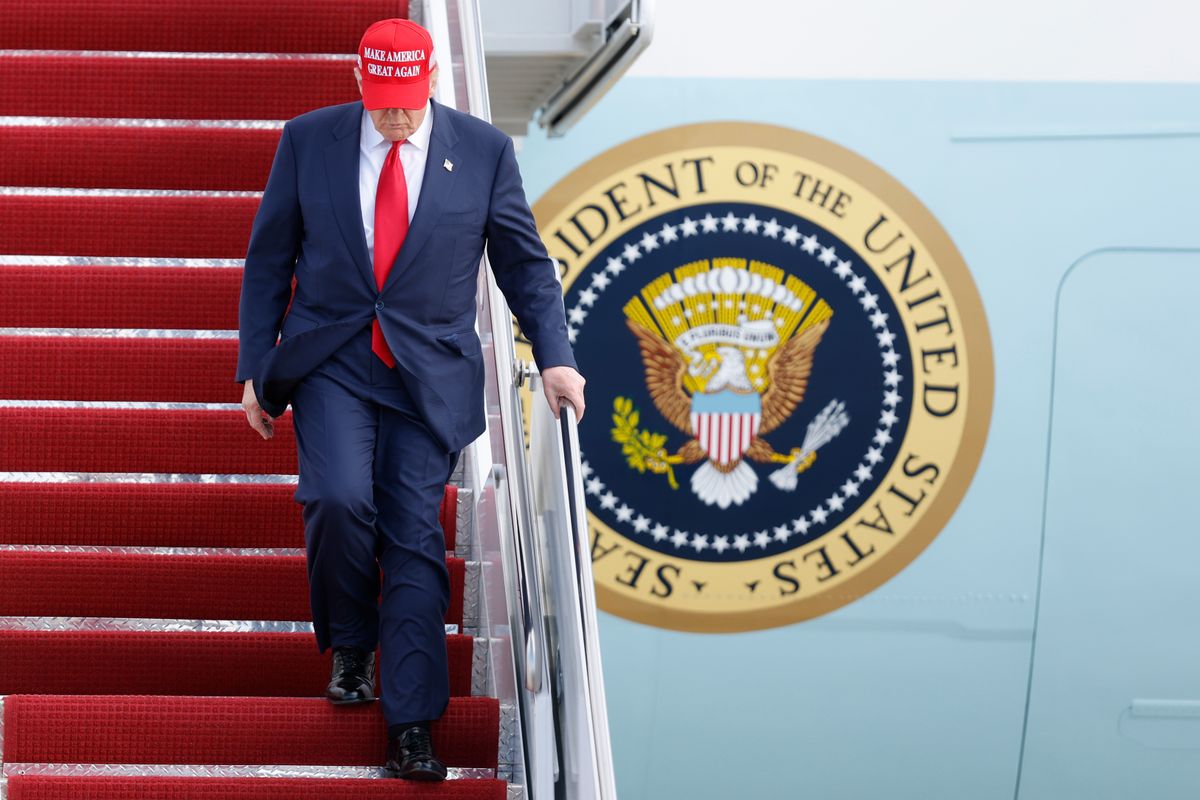
Defense Secretary Pete Hegseth is not shedding light on what kind of testing the administration planned to undertake. But he is reiterating Trump’s Reagan-borrowed mantra.
“America will ensure that we have the strongest, most capable nuclear arsenal, so that we maintain peace through strength,” Hegseth said Friday. “That’s what this is. In every meeting, that’s what we talk about: Peace through strength.”
A classic top-to-bottom operation
While the loose talk about nuclear testing was certainly unsettling to some, reaction appeared to be relatively measured. Trump, after all, has made many pronouncements only to later make pronounced shifts in positions.
For example, in a matter of weeks recently, he went from maintaining Ukraine must cede land to Russia to proclaiming that he believed Kyiv could win back all of the land lost in the war to declaring “fighting should stop at the lines they are at now.”
Administration officials are loath to question Trump’s tactics but acknowledge that some may appear to be contradictory, particularly with what seem to be spur-of-the-moment reversals in his public statements.
Rather than regard these abrupt changes in course as defects, administration officials privately argue that they give the U.S. more influence and make adversaries and potential adversaries — not to mention allies and partners — more wary to cross Trump.
But policy consistency has long been regarded as key in national security and international relations, not least because it provides a concrete basis for international understandings and actions that other countries consider when making their own decisions.
“This is a product of a lack of process,” said Ian Kelly, a retired career diplomat who served as U.S. ambassador to Georgia in Trump’s first term. “It’s a classic top-to-bottom operation and there doesn’t seem to be any consultation with other stakeholders, especially with Congress, but also long-standing allies.”
Steering clear of the endless war pitfall
Trump has managed to grasp tightly onto the “peacemaker” title even as his administration has carried out an activist foreign policy in the early going of his second term.
Trump claims as a shining achievement his decision to order strikes in June on three critical Iranian nuclear facilities that he says “obliterated” the Iranian program. The bombing caused significant damage in an operation in which no American troops were harmed.
While Trump insists the program was destroyed, the head of the U.N. nuclear watchdog said this week that renewed movement has been detected recently at Iran’s nuclear sites.
Before those strikes, some of Trump’s die-hard backers, including Steve Bannon, Rep. Marjorie Taylor Greene, R-Ga., and commentators Tucker Carlson and Charlie Kirk, expressed consternation as Trump mulled military action. They pointed to Trump’s own wariness over decades of war fomented in previous administrations.
Trump’s strikes in the Caribbean appear to be landing huge blows to Venezuelan drug smugglers and unsettling the government of President Nicolás Maduro. At the moment, that seems to be coming with “very little political cost” for Trump, said Justin Logan, director of defense and foreign policy studies at the Cato Institute, a libertarian think tank in Washington.
But Logan argues that Trump should be careful as he ponders the path ahead in Venezuela and steer clear of the pitfalls of the “endless wars” in Iraq and Afghanistan that left an indelible mark on the American psyche. This one would be in his own backyard.
“This administration seems to favor these short, sharp strokes and then say they have resolved the problem altogether,” Logan said. “I’m afraid what will happen is that we will discover that none of these problems have actually been put to bed.”
