MANILA, Philippines – Many feared what the Philippines’ media landscape – already battered from the time of former president Rodrigo Duterte and social media algorithms that favor fallacies and segregation over the truth and shared realities – would look like under President Ferdinand Marcos Jr.’s term.
His father, during the Martial Law years, had been known for killings, disappearances, and other forms of media censorship and control that completely snuffed out journalistic independence and dissenting voices.
After a year in power so far, Marcos’ administration has not been a replica of his father’s. Nor has he been openly hostile like his predecessor Duterte – at least not until after he got elected, and not until after a polling season where he blocked critical media outlets from access, including an incident where his campaign team had physically harassed Rappler’s assigned campaign reporter, Lian Buan.
But in the social media age, governments don’t always need to physically gag journalists to exact a measure of control. As his successful election campaign has proven, he wields considerable power in social media. He also has powerful allies in the Romualdez clan expanding its media influence, and finds himself in an environment where the former largest media entity ABS-CBN, a critical one, remains kneecapped.
All of that to say: the administration can afford to be – as the Center for Media Freedom and Responsibility (CMFR) described Marcos Jr. in its 2023 state of press freedom report in May – “amiable towards the press.”
But despite using more pleasant sounding words compared to his predecessor, the CMFR also said: “But actions speak louder than words. And there has been no real action to prevent the kinds of attacks that made the Duterte regime as dark as it could ever be for the media and for democracy.”
The Philippines also moved from the 147th spot to 132nd in the World Press Freedom Index this year, the country’s best since 2017’s 127th spot in the ranking. But as the National Union of Journalists of the Philippines (NUJP) noted on World Press Freedom Day, many journalists are still “facing threats” and that this freedom is “still fragile” even as it seems that the situation is improving.
“Since the Duterte administration, there have been attempts to convince colleagues to disaffiliate from groups like the National Union of Journalists of the Philippines and outright attempts to paint the independent and alternative press as enemies of the state. While these attempts have been toned down under the new administration, they have continued,” the NUJP said.
Here’s how the media landscape has looked like in Marcos’ first year.
Marcos, disinformation beneficiary, his campaign against fake news
The Marcos family, for years, created networks on social media where it channeled propaganda meant to clean the family’s name – an online disinformation campaign that helped tremendously in the 2022 election season.
In spite of that, in June 2023, Marcos, speaking at the International Conference of Information Commissioners, reiterated plans to launch a “media and information literacy campaign,” saying “fake news should have no place in modern society.” The hypocrisy echoed statements he made during his campaign when he said “Kami biktima diyan eh,” (We’re the victims) referring to his family and fake news.
More sweet words
Prior to these June 2023 pronouncements, at the 50th anniversary of the Kapisanan ng mga Brodkaster ng Pilipinas (KBP) in April, he said:
“We started with mistaken information, then it became more active, disinformation, and misinformation and now, out-and-out, fake news. However, it is something that is to be expected considering how powerful the tool social media has become…And it is up once again to the KBP [Kapisanan ng mga Brodkaster ng Pilipinas] to bring a measure of stability, a measure of objectivity, to help our people discern what is the real information and what is propaganda.”
At the same event, he also praised the media, saying, “The press and broadcast media are instrumental not only in informing the citizenry, but also in shaping public opinion and even triggering social mobilization and change.”
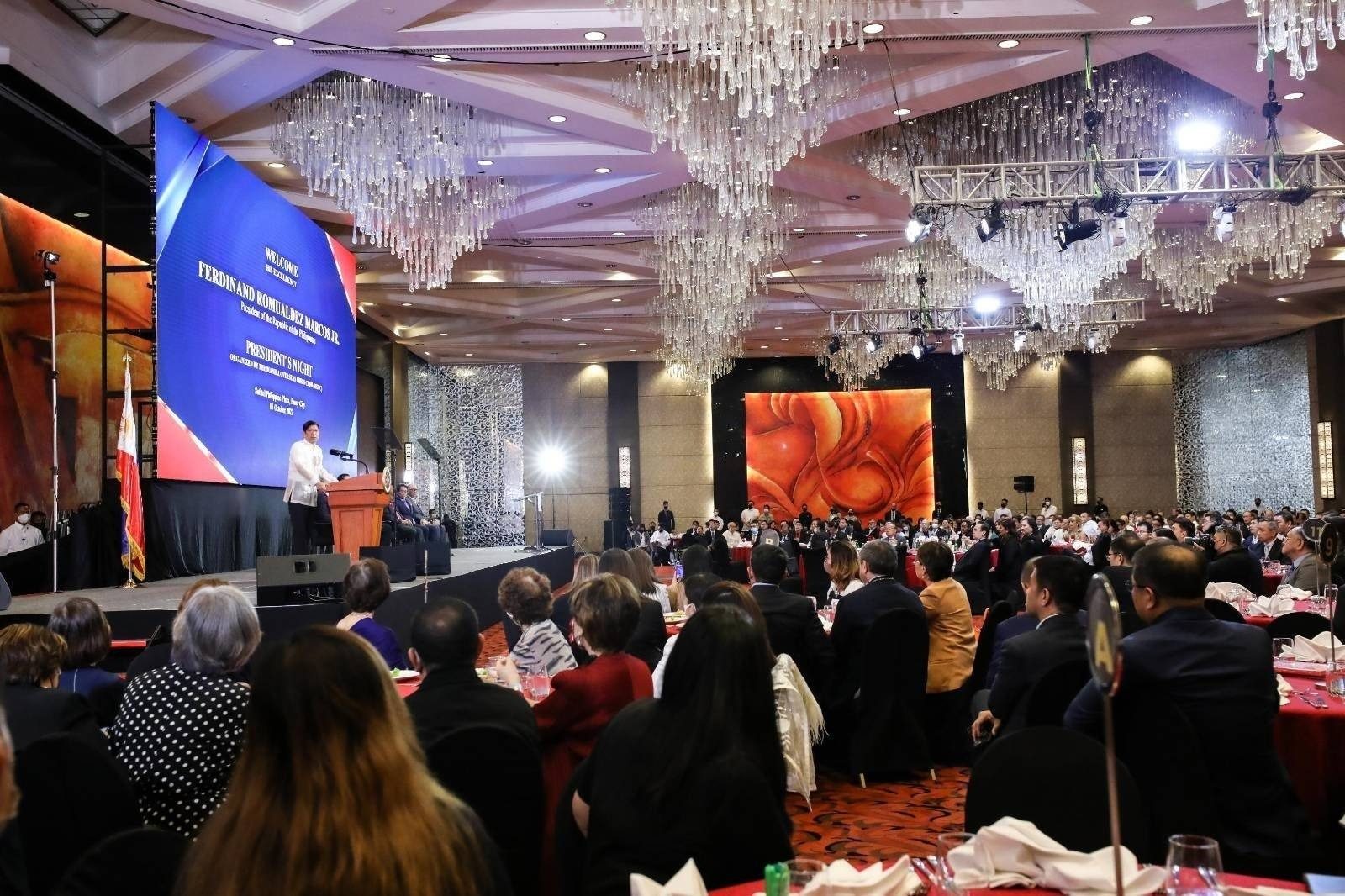
Even way back in October 2022, Marcos has had pleasant words for the media. He said at a the Manila Overseas Press Club (MOPC) event: “Under my lead, we will serve and protect the rights of the media as they efficiently perform their duty.”
“Your proactive participation in keeping a well-informed citizenry forms part of our collective goal to empower Filipinos and establish a more robust Philippines.”
Transparency promise, restrictions to freedom of information
Marcos has also said that the government is “committed to ensuring transparency,” which is a 180-degree turn from his stance during his campaign when access to him by critical media was difficult and rejected debate invites hosted by CNN, and instead joined a similar event by a media outlet SMNI, whose owner FBI-wanted Apollo Quiboloy had already endorsed him and running mate Sara Duterte.
On the occasion of the President’s first 100 days, Rappler investigative head Chay Hofileña wrote, “One Palace reporter says Marcos has been neither warm nor antagonistic towards the media. Neither has he shown an obsession with sharing important data and statistics with journalists that past presidents like Fidel V. Ramos, for example, had shown.
In March 2023, the administration also added more restrictions to what can be accessed under former President Rodrigo Duterte’s executive order (EO) on freedom of information (FOI), the Inquirer reported. The Inquirer was also rejected by the Palace when it asked for details on expenses incurred by Marcos’ foreign trips.
Red-tagging remains
Marcos’ pronouncements have yet to show a reversal of trends regarding treatment of media. The CMFR said that there were 75 attacks on media from June 20, 2022 to April 30, 2023, which “exceeds the number of attacks/threats in any one year during the term of Duterte. This suggests that Marcos has not pulled away from the pattern showing state agents themselves actively going after the media.”
Red-tagging by authorities still “shows up as the highest number of attacks/threats,” meaning “Marcos has not departed from Duterte’s custom of deploying law-enforcement agents on various fronts.”
Will there be mention of press freedom in next SONA?
In both his inaugural address, and first SONA in 2022, Marcos made no mention of press freedom. But since then, he’s publicly stated support for media in at least three instances.
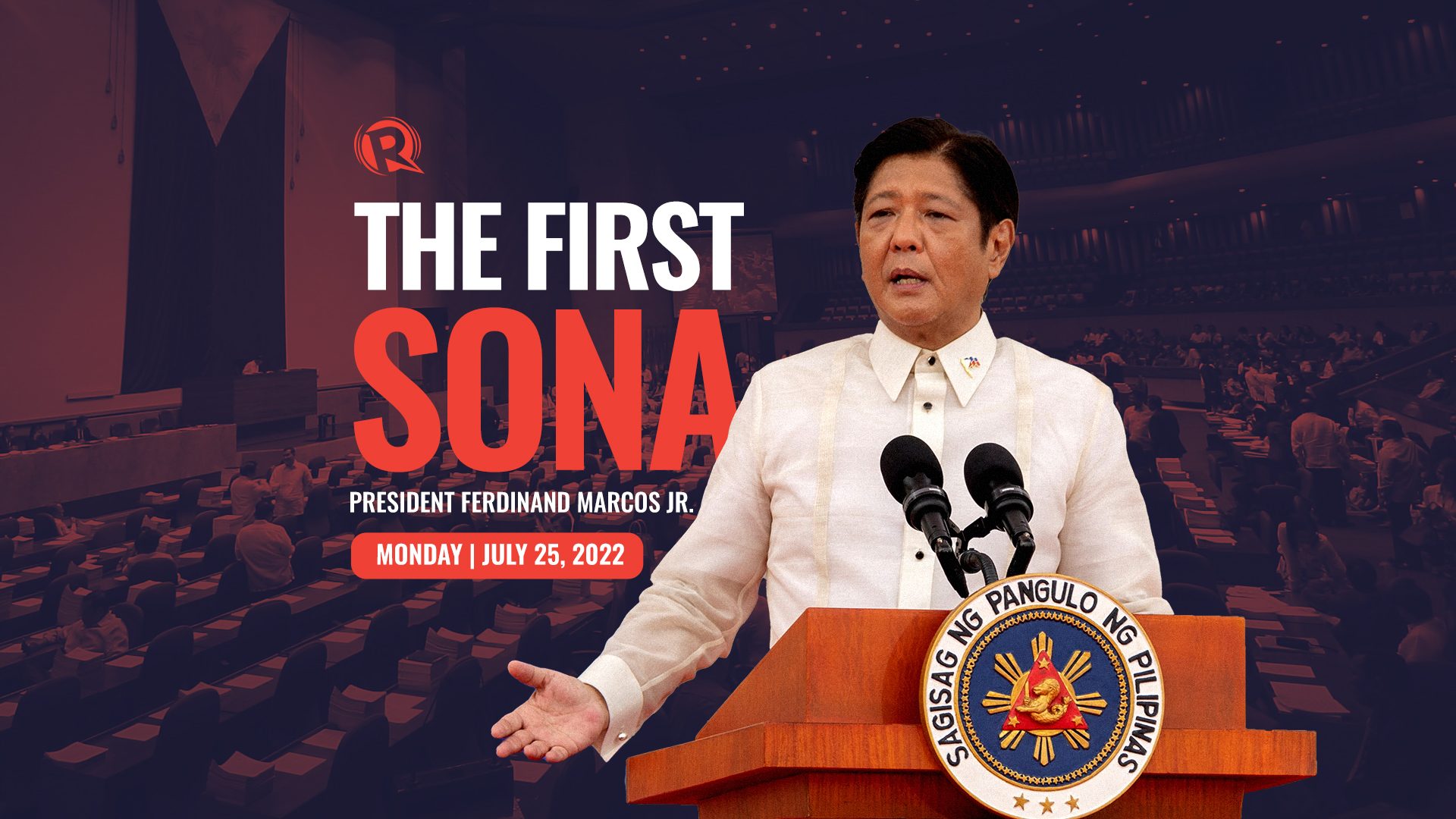
Plans for vlogger Palace accreditation still under review
Back in June 2022, media raised concerns about the Palace accrediting vloggers and social media influencers.
The NUJP expressed worry about highly partisan pro-Marcos vloggers. It said, “Democratizing access to government by way of vloggers is commendable in principle, but must be viewed in the context that the vloggers who may likely benefit from this access would be the pro-Marcos vloggers, as was the case during the campaign.”
A group called the United Vloggers and Influencers of the Philippines (UVIP), made up of pro-Marcos vloggers, pushed for accreditation but eventually disbanded due mainly to infighting. “UVIP is composed mainly of hyperpartisan vloggers whose common interest is to earn while blindly supporting their principals…They have no clear bases of unity that can transcend their own self-interest,” UP associate professor Danilo Arao told Rappler at the time.
As recently as March 2023, Malacañang’s policy on vlogger accreditation is still under review. “The accreditation of our vloggers is part of the program that is under evaluation,” said Presidential Communications Office (PCO) chief Cheloy Velicaria-Garafil.
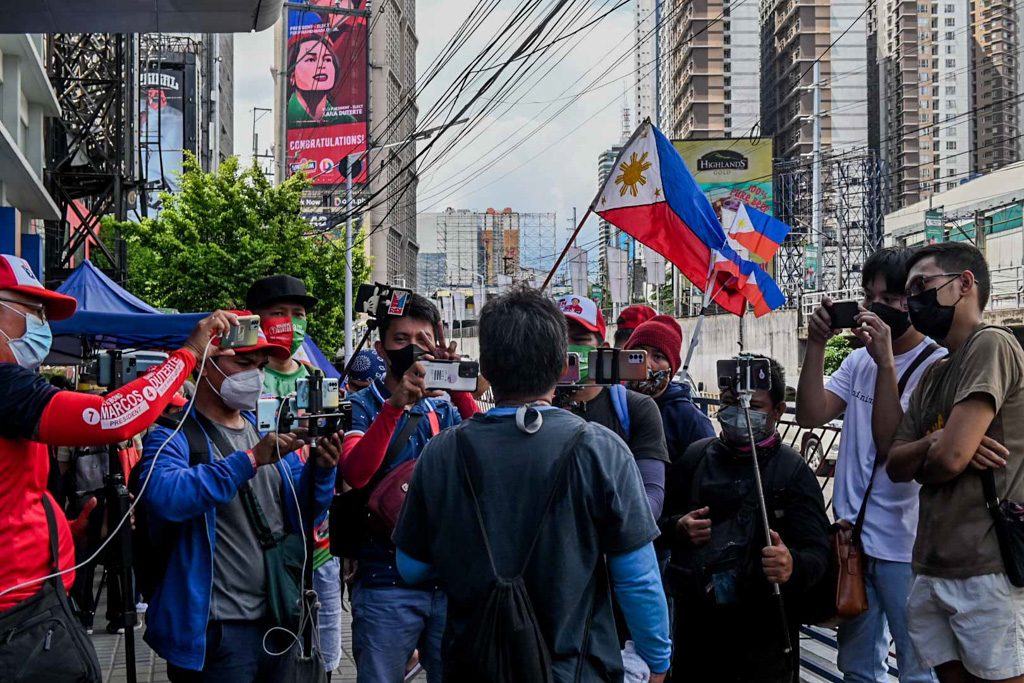
Accrediting and legitimizing hyperpartisan vloggers who are primarily incentivized by political patronage and triggering social media algorithms for engagement present further harms to the information ecosystem.
Even without accreditation, “Bloggers, pro-Marcos influencers and far-right media and their supporters are still invited to cover presidential events, a practice inherited from the Duterte administration,” Ma. Diosa Labiste, University of the Philippines journalism associate professor, wrote.
Journalist killings, impunity continue
Under Marcos, three journalists were killed: Rey Blanco in September 2022, Percival “Percy Lapid” Mabasa in October 2022, and Cresenciano Aldovino Bunduquin in May 2023.
In the Mabasa case, Malacañang issued a statement shortly after the incident, saying Marcos is “very concerned” over the killing.
More recently, on June 22, 2023, the Committee to Protect Journalists (CPJ) called on authorities to arrest suspended Bureau of Corrections chief Gerald Bantag, the alleged mastermind, and Ricardo Zulueta, prison security official and described by Department of Justice (DOJ) Secretary Jesus Crispin Remulla as Bantag’s “right-hand man.”
The CPJ was responding to the DOJ’s earlier pronouncement that arresting Bantag was “a little bit tricky” due to “certain networks with the police.”
Said Shawn Crispin, CPJ’s senior Southeast Asia representative: “If the Ferdinand Marcos Jr. administration is serious about ending impunity in media killings, it should prioritize securing these arrests. A suspect’s connections to law enforcement should not be allowed to hinder the swift pursuit of justice.”
On June 23, 2023, three inmates who admitted participating in the Mabasa murder were convicted to two to eight years in prison, with the DOJ saying that the case isn’t over until the masterminds are arrested.
The Philippines ranks 7th in the CPJ’s 2022 Impunity Index – the same rank as 2021 – published in November 2022.
Legal cases
Rappler CEO and Nobel Peace Prize laureate Maria Ressa and former Rappler researcher Reynaldo Santos Jr.’s motion for reconsideration in their cyberlibel case was denied by the Court of Appeals in October 2022.
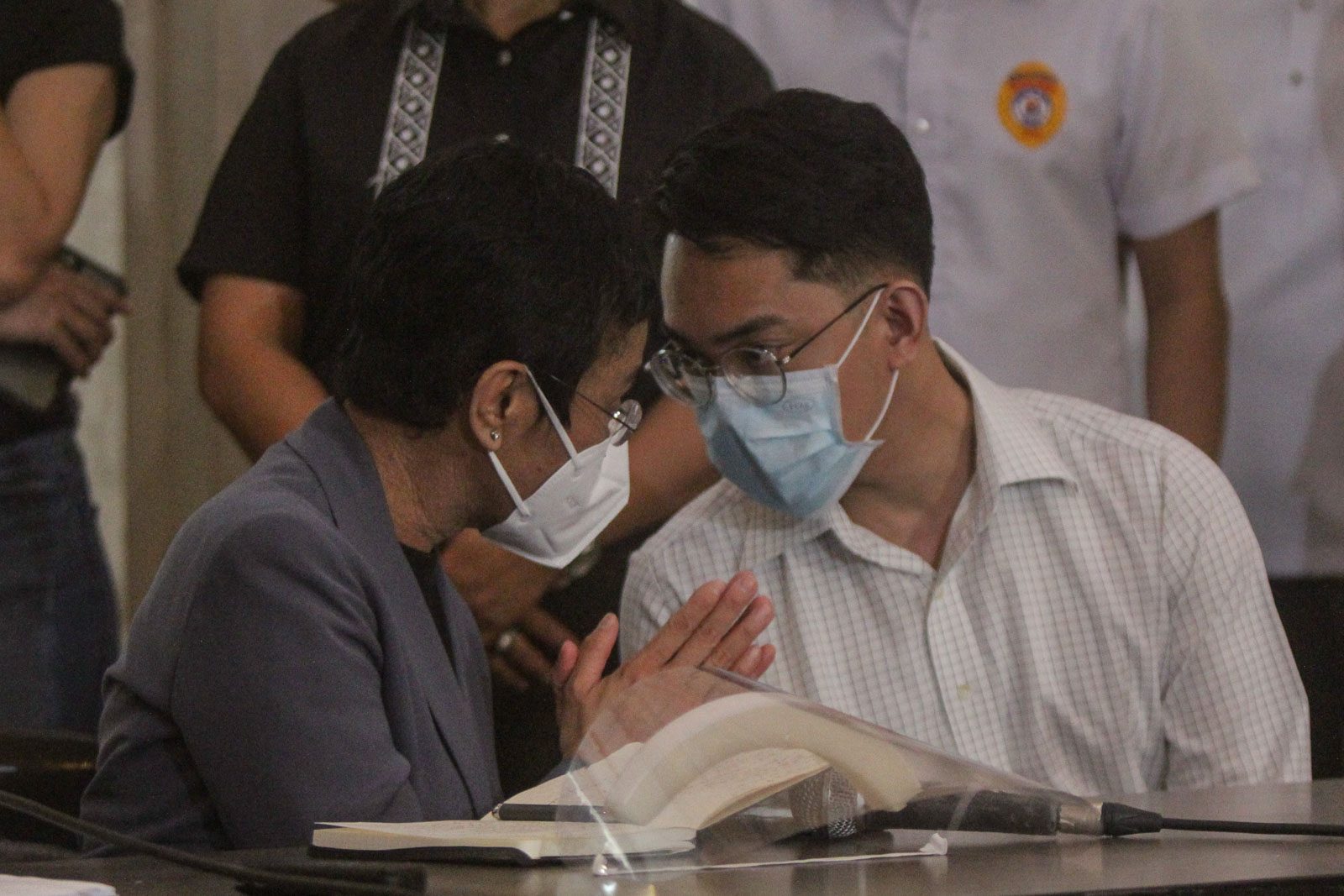
In spite of Ressa and Rappler Holdings Corporation being acquitted of four tax evasion cases in January 2023, the government continues to criminalize defamation as a way of holding an ax over journalists’ heads, creating a chilling effect on the whole of media.
Baguio Chronicle and Rappler correspondent Frank Cimatu was convicted of cyberlibel in December 2022, in a case filed by former agriculture secretary Emmanuel “Manny” Piñol over a Facebook post from five years ago.
Red-tagged Tacloban journalist Frenchie Mae Cumpio remains detained three years after her arrest in February 2020 on questionable illegal possession of firearms and explosives charges.
Her arrest follows a similar pattern with how other critical progressive journalists and activists like Reina Nasino in 2019 and Lady Ann Salem in 2020 had been arrested: “First there is a search warrant. Then a raid. Then the police find explosives.” Calls to release Cumpio have been ignored by the government.
The case involving the blocking of top alternative news site Bulatlat, and 26 other websites also continued on June 15, 2023. The National Telecommunications Commission, the National Security Commission, and former National Security Adviser Hermogenes Esperon ordered the blocking of these websites in June 2022, empowered by an Anti-Terror Act that has weaponized red-tagging in the legal realm, and enabled censorship such as the blocking of the sites.
Bulatlat is asking to nullify the NTC order in its case, and further, the junking of the Anti-Terror Act. It said that the blocking is state-perpetrated censorship.
“The Marcos Jr. administration has not lifted the NTC memorandum, and its supporters continue to engage in arbitrary labeling of individuals and groups as communists and terrorists,” Bulatlat editor-in-chief Ronalyn Olea said.
Marcos has offered platitudes to the media, which, coming from an aggressive, antagonistic Duterte administration, is an improvement. But, at this point, it feels hollow with cases that stifle true, independent journalism, and still unsolved press killings.
Resolving these in favor of the media would make for a statement far stronger than his pleasant words to the press so far.
Violence towards community press remains
More robust moves from the Marcos administration supportive of independent journalism would be beneficial especially for the community press. At least one community news outlet said that the provincial press is hardly independent, estimating that 80% of the provincial press is owned by politicians.
This makes it hard and dangerous for independent outlets.
“How can you survive as an independent provincial journalist where 80% of the news outlets are owned by politicians? Try doing independent journalism by attacking the corrupt most powerful politicians in the region and you will be bashed no end by fellow journalists who are on the payroll of politicians who own and run big and influential radio and online news outlets,” said Edith Caduaya, owner of online news outfit, Newsline Philippines, which has 430,000 followers.
“And we are so far away from Manila. Here, there is a prevailing culture of violence. You will be bashed and bullied if you do independent journalism,” Caduaya added.
Moving toward a stronger hold on mainstream media
The year’s biggest story involving politicians owning media concerns House Speaker Martin Romualdez, first cousin to Marcos.
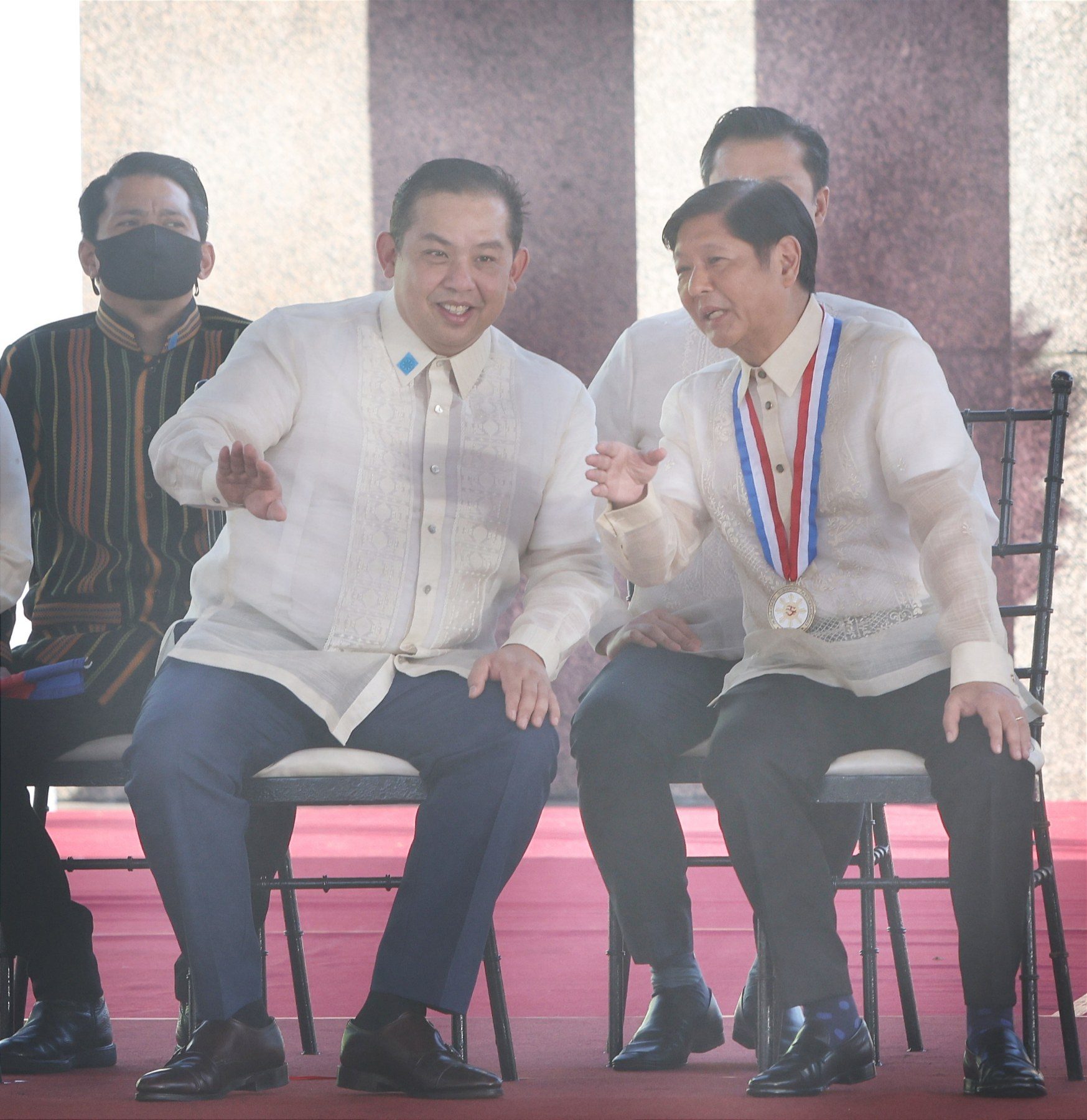
Romualdez started in the TV and radio broadcast industry in 2008 in his home region of Eastern Visayas via his Philippine Collective Media Corporation (PCMC), now a subsidiary of Prime Media. PCMC went from regional to national after Congress amended its franchise in 2020. Its radio stations grew fast in the years after, with bases of operation in Luzon, Visayas, and Mindanao.
Now, through Prime Media and ABS-CBN’s radio-exclusive joint venture company, he expands his reach by using DZMM’s former 630 Khz frequency. The frequency is considered prime since it sits at the lower end of the frequency spectrum, which means it can be powered to reach a wider audience.
Romualdez and his wife, Tingog (Voice) Party-list Representative Yedda Marie Romualdez, were among the 70 Congress representatives who voted against ABS-CBN’s franchise renewal. The Romualdez clan also owns the Manila Standard and Journal newspapers.
It’s a continuation of the consolidation of media power in the ABS-CBN fallout, following Manny Villar’s Advanced Media Broadcasting System (AMBS) acquisition of the original analog Channel 2 and ABS-CBN’s digital channel 16, and pro-Marcos SMNI channel’s acquisition of Channel 43, also used by ABS-CBN via a blocktimer agreement with Amcara, both in 2022.
The big kink here? Romualdez is obviously far closer to Marcos than any of them. – Rappler.com