
The government’s move is seen as a big blow to TikTok, the short video app that is pressing down on Southeast Asia’s largest economy to build its e-commerce business. Reuters
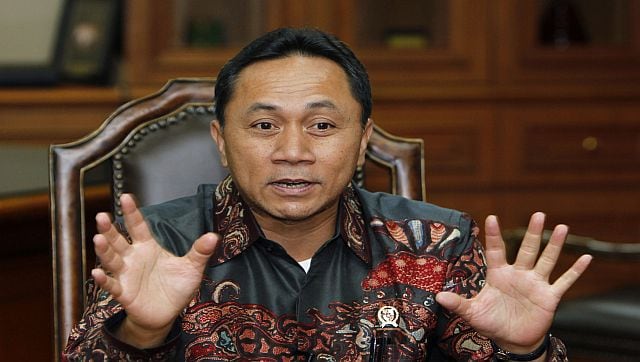
The Indonesian government banned e-commerce transactions on social media platforms on Wednesday. The announcement was made by the country’s Trade Minister, Zulkifli Hasan, who stated that the government was attempting to defend offline merchants, marketplaces, and small enterprises.
Government officials in recent weeks called for social media and e-commerce to be decoupled, targeting platforms they say engage in monopolistic practices that threaten offline sellers, with some specifically blaming Chinese-owned short video app TikTok.
According to Hasan, predatory pricing on social media platforms is endangering the livelihoods of small and medium-sized businesses that are unable to compete with monopolistic rules.
Related Articles


“This trade regulation has been in force (since yesterday),” Trade Minister Zulkifli Hasan told a press conference in the capital Jakarta, adding that “the connection [between social media and e-commerce] must be separated so that the algorithm is not all controlled” and this “prevents the use of personal data” for business purposes, reports Wion.
The government’s move is seen as a big blow to TikTok, the short video app that is pressing down on Southeast Asia’s largest economy to build its e-commerce business.
Here’s what Indonesia’s e-commerce sales ban on social media platforms means and why it’s a big hit for TikTok.
E-commerce and social media separated
The regulation means social media firms will not be able to conduct direct transactions but only promote products on their platforms.
“Social commerce can place ads like TV, but it mustn’t be transactional. [They] can’t open shop, can’t directly sell,” the trade minister, Zulkifli Hasan, told a news conference, as reported by The Guardian.
“Now, e-commerce cannot become social media. It is separated,” Hasan said, adding that the social commerce platforms would have a week to comply with the new rule. Companies who do not comply risk having their business licences in Indonesia cancelled.
Furthermore, the new legislation requires that e-commerce platforms in the country specify a minimum price of $100 for some commodities purchased straight from abroad.
Laws in the archipelago nation did not cover direct transactions through social media platforms such as TikTok, Facebook or Instagram before the new regulation.
The new regulation is yet another setback for TikTok, which has faced intense scrutiny in the United States and other nations in recent months over users’ data security and the company’s alleged ties to Beijing.
Big blow to TikTok
The decision comes just three months after TikTok announced a billion-dollar investment in Southeast Asia, mostly in Indonesia, over the next four years as part of a significant drive to grow its e-commerce platform TikTok Shop.
Indonesia is one of the world’s biggest markets for TikTok Shop and was the first to pilot the app’s e-commerce arm.
TikTok, which is owned by China’s ByteDance, has 125 million active monthly users in Indonesia and is attempting to convert the massive user base into a significant e-commerce revenue source.
A spokesman for TikTok Indonesia told Reuters that the company was “deeply concerned” by the move, “particularly how it would impact the livelihoods of the six million” local vendors operating on TikTok Shop.
“Social commerce was born to solve a real-world problem for local traditional small sellers, by matching them with local creators who can help drive traffic to their online shops,” a TikTok spokesperson said.
“While we respect local laws and regulations, we hope that the regulations take into account its impact on the livelihoods of more than 6 million sellers and close to 7 million affiliate creators who use TikTok Shop,” he added, as reported by Wion.
Facebook and Instagram are yet to comment on the issue.
Indonesia is now the first country in the region to act against the platform’s growing popularity in the social commerce space.
The ministerial-level regulation — an amendment to a trade regulation issued in 2020 — did not need approval by lawmakers.
Little influence on other digital marketplace business
According to research firm BMI, the transaction ban would solely effect TikTok, and the measure would have little impact on the expansion of the digital marketplace industry.
The commerce market in Indonesia is largely dominated by the homegrown IT firm GoTo’s (GOTO.JK) Tokopedia, Sea’s (SE.N) Shopee, and Chinese e-commerce giant Alibaba’s (9988.HK) Lazada.
According to figures from consultant Momentum Works, as reported by Reuters, e-commerce transactions in Indonesia totalled about $52 billion (Rs 432,676 crore) last year, with TikTok accounting for five per cent of that total.
Retailers react
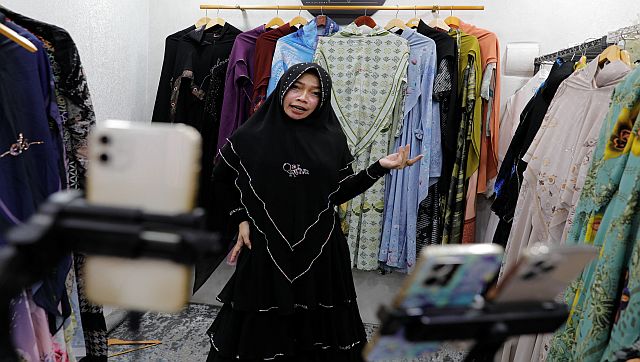
Fahmi Ridho, a TikTok vendor selling garments, told Reuters that the platform was a means for retailers to recover from the COVID-19 outbreak.
“Sales don’t have to be necessarily through (brick and mortar) shops, you can do it online or wherever. … Everything will still have a portion,” he explained.
However, Edri, who goes by one name only and sells garments at a big wholesale market in Jakarta, agreed with the policy and emphasised that things offered online should be limited.
With inputs from AFP and Reuters