
WeChat ban in US cuts off users' link to families and friends in China
Some WeChat users have started to share backup contacts for a limited number of apps that are still available in China
Topics
WeChat | WeChat messaging app | United States
Reuters | Washington DC Last Updated at August 8, 2020 09:52 IST
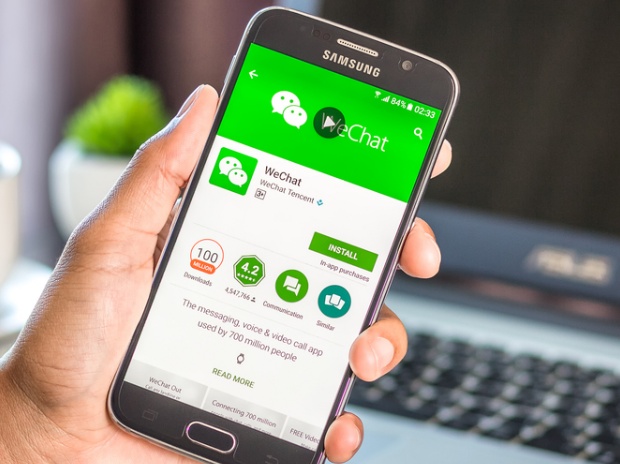
US President Donald Trump’s ban on transactions using popular Chinese messaging app WeChat will cut the ties of millions of users in the United States to families and friends in China, it is feared, as they become the latest casualties in the standoff between the two nations.
WeChat, owned by Chinese internet giant Tencent Holdings Ltd, is popular among Chinese students, expats and some Americans who have personal or business relationships in China. Most popular messaging apps in the United States, including Facebook Messenger , Whatsapp and Telegram have been blocked in China.
“I came to the US for free access to information. I feel I’m targeted by Trump,” said Tingru Nan, a Chinese graduate student at the University of Delaware. “I’m living in constant fear now thinking I might get disconnected with friends and families.”
Others plan to do what they do at home to get around the “Great Firewall,” as the blockade of foreign apps in China is known, by using virtual private networks (VPN) that mask a user’s identity on a public network.
“When in China I need to use VPN to make Gmail and Instagram work. I’ve never imagined that I need to do similar things in the US,” said Tao Lei, a Philadelphia-based tech worker.
“After the 45-day period is up, I’ll experiment with it and see if we can still use WeChat,” Chan said.
She said WeChat has been a major tool for her and her parents to communicate with her grandparents in China.
“I understood the argument about security, but for me, it was more about how I’m going to talk to my family,” Chan said. “My parents are worried about my grandparents because their health has been declining and they want to get constant updates about them.”
Some Chinese expats in America worry that this is only the latest salvo in a worsening U.S.-China relationship.
“My parents are more worried than me when they saw the news,” said Yun Li, a User Experience (UX) designer in Boston who is from Guangdong, China. “They also asked me to seriously consider moving back to China given the current political environment,” she added.
First Published: Sat, August 08 2020. 09:52 IST
