
UK security warning as MI5 fears terror attack ‘likely’ amid 9 major threats
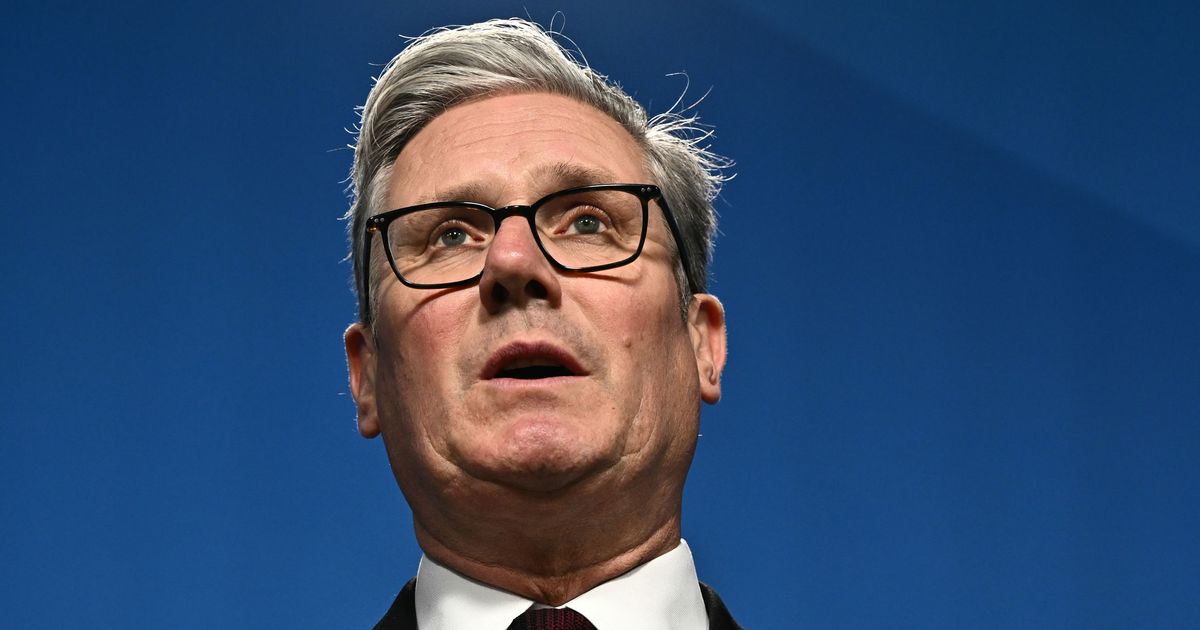
The UK is set to significantly enhance its security measures in the wake of increasing threats both domestically and internationally, as unveiled by Prime Minister Keir Starmer. Britain is preparing for potential dangers such as war, terrorism, cyber-attacks, and organised crime.
A comprehensive update to the country’s safety protocols has been initiated, driven by concerns that British citizens are facing “growing threats at home” as well as challenges from overseas.
This move follows cautionary alerts from MI5 suggesting a terror attack on British soil is highly probable, given the ongoing conflict between Ukraine and Russia, turmoil in the Middle East involving Israel, and cyber-espionage threats from foreign adversaries. Introducing the new security strategy paper, Prime Minister Sir Keir Starmer articulated the perils faced by the nation stating: “Russian aggression menaces our continent. Strategic competition is intensifying. Extremist ideologies are on the rise. Technology is transforming the nature of both war and domestic security. Hostile state activity takes place on British soil.”
Read more: Nuneaton rallies for Pokemon-loving schoolboy battling rare cancer for third time
Starmer emphasised the precarious times: “It is an era of radical uncertainty, and we must navigate it with agility, speed and a clear-eyed sense of the national interest.”
The document advocates for the WWII spirit to motivate Britons in combating these threats, expressing confidence in the future: “The years ahead will test the UK… We will need agility and courage to succeed, but we should be optimistic.”, reports the Mirror.
“We remain a resolute country, rich in history, values and in our capabilities. But most of all, there is the determination of the British people themselves. After all, we do not need to look too far into our history for an example of a whole-of-society effort, motivated by a collective will to keep each other safe. We can mobilise that spirit again and use it both for our national security and the rebuilding of our country.”
Here are the major threats, according to the new National Security Strategy:.
Nuclear war.
It says arms control measures have failed to stop nuclear proliferation – highlighted by fears Iran was making a bid for atomic bombs. And Russia could attack the UK as it tries to expand militarily.
Atomic-armed China is also a growing threat to the west as it is aligned with Russia, Iran and even North Korea.
It says: “The threat to the UK and our allies from nuclear weapons is once again growing. Tackling this challenge is likely to be more complex than it was even in the Cold War, with more states with more nuclear weapons, the further proliferation of nuclear and disruptive technology and the failure of international arms control arrangements to keep pace.”
International war.
The document cautions: “…adversaries are laying the foundations for future conflict, positioning themselves to move quickly to cause major disruption to our energy and or supply chains, to deter us from standing up to their aggression. For the first time in many years, we have to actively prepare for the possibility of the UK homeland coming under direct threat, potentially in a wartime scenario.The government suggests that wars abroad between major states could have a devastating knock-on effect on British citizens. It states “Warfare between major powers, an international security crisis, or a situation with multiple-contingencies across different regions, is an active possibility. “It underscores “tensions between India and Pakistan” reaching “their highest levels for decades.”
And it adds: “We have seen direct military conflict between Israel and Iran. This follows years of aggressive and destabilising activity by the Iranian regime which has included activity specifically targeted against UK interests at home and overseas.
“Significant escalation in any of these theatres would have a profoundly negative impact on our energy security, the cost of living and our ability to grow our economy.”
Hostile states and crime.
This development emerges against the backdrop of significant concerns about hostile states exploiting domestic criminal networks in the UK, as the distinction between state-sponsored terrorism or espionage and crime becomes increasingly ambiguous. The warning states: “It may become more difficult to identify hostile state activity as they make use of terrorist and criminal groups as their proxies.
“Our reliance on data centres and other forms of digital infrastructure will also increase vulnerabilities to cyber attack.”
According to The Mirror, Russia and Iran are increasingly resorting to employing crime gangs to launch attacks on the UK from a distance, effectively using proxy forces.
A source revealed: “Both Russia and Iran are highly motivated to launch sabotage, espionage or physical threats to life missions within Britain. Employing the use of criminals is cheaper and less long-term than using highly-trained operatives such as special forces or intelligence officers. It also gives hostile states deniability.”
Rapid advancements in Artificial Intelligence and emerging technologies are also sounding alarm bells. It notes that the development of hypersonic missiles and AI-enhanced systems will pose greater challenges than existing arsenals.
Additionally, it cautions: “Technology will also create new vulnerabilities and change the character of conflict.”
China, North Korea, Iran and even Russia are reportedly developing AI capabilities to deploy “swarms” of drones for attack. These drones, with advanced programming, could prove extremely difficult to shoot down or disable if they operate in overwhelming numbers, controlled by artificial intelligence that responds at lightning speed.
The alarming new study suggests Britain must gear up to defend against catastrophic new weapons. It cautions: “New chemical and biological weapons may be developed and proliferate. Hypersonic missiles and AI-enhanced systems will be supplemented by mass-produced, low sophistication capabilities like drones.”
It also highlights that these technologies could become accessible to a broader range of adversaries, challenging traditional concepts of deterrence and escalation.
Furthermore, the risk of attacks from radicalised groups or solitary extremists is on the rise. The report warns: The combined threat from terrorists, criminals and lone actors will evolve as instability overseas feeds radicalisation and extremism in the UK.
“Ungoverned spaces in the Middle East and North Africa will accentuate these challenges, along with illegal migration.
“Terrorism – from Islamist and Extreme Right Wing ideologies – will remain a persistent, and diversifying threat. The number of vulnerable young people who are desensitised, exploited and radicalised online is likely to increase, alongside more individuals who are fixated by extreme violence.”
Espionage.
The document cautions: “Threats to the homeland from state actors are increasing. “The UK is directly threatened by hostile activities including assassination, intimidation, espionage, sabotage, cyber attacks and other forms of democratic interference. These have targeted our citizens, institutions, journalists, universities and businesses.
“Adversaries threaten societal cohesion and seek to erode public trust through the spread of disinformation, malign use of social media and stoking tensions between generations, genders and ethnic groups.Russian warships have attempted to map out North Sea underwater cables linking internet communication between the UK, Europe and America in preparation for sabotage attacks. The document states:”Meanwhile, critical national infrastructure – including undersea cables, energy pipelines, transportation and logistics hubs – will continue to be a target. “It may become more difficult to identify hostile state activity as they make use of terrorist and criminal groups as their proxies. Our reliance on data centres and other forms of digital infrastructure will also increase vulnerabilities to cyber attack.”
Cyber attacks and cyber security Criminal enterprises, some associated with adversarial nations, have been identified for channelling a staggering £100 billion annually through either UK soil or British corporate entities, partly utilising the digital realm. An infamous incident saw NHS systems fall prey to the Wannacry hackers, incurring costs around £92 million and resulting in the cancellation of 19,000 medical appointments.
In the preceding year alone, upwards of 40% of businesses across the UK acknowledged falling victim to cyber security breaches or attacks. The societal toll of fraud targeting individuals reportedly hit at least an astronomical £6.6 billion.
Regarding climate change:.
Water scarcity is gripping regions like the Sahel, an expansive belt spanning from Senegal to Sudan, with dire implications. Sources conferred with the Mirror are shedding light on grave issues the Sahel contends with, including drought, desertification, poverty and conflict.
Al-Qaeda and Islamic State factions have added to the turmoil, driving a surge in refugees seeking sanctuary from the chaos and adding to Europe’s mounting pressures, as uncovered by the Mirror.
A fresh report further sounds the alarm: “We will have to contend with the effects of climate change and potential ecosystem collapse, biological threats, demographic shifts, continued urbanisation, threats to human health, slow economic growth, inequality, and competition for basic resources, including food and water. “.
The document continues, outlining a proactive stance: “Alongside our international partners, we are taking action to deliver secure energy, financial security and green growth at home, restoring the UK’s position as a climate leader on the world stage.”
