
‘Highs and lows in Pak-US relations prove the ties are rooted in pragmatism’: Moonis Ahmar
KARACHI
The evolving dynamic of Pakistan-US ‘courtship’ reflects the longstanding inconsistency in their relationship. A low point came on January 1, 2018, when President Trump tweeted that the US had “foolishly given Pakistan more than $33 billion in aid” and accused Islamabad of “lies and deceit”. However, relations later improved, particularly during prime minister Imran Khan’s 2019 visit to Washington, when Trump adopted a more conciliatory tone.
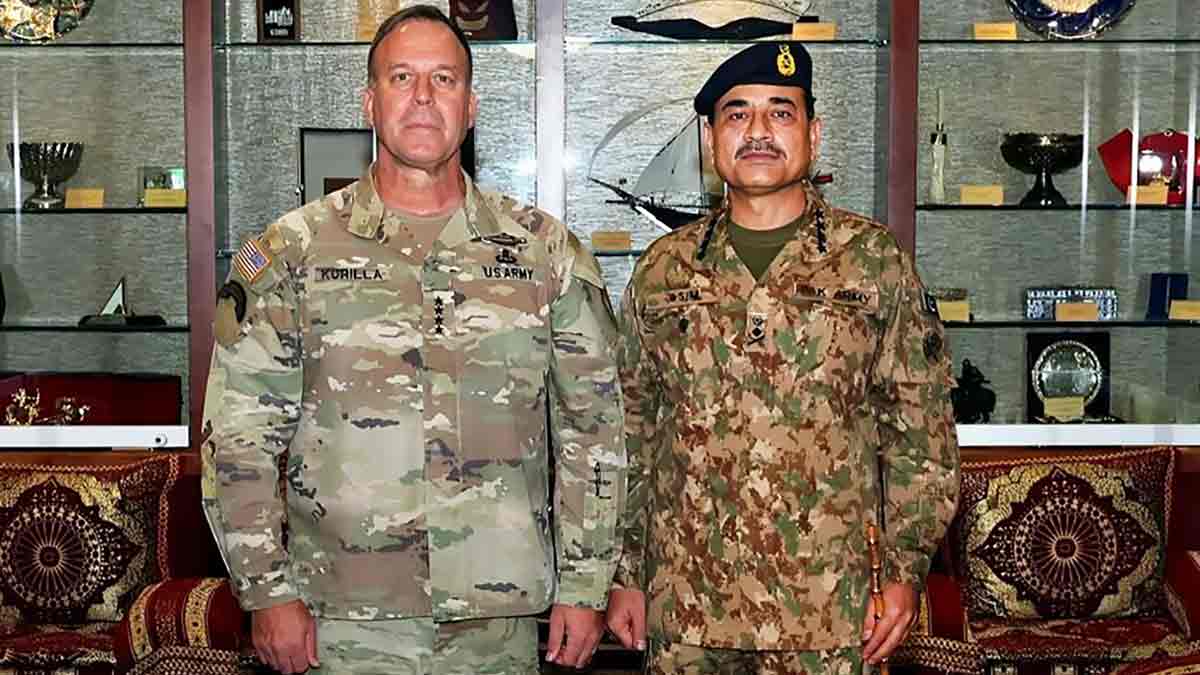
This historical context raises questions about why the Trump administration, after the recent India-Pakistan conflict, has chosen a cooperative approach with Islamabad. Despite its close ties with India, why was the US unconvinced by New Delhi’s assertion that Pakistan was behind the Pahalgam terror attack? Why was Pakistan army chief Field Marshal Asim Munir invited to the US and granted an audience with President Donald Trump? How would Munir’s visit influence American policy towards Pakistan? If Pakistan is indeed a ‘phenomenal partner in the world of counter-terrorism’, as mentioned recently by General Michael Kurilla who heads the American Central Command, why then does Washington periodically urge Islamabad to ‘do more’ in the fight against terrorism?
The nature of the partnership between Pakistan and the US must be examined from three angles. First, by drawing closer to the Pakistani military, the US may be signalling to India that it should consult Washington before taking any future military action against Pakistan. Trump may also be displeased with Prime Minister Narendra Modi’s government for criticising his social media post announcing the ceasefire between India and Pakistan, and for downplaying his self-proclaimed role in averting a nuclear war.
Ironically, even as members of Congress push legislation targeting Pakistan’s military, Munir’s visit sends a different message. Analysts suggest that Munir aims to assure that Pakistan is committed to cooperation in counter-terrorism efforts, though likely excluding support for American operations involving Iran and Yemen.
Second, if viewed historically, the Pakistan-US ‘courtship’ has always been a temporary phenomenon, rooted in longstanding mutual distrust. What is noteworthy is that the very same issues of ‘reliability’ and ‘trust’ that have plagued Pakistan-US ties are now beginning to affect India-US relations. Following the Trump administration’s unexpected shift during the recent conflict, some circles in New Delhi have started questioning the dependability of the US. Trump’s offer to mediate in Kashmir only intensified India’s frustration. Since the signing of the Simla Agreement in 1972, India has firmly opposed any external mediation in its disputes with Pakistan.
Lastly, despite the Pakistani military’s ongoing efforts to strengthen ties with Washington, prevailing anti-American sentiment in Pakistan and the perception that the US may again abandon Islamabad cannot be overlooked. The outcome depends in part on the strength of the Indian lobby in Washington and its influence on the Trump administration’s tilt towards Islamabad after the May hostilities.
India must reflect on why the international community, particularly the US, has not accepted India’s narrative on the Pahalgam incident. The US, despite tensions with China, has remained silent on Beijing’s decisive military support to Pakistan during the May conflict. India needs to recognise that America’s engagement with Pakistan is driven by strategic geography and regional power interests, not loyalty. In realpolitik, allegiance counts for little.
The author teaches international relations at the University of Karachi.
