
Map Shows All Countries Facing Steep New Tariffs From Trump
A Newsweek map illustrates the geographic scope of the steep tariffs that President Donald Trump will impose on at least 14 countries starting next month.
Trump shared images on Truth Social of the missives, which warned leaders from Asia, Europe, and Africa that any retaliation with increased import taxes would result in further levies from the United States.
The White House said that additional letters would be sent to world leaders this week.
Why It Matters
Trump dubbed April 2, 2025, “Liberation Day” in announcing tariffs to counter what he described as the exploitation of the U.S. in trade. The levies were intended to mirror foreign trade barriers imposed on U.S. exports.
Following heavy market losses, Trump announced a 90-day pause on April 9, lowering the tariff rates to a flat 10 percent. This pause for negotiations was due to expire on Wednesday, but Trump has extended it to August 1.
As concerns grow over global trade being upended, Trump’s letters, made public on Monday, show his intent to push through with the measures.
What To Know
On Monday, Trump posted the first batch of letters to the leaders of 14 countries on Truth Social. The White House stated that more letters would follow, whose language suggested that these were not the final word on tariffs, which could be adjusted depending on Washington’s relations with the country.
Trump shared screenshots of the missives outlining tariff rates to the leaders of Japan, South Korea, Malaysia, Kazakhstan, South Africa, Laos and Myanmar.
Later, he posted another set of seven letters to the leaders of Bosnia and Herzegovina, Tunisia, Indonesia, Bangladesh, Serbia, Cambodia and Thailand.
The letters listed a range of tariffs. Goods entering the U.S. from Japan, South Korea, Malaysia, Kazakhstan, and Tunisia will be subject to a 25 percent levy. There will be a 30 percent levy on South African and Bosnian goods, while imports from Indonesia will be subject to a 32 percent rate.
Tariffs for Bangladesh and Serbia have been set at 35 percent, while Cambodia and Thailand face a 1 percent higher rate. In contrast, regional neighbors Laos and Myanmar are subject to a 40 percent duty.
Apart from Malaysia and Japan, all the countries Trump sent letters to Monday face levies either less than or the same as the ones announced on April 2.
Trump has also stated that countries aligned with the “anti-American” policy goals of the BRICS, comprising Brazil, Russia, India, China, South Africa, and other emerging economies, would face additional tariffs of 10 percent.
Richard Gardiner, a senior analyst at S-RM, told Newsweek that the 10 percent tariff threat is a source of concern for BRICS members with the highest U.S. trade exposure, particularly China and India.
“BRICS members have already sought to reduce dependence on the US dollar, develop alternative payment systems, and increase local currency financing,” he said. “Should President Trump follow through on his tariff threat, these efforts may be accelerated, with renewed urgency to shield their economies from U.S. policies.
Meanwhile, China will retaliate if the Trump administration restores huge tariffs on its goods, according to an op-ed in the state-run newspaper People’s Daily, which derided Trump’s “bullying” levies and threatened action against countries doing business with the U.S. that cut Beijing out of supply chains.
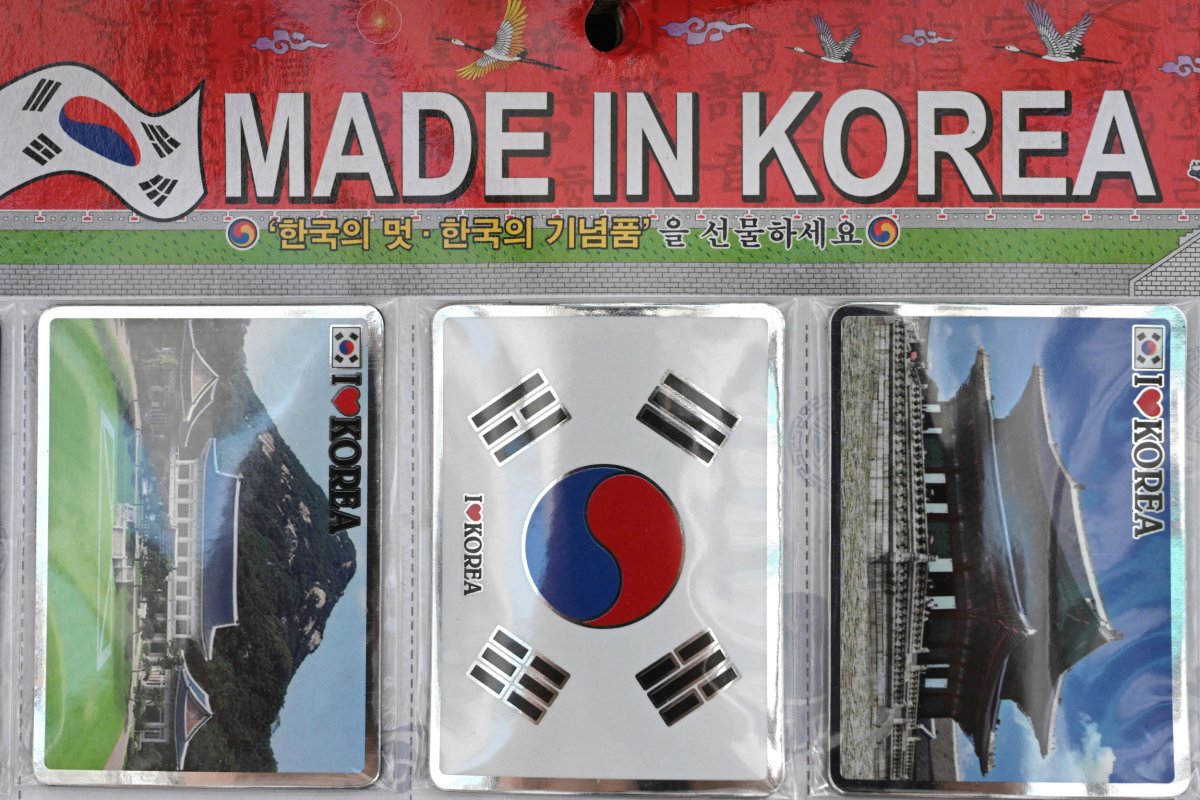
A sign reading “Made in Korea” is seen at a souvenir shop in Seoul on July 8, 2025.
Jung Yeon-je/Getty Images
What People Are Saying
The letters President Donald Trump signed and posted on Truth Social said that the U.S. will “perhaps” consider adjusting the new tariff levels, “depending on our relationship with your country.”
Trump said Monday night at the White House that the August 1 deadline for a tariff deal was “firm, but not 100 percent firm. If they call up and they say would like to do something a different way, we’re going to be open to that.”
Josh Lipsky, chair of international economics at The Atlantic Council, as per the Associated Press, said of Trump’s three-week deadline extension: “I take it as a signal that he is serious about most of these tariffs and it’s not all a negotiating posture.”
What Happens Next
Trump’s team had boasted that 90 deals could be done in 90 days, but so far, only two trade frameworks have been established, meaning that the August 1 deadline sets up three weeks of frenzied talks among the U.S. and its trade partners.
