
Marcos to visit Washington ‘in a few days’
MANILA, Philippines — President Ferdinand Marcos, Jr. is set to visit Washington, DC, “in a few days,” State Secretary Marco Rubio said in a briefing on Thursday, July 10, on the sidelines of the ongoing Association of Southeast Asian Nations (ASEAN) Ministerial meeting in Malaysia.
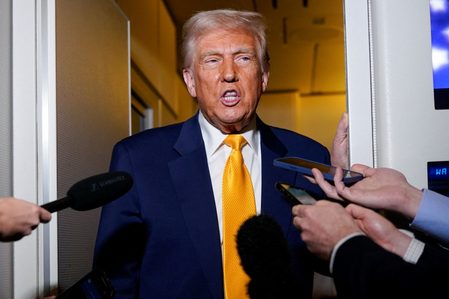
The announcement came shortly after US President Donald Trump upped his so-called “reciprocal” tariff on goods imported from the Philippines.
Malacañang confirmed the visit Monday noon, saying the schedule will be from July 20 to 22.
“We have a great relationship with Japan and the Philippines, and work very closely with them on the economic corridor, on maritime security, and territorial integrity — and continue to build upon that partnership, and look forward to hosting the president of the Philippines in Washington in a few days,” said Rubio, following a trilateral meeting with newly-appointed Philippine Foreign Secretary Maria Theresa Lazaro and Japanese Foreign Minister Iwaya Takeshi.
Marcos’ cousin and Philippine envoy to the United States Jose Manuel Romualdez said they were still “finalizing” details.
On July 10, Trump — initially, through social media posts — announced a 20% tariff on Philippine products that would enter the US, three percentage points higher than the previously announced 17% rate. Romualdez has said they would negotiate with the US to lower the tariffs. Philippine trade officials are set to visit Washington next week for negotiations.
The Philippines and the United States are treaty allies with a relationship that grew closer under Marcos and Trump’s predecessor, Joe Biden. It was under Biden that a leaders-level summit between the Philippines, Japan, the United States took place in the White House.
In a separate statement, the Philippines’ Department of Foreign Affairs (DFA) said that Lazaro, Rubio, and Takeshi “discussed strengthening security cooperation and reaffirmed commitment to safeguarding regional peace, stability and freedom of navigation in the South China Sea.”
Lazaro, said the DFA, “expressed appreciation for the United States and Japan’s enduring support for the Philippines’ position in the South China Sea and the United States’ steadfast commitment to the Mutual Defense Treaty.”
The new tariffs were not discussed but Lazaro said “in order for us to be politically strong, we have to be economically strong,” referring to the Luzon Economic Corridor. – Rappler.com
