
Death Cafes, Now In India: No Therapy, No Religion. Just Mortality On The Menu
Last Updated:August 01, 2025, 13:03 IST
Death Café offers a space for people to discuss death and life in a comfortable, non-judgmental setting. By sharing experiences and fears, individuals find solace and understanding

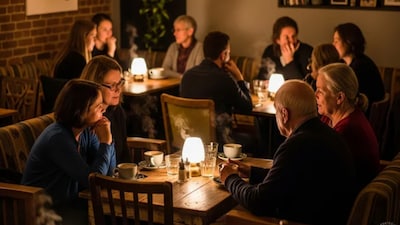
This simple yet profound concept spread quickly across the globe, and today there are over 15,000 Death Cafés in more than 80 countries. (AI Generated/News18 Hindi)
In a world where talking about death is often avoided or considered taboo, Death Cafés provide a safe and welcoming space to address one of life’s most inevitable subjects: death. These cafés are not like any other ordinary café. People gather here not only to enjoy tea, coffee, and cake, but also to share their feelings, experiences, and thoughts about life and death, in an open and non-judgmental environment.
What Happens At A Death Café?
Recommended Stories
The idea behind a Death Café is simple: it is a space for people to come together and openly discuss death, life, and everything related to it. There is no fixed agenda, no religious rituals, and no therapy sessions. Instead, attendees are encouraged to share their personal stories, fears, philosophies, and reflections on death.
Conversations can range from the emotional aspects of losing loved ones to contemplating one’s own mortality. The goal is to help people come to terms with death, reduce the stigma around it, and better understand life.
- No Fixed Agenda: There are no pre-determined topics. The conversation flows naturally based on the participants’ experiences and interests.
- No Propaganda or Expert Speakers: These sessions are not meant to push any ideology or therapy, but to encourage genuine dialogue among equals.
- Equal Freedom: Everyone has the right to share or listen at their own pace.
Sessions are typically held in a casual and friendly environment like a regular café or a library, where attendees can enjoy drinks and snacks while discussing serious topics. The idea is to create a relaxed atmosphere that encourages participants to open up without any pressure.
How Death Cafés Have Helped People Cope With Grief
While the concept might sound morbid at first, the impact of Death Cafés on participants is overwhelmingly positive. The conversations held in these spaces can be life-changing, helping individuals cope with grief, depression, and existential questions.
Here are a few heart-wrenching stories of people whose lives were touched by the Death Café:
- A Mother’s Journey of Grief: A woman in London, who had lost her 19-year-old son in an accident, spent years in grief without speaking to anyone about her pain. When she finally shared her story at a Death Café, she felt an immense sense of relief. For the first time, she felt heard and understood, which allowed her to grieve without the burden of guilt or shame.
- A Young Man in Delhi: A 29-year-old man attended a Death Café in Delhi, where he confessed that he had never really considered death, being too caught up in life. After hearing other people’s stories, he realised that it was not death that scared him, but the fear of leading an incomplete life. This epiphany prompted him to complete and publish his long-forgotten novel within six months.
- A Family’s Final Wishes in Bengaluru: Three generations of a family, grandmother, mother, and granddaughter, attended a Death Café together. The grandmother, who was nearing the end of her life, shared her wish not to die in an ICU but rather under the Tulsi plant in her garden. Her daughter, doctor by profession, after listening to her mother’s wishes, noted it, realising how clearly her mother had planned her last days.
- A Young Man in Japan: A young man struggling with suicidal thoughts visited a Death Café in Japan. There, he was able to speak without fear of judgement or interruption. His experience gave him the courage to seek therapy, which led him to eventually find a reason to live.
Origins Of The Death Café Movement
The concept of the Death Café was first introduced in 2011 by John Underwood and his mother, Suzy Willment, in the United Kingdom. Their inspiration came from Buddhist philosophy and the teachings of Swiss sociologist Bernard Crettaz, who advocated for open discussions about death.
The first gathering was held in their basement, where they invited people to share their thoughts on death over tea and cake. This simple yet profound concept spread quickly across the globe, and today there are over 15,000 Death Cafés in more than 80 countries.
Death Cafés In India: Slowly Gaining Acceptance
While discussing death remains a sensitive topic in India, the concept of Death Cafés is slowly gaining acceptance, particularly in urban areas such as Delhi, Mumbai, Bengaluru, and Pune. Despite the cultural stigma surrounding conversations about death, many people are now realising the therapeutic value of these discussions.
In Bengaluru, Karnataka, mental health organisations and individual initiatives have hosted Death Cafés, and the first formal one in Delhi was organised in 2019.
At these gatherings, attendees discuss not only personal experiences with loss but also cultural views on death, including Hindu, Buddhist, and Islamic perspectives. Topics like end-of-life care, wills, and euthanasia are common, along with creative discussions involving poems, art, and literature related to death.
Why Death Café Matters
Talking about death may seem uncomfortable, but it is essential for normalising the subject and reducing the fear surrounding it. Discussing death can actually improve mental health by offering a sense of relief, allowing people to express their grief, loneliness, or depression in a supportive environment. It helps people lead more meaningful lives and can deepen emotional and social bonds among individuals, even those who were strangers at the start.
While some may misunderstand Death Cafés as promoting superstition or even suicide, they are entirely voluntary, support-based, and designed to offer philosophical and cultural dialogue, not therapy or treatment.
They provide a safe and open space for individuals to confront their thoughts and fears about death, ultimately allowing them to live a more fulfilling life.
How You Can Participate
If you’re interested in attending or organising a Death Café in your area, visit the official website Death Café for more information. You can find local events happening nearby, or even host one in your own café or library. It’s a simple and profound way to reflect on life and death with others who are willing to listen and share.
view comments
Read More
