
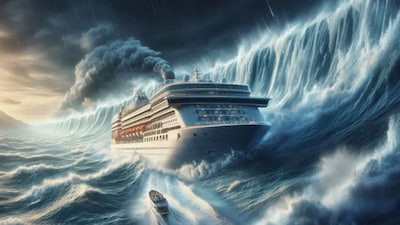
Why Are Cruise Ships Safer In The Middle Of A Tsunami Than At Port? Explained
Last Updated:August 02, 2025, 11:30 IST
Cruise ships are generally safe during a tsunami if they are in the open ocean, as the waves remain low in deep water but become taller and more powerful in shallow waters

In deep ocean water, where it’s more than 180 feet deep, tsunami waves are extremely long but relatively low in height.
People often assume that cruise ships in the middle of the ocean are completely safe, surrounded by calm waters, far from land, and aboard what feels like a floating hotel. But when a tsunami alert is issued, even these massive vessels spring into emergency mode.
That’s exactly what happened recently after an 8.8-magnitude earthquake struck near Russia on July 30, sending tsunami warnings across the Pacific, from Japan to Hawaii and Alaska. The incident has sparked renewed curiosity: Are cruise ships actually at risk during a tsunami? The answer is more surprising than one might expect. In open waters, cruise ships are actually among the safest places to be.
Recommended Stories
Safe In Deep Ocean
When people hear the word ‘tsunami’, they often picture a towering wall of water crashing down. However, that image doesn’t reflect the reality of what happens out at sea. In deep ocean water, where it’s more than 180 feet deep, tsunami waves are extremely long but relatively low in height. These waves may travel at jet-plane speed, but they’re hardly noticeable to a ship cruising over them, much like a car driving over a slight speed bump.
However, as these waves approach the shore and the water gets shallower, their speed drops, their energy becomes compressed, and their height increases dramatically. That’s when the waves become dangerous. The devastation tsunamis cause is almost always concentrated near coastal areas, not in the middle of the ocean.
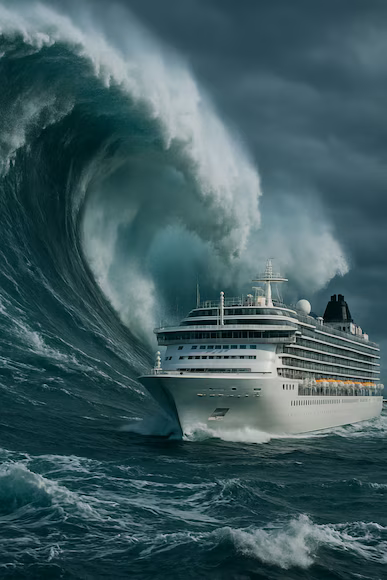
Greater Risk To Docked Ships
Ships docked at ports or anchored near the shore are at much higher risk during a tsunami. A sudden rise or fall in water level can destabilise the ship. Strong currents may drag it, causing it to crash into piers or collide with other vessels. Floating debris, such as containers or broken docks, also pose serious threats.
This is why, as soon as a tsunami warning is issued, cruise companies immediately move their ships out to deep waters, even if all passengers have not yet returned. Safety protocols prioritise the ship and those already on board.
During the recent alert in Hawaii and Alaska, several cruise ships were ordered to leave the docks without delay. Videos quickly went viral showing passengers running to catch their ships, with some missing them by just a few seconds.
One viral TikTok video showed people trying to catch up by bus, only to find the ship had already departed. Some ships even left with fewer passengers, prioritising safety over schedules.
How Cruise Ships Prepare
Modern cruise ships aren’t just built for luxury; they are designed with advanced safety systems. These include satellite-based monitoring, real-time weather updates, tsunami alert networks, and emergency training for captains and crew. When a tsunami alert is received, cruise ships may:
- Cancel scheduled port stops
- Delay returning to shore
- Change course
- Activate emergency protocols
While these changes may disappoint some passengers, safety always takes precedence.
view comments
Read More
