
Opinion | PM Modi’s China Visit: Strategic Balancing Or A Reset In Asian Power Equations?
Last Updated:August 11, 2025, 14:16 IST
PM Modi’s China visit could mark the start of a more mature phase in India’s foreign policy, one that balances engagement with all major powers while bowing to none


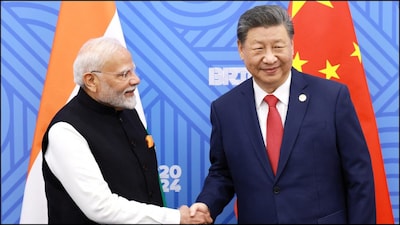
By improving dialogue with China and Russia through forums like the SCO, India strengthens its negotiating position vis-à-vis the US. (Image: PTI/File)
Prime Minister Narendra Modi’s upcoming visit to China for the Shanghai Cooperation Organisation (SCO) summit in Tianjin from August 31 to September 1 marks his first trip to the country in seven years. According to Indian media reports, this engagement may also provide him an opportunity to meet President Xi Jinping for the first time since their brief encounter in Russia 10 months ago. The timing is significant. It comes at a moment when India’s relations with the United States, once touted as a rising strategic partnership, have been strained by Washington’s growing protectionism. The latest flashpoint: US President Donald Trump’s decision to impose 50% tariffs on Indian goods, ostensibly over New Delhi’s continued purchase of Russian oil.
India-China relations have been in a deep freeze since the deadly June 2020 Galwan Valley clash, which resulted in the loss of lives on both sides and pushed the relationship to its lowest point in decades. However, over the past year, there have been cautious but deliberate steps towards thawing ties. China has reopened access to Tibet for Indian pilgrims, whereas India has eased visa restrictions for Chinese travellers, and both sides have signalled intent to restore direct flights.
Recommended Stories
Defence and foreign ministers of both nations have met in recent months, and the latest round of border talks was described as “positive” by diplomats. These are not signs of trust restored, but they are indications of mutual recognition that perpetual hostility is strategically costly.
India joined the SCO in 2017, but its engagement has been uneven, largely because the bloc is dominated by China and Russia, both countries with which New Delhi has complex relations. Now, PM Modi’s attendance could be read as an attempt to re-energise India’s role in the organisation. For China, the visit offers a chance to show that it can manage and even improve ties with a major Asian rival, countering narratives of Beijing’s isolation. For India, the SCO serves as an alternative multilateral forum where Asian powers without Western oversight can discuss security, trade, and connectivity. This becomes more relevant as Washington increasingly weaponises trade policy against its own supposed partners.
Trump’s tariff hike is not just an economic irritant; it’s a strategic blunder. It risks pushing India, the very country the US has courted as a counterweight to China, into exploring alternative partnerships. New Delhi has categorically rejected the US tariffs as “unfair, unjustified, and unreasonable.” From a realist perspective, the US is learning the hard way that India will not be a subordinate ally. New Delhi’s foreign policy is rooted in strategic autonomy, a doctrine that predates Modi and has been reinforced in his tenure.
While India has deepened defence cooperation with the US in recent years, it has never been willing to completely align with Washington’s geopolitical agenda, especially when it comes at the cost of relations with Russia or China.
Critics within hawkish Indian circles will point to Beijing’s aggressive behaviour in the South China Sea, its deepening military ties with Pakistan, and its Belt and Road projects in India’s neighbourhood as reasons to be sceptical about any rapprochement. These are valid concerns. Indeed, just this week, India conducted joint naval drills with the Philippines in the South China Sea, drawing a sharp response from China. Both New Delhi and Manila reiterated support for the 2016 Hague tribunal ruling that dismissed Beijing’s expansive maritime claims, a ruling China has rejected outright.
This demonstrates that India is not softening its stance on principles of international law or freedom of navigation, even as it engages Beijing in other domains.
What PM Modi appears to be doing is balancing, not bending. By improving dialogue with China and Russia through forums like the SCO, India strengthens its negotiating position vis-à-vis the US. Washington’s tariff threats and China’s border disputes are both challenges; but playing one against the other gives New Delhi room to manoeuvre.
From a nationalist, India-first perspective, PM Modi’s China visit must be assessed on cold, hard metrics of national interest, not ideological sentiment. It is neither a “pivot to Beijing” nor a betrayal of the Indo-US partnership. Instead, it is a reminder that India’s destiny will not be scripted in Washington or Beijing, but in New Delhi.
India cannot afford to be a pawn in great power games. Whether dealing with Trump’s tariff tantrums or Xi’s border assertiveness, the goal is the same: safeguard India’s economic growth, national security, and strategic autonomy. If engaging with China at the SCO helps secure better trade terms, reduces military tensions, or gains leverage against the US, then it is a tactical move worth making.
The key question is whether this thaw will translate into structural changes in the India-China relationship or remain limited to tactical de-escalation. The border dispute remains unresolved. China’s strategic partnership with Pakistan is deepening. India’s role in the Quad (with the US, Japan, and Australia) continues, signalling that New Delhi still sees Beijing as a challenge in the Indo-Pacific. Yet, history shows that adversaries can find common ground when circumstances demand it.
In the 1970s, the US and China normalised relations not because they trusted each other, but because they shared a common interest in countering the Soviet Union. Today, India and China face a different but equally compelling reality: both are targets of US economic coercion, both have stakes in regional stability, and both need breathing space to focus on domestic priorities.
If handled with strategic clarity, PM Modi’s China visit could mark the start of a more mature phase in India’s foreign policy, one that balances engagement with all major powers while bowing to none. In the era of shifting alliances and unpredictable leaders, that is not just wise diplomacy; it is the essence of sovereignty.
The writer is a technocrat, political analyst, and author. He pens national, geopolitical, and social issues. His social media handle is @prosenjitnth. Views expressed in the above piece are personal and solely those of the author. They do not necessarily reflect News18’s views.
About the Author

The writer is an Indian technocrat, political analyst, and author.
The writer is an Indian technocrat, political analyst, and author.
view comments
Read More
