
Rain Batters Mumbai, But Better Coordination, Social Media Updates Keep City Afloat
Last Updated:August 19, 2025, 14:31 IST
Unlike previous years, there was better coordination between civic agencies, efficient manpower deployment, and the effective use of social media by the BMC and Mumbai Police



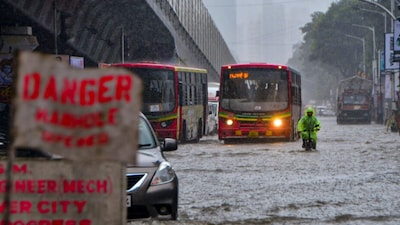
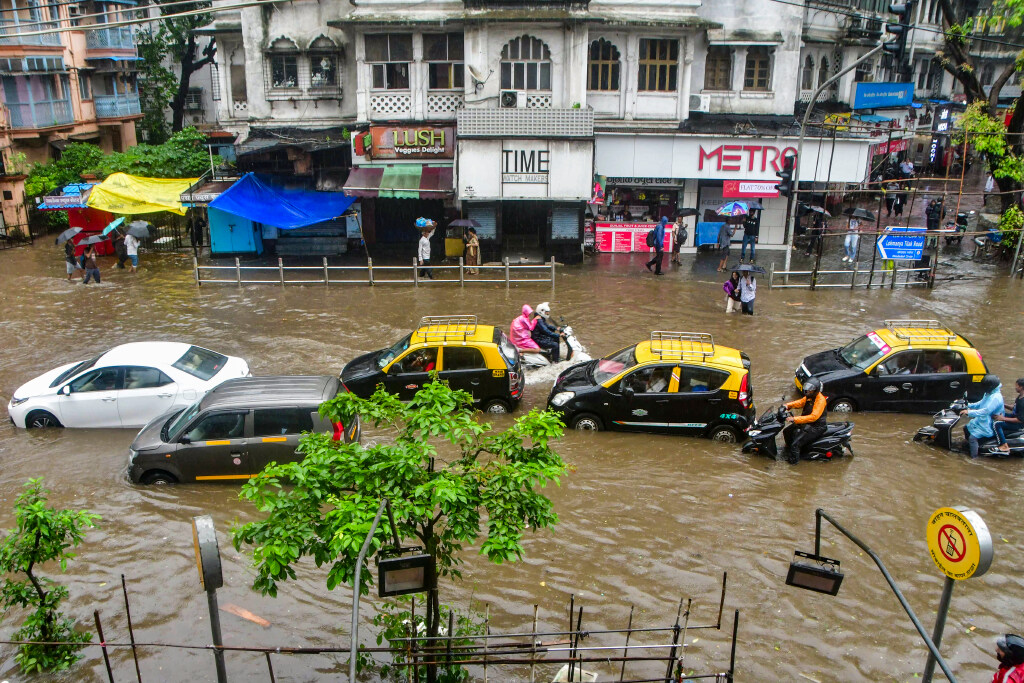
Mumbai rain: Commuters wade through a waterlogged road in Hindamata area on Monday. (PTI)
Mumbai has been experiencing heavy rainfall for the past four days, marking the return of city’s monsoon woes. While the usual flooding spots in low-lying areas remained inundated and railway services were hit, there was one key difference in the way Mumbai dealt with the deluge this time – proactive communication strategy.
Unlike previous years, there was better coordination between civic agencies, efficient manpower deployment, and the effective use of social media by the Brihanmumbai Municipal Corporation (BMC) and Mumbai Police. Citizens receive timely and accurate information about rainfall updates, traffic diversions, and safety precautions, which, in turn, improved the city’s rain response.
Recommended Stories
Coordination: BMC’s new keyword for Mumbai authorities
This year, Mumbai authorities decided to shift their focus from only physical pre-monsoon work to strengthening inter-agency communication. The BMC held several rounds of meetings with the MMRDA, Railways, the Navy, MSRDC, Mumbai Police, and the India Meteorological Department (IMD) to ensure that during emergencies all agencies share infrastructure and information in real time.
The results of this planning were visible. Over the past two days, when Mumbai witnessed intense showers and waterlogging in low-lying areas, there were no major untoward incidents. Even during low tide, when some areas reported flooding, the situation remained under control due to rapid response and advance deployment of teams.
BMC chief’s perspective
Speaking to CNN-News18, BMC Chief Bhushan Gagrani explained the new approach. “This time we went back to basics. I believe that unless any agency goes on the ground, it cannot fully understand the issue. During our pre-monsoon meetings, I insisted that all stakeholders should physically inspect problem-prone spots. This exercise helped us identify challenges first hand and find workable solutions. Another crucial aspect we focused on was effective and continuous communication between agencies. This ensured everyone had updated information at the right time.”
The BMC also ensured that wherever waterlogging was expected, their teams were pre-positioned before heavy rain began. This proactive strategy reduced delays and helped in quick responses.
🌧️भारतीय हवामान विभागाने बृहन्मुंबई क्षेत्रासाठी आज (दिनांक १९ ऑगस्ट २०२५) दिलेला अतिमुसळधार पावसाचा इशारा (Red Alert) आणि सातत्याने कोसळत असलेल्या जोरदार पावसाच्या पार्श्वभूमीवर, राज्याचे कौशल्य, रोजगार, उद्योजकता व नाविन्यता मंत्री तथा मुंबई उपनगरे जिल्हा सहपालकमंत्री श्री.… pic.twitter.com/TfRRHXkEcp— माझी Mumbai, आपली BMC (@mybmc) August 19, 2025
Mumbai Police on the ground
The Mumbai Police also played a key role during the downpour. Personnel were deployed at vulnerable flooding points across the city. In visuals that went viral over the past two days, police officers were seen helping schoolchildren cross roads after buses got stranded in waterlogged areas. At several locations, they were spotted assisting drivers in pushing stalled vehicles through waist-deep water.
In areas such as the Andheri Subway, where the water level often rises above four feet, police were stationed to divert traffic and prevent accidents. Similar scenes were reported at Sion and Chunabhatti, where officers managed traffic and guided motorists towards alternative routes after main roads became submerged.
Advantage social media
Another striking difference this time was the heavy reliance on social media platforms. Both the BMC and Mumbai Police used ‘X’ (formerly Twitter) to keep citizens updated in real time. The BMC’s handle, @MyBMC, with 985.3k followers, and Mumbai Police’s handle, @MumbaiPolice, with a massive 4.8 million followers, became vital channels of communication.
The BMC posted weather alerts, advisories, and nowcast warnings, while the Mumbai Police not only issued traffic updates but also circulated a message from the Police Commissioner urging citizens to stay indoors during heavy downpours.
“Social media gives us instant feedback from the ground. If our teams have not reached a spot, citizens immediately alert us, and we mobilize resources faster. We also requested the Mumbai Police to share our advisories since their follower base is much larger. This helped us reach more people with accurate information in a world full of misinformation,” Gagrani explained.
Thanks @MumbaiPolice @MatungaPS My 9 year old can be seen in the video we will always be grateful for this incredible help. Special appreciation for Constable Kale for answering our calls and assuring us that the girls are safe.Salute 🫡 to the superheroes. https://t.co/CXv0Preo0M— shwetabajpaikadam (@shwetabajpai983) August 18, 2025
Is it a Mumbai problem or a global urban problem?
During every monsoon, the BMC has been on the receiving end of criticism from all quarters. The civic body carries out road repairs, desilting works, and stormwater drain cleanups before the monsoon begins. Yet, whenever heavy and continuous rain lashes the city, waterlogging is reported at the same chronic spots — Gandhi Market, Chunabhatti, Andheri Subway, Kurla, and Sion. Citizens are quick to blame the BMC for not carrying out pre-monsoon work thoroughly.
However, Mumbai is not alone in facing this urban flooding crisis. Even some of the world’s most modern and well-equipped cities deal with the same problem every year.
In the USA, Houston, Miami, and New Orleans often experience severe flooding. In China, cities like Beijing, Guangzhou, and Wuhan regularly face waterlogging. In the UK, London and Manchester deal with rain-induced disruptions, while in Australia, Sydney and Brisbane often experience flood-like conditions during heavy rain. These global examples show that even advanced infrastructure and resources cannot always fully prevent flooding.
🔹अतिमुसळधार पावसामुळे मुंबईतील उपनगरीय रेल्वे सेवा विस्कळीत झाली. परिणामी विविध रेल्वे स्थानकांवर अडकलेल्या प्रवाशांना बृहन्मुंबई महानगरपालिकेच्या वतीने पाणी, चहा, बिस्कीट व इतर खाद्यपदार्थ पुरवण्यात येत आहेत.___
🔹Mumbai’s suburban train services are disrupted due to heavy… pic.twitter.com/HXMPlZHZkv
— माझी Mumbai, आपली BMC (@mybmc) August 19, 2025
The bigger challenge ahead for Mumbai
While the improved coordination and communication helped Mumbai cope better this year, flooding in the city remains a long-term challenge for the civic authorities. With rapid urbanisation, new infrastructure projects, and rising residential complexes, the pressure on Mumbai’s drainage system continues to increase. Experts argue that merely deploying heavy-duty pumps to drain water from low-lying areas is not a sustainable solution.
Global best practices point towards modern approaches such as rainwater harvesting, building underground storage tanks in flood-prone zones, elevating road levels, and constructing bridges to ensure uninterrupted transportation. Cities such as Tokyo, Singapore, and Seoul have adopted such strategies with measurable success.
For Mumbai, being an island city with unique geographical constraints, the challenge is even greater. The civic authority will need innovative and long-term solutions to truly tackle the issue of urban flooding. Until then, each monsoon will continue to test the city’s resilience, its civic infrastructure, and the patience of its people, say experts.
About the Author

Mayuresh Ganapatye, News Editor at News18.com, writes on politics and civic issues, as well as human interests stories. He has been covering Maharashtra and Goa for more than a decade. Follow him at @mayuganapa…Read More
Mayuresh Ganapatye, News Editor at News18.com, writes on politics and civic issues, as well as human interests stories. He has been covering Maharashtra and Goa for more than a decade. Follow him at @mayuganapa… Read More
Loading comments…
Read More
