
‘I thought I had a hangover but it was actually lethal infection’
Alysha Pyrgotis, 27, was left vomiting and with ‘extreme diarrhoea’ after catching typhoid on the remote Indonesian party island of Gili Trawangan in June this year
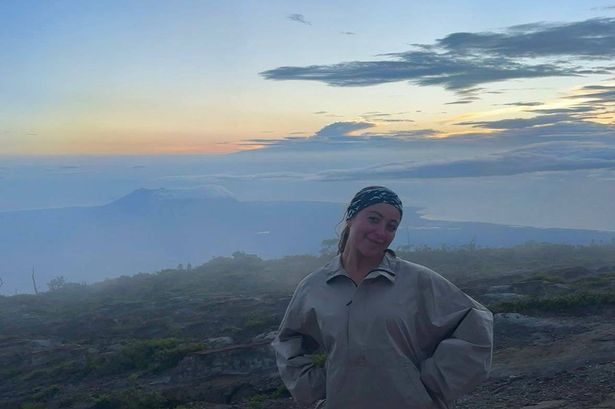
A British backpacker has revealed how what she believed was a post-party hangover actually turned out to be a lethal infection that claims the lives of more than 100,000 people annually.
Alysha Pyrgotis, 27, was left being sick and suffering from ‘severe diarrhoea’ after contracting typhoid on the isolated Indonesian party island of Gili Trawangan in June this year.
She said: “I was bed bound, in a lot of pain with my muscles and my bones. I was a bit delirious. I couldn’t concentrate at all, that’s when I started to panic.
Read more: Law on flying St George’s flag
“The guy I was travelling with at the time started to realise I was quite poorly, I wasn’t hungover.
“He spoke to the person at the hostel and we had a look online, there weren’t any hospitals or anything.
“I was on a very small island, there wasn’t really healthcare, it was just really unlucky that I was there at the time.”
A local medic visited Alysha and examined her blood to discover she had contracted typhoid – a bacterial infection that can prove fatal for one in five sufferers who don’t receive treatment.
The backpacker, from Bradford, West Yorkshire, suspects she may have picked up the infection from contaminated food.
She said: “I thought I was going to die, to be honest. It was that bad, I was literally like ‘this is it’.
“I was so frustrated as I was so close to the end of my trip. I’d been unwell before, but not that unwell before.
“I was really worried about telling my family – I didn’t tell them, actually, because they were having a lot of stress at work at the time. I didn’t tell them until after I’d been poorly.
“I just thought it was not going to end well for me. I was panicking as I knew I had to leave the country soon, I was really, really scared.”
Alysha continued: “It was just like my body didn’t want anything inside it, it was trying to get rid of everything.
“I didn’t eat anything for the whole time I was really ill – probably five or six days.
“Even water, I would sip water and it would come straight back up.
“It was a very, very extreme sickness.”
Following six days receiving treatment via drip in a tiny, confined medical facility, Alysha was given a negative typhoid result and faced having to leave the nation.
She explained: “I had to get out of Indonesia because my visa would run out. I’d spent almost my whole time in Indonesia being sick.
“I had to get out, I had a flight to Thailand.
“They took me off the drip and the next day I had to fly to Bangkok.
“I still was very sick, the flight was horrific.
“Even the next few days in Bangkok were very difficult, I couldn’t do anything.
“The lasting effects of it were still a couple of weeks of not feeling quite right.”
The ex-social media marketing professional was midway through a seven-and-a-half-month overseas adventure when she was struck down by the illness.
After a relationship ended, Alysha made the impulsive choice to jet off to southern Thailand in December 2024. She then travelled to Cambodia, Vietnam, Laos, and the Philippines before heading to Indonesia.
Now, she’s advising anyone who visits these nations to ensure they wash their hands and monitor what they consume.
Alysha said: “I’m not going to say ‘nobody pet the stray animals’, because that’s one of my favourite parts of travelling.
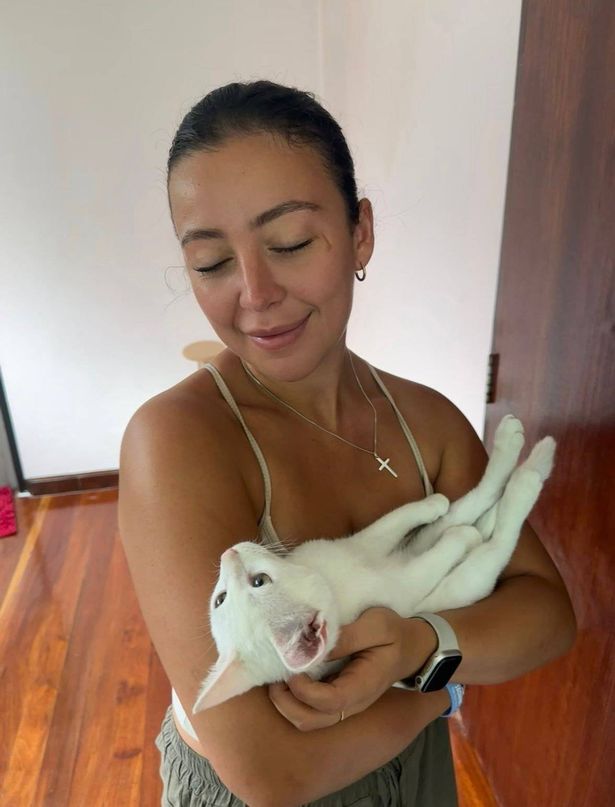
“I think washing your hands is really important afterwards, because that’s something I really didn’t do.
“I was in the middle of nowhere petting stray animals and then going about my day for hours and hours without access to any water to wash my hands in, I didn’t bring any sanitiser either.
“I think general handwashing, being careful with what you eat out there.
“A lot of street food you eat isn’t kept in clean conditions, it’s in a hot country on the street.
“Chicken is sat out for hours and the cleaning utensils are probably not cleaned to the standard you would in the west.
“I just wasn’t careful where I ordered my food from.
“I was just eating everything that looked good and smelled good at the time – and that’s probably not the wisest thing to do.”
According to the NHS, typhoid fever is transmitted through contaminated food or water.
Signs include high temperature, headache, coughing, chills, aches, pains, feeling tired, constipation, and a lack of hunger.
Those journeying in areas where there’s a risk of contracting it are recommended by the health agency to get a vaccination against the illness. Treatment for those who contract it is through antibiotics.
Some individuals who recover from the disease can become carriers who can still spread it for months or even years afterwards.
The NHS advises regular hand washing with soap and warm water, or using sanitiser gel if these are unavailable, as well as consuming bottled or boiled water and eating thoroughly cooked foods to help prevent catching or spreading the infection.
The health agency recommends avoiding ice in drinks, or consuming raw or lightly cooked meat or seafood and unwashed salad.
Dairy products made from unpasteurised milk and food that has been left uncovered can also pose a risk.
Typhoid vaccines are recommended for anyone aged over one year old when travelling to an area where there is a high risk of contracting typhoid.
Travellers are advised to see a GP six to eight weeks before travelling.
The vaccine lasts for three years and is available as an injection or tablets.
