
Honduras is not Venezuela – but Washington shouldn’t get this wrong
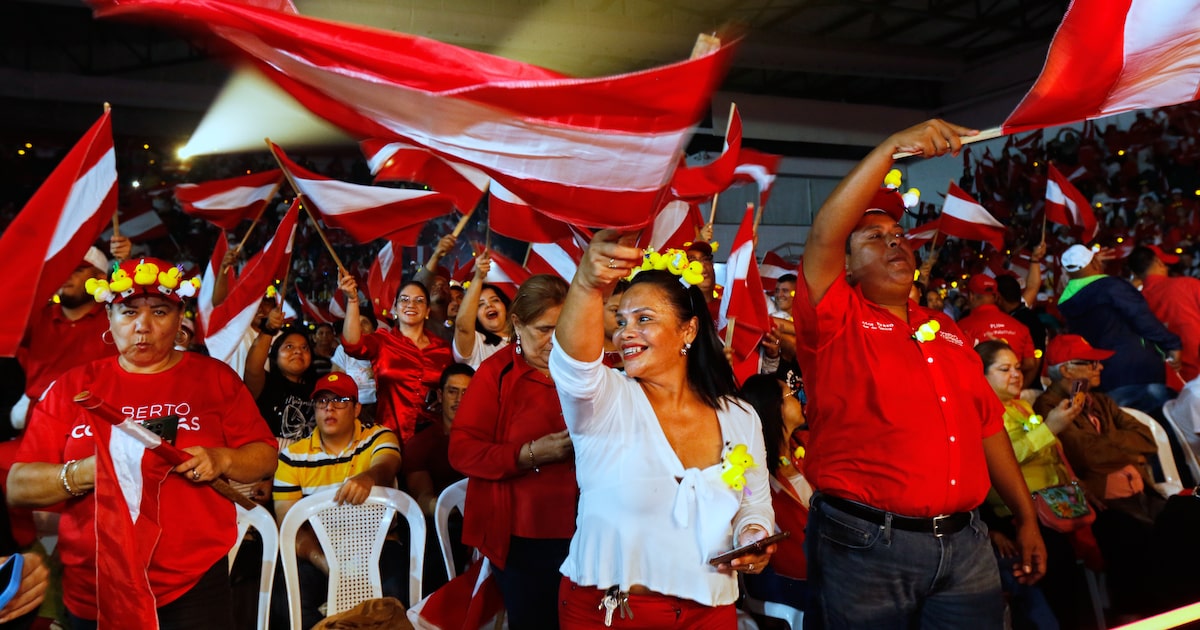
As Honduras prepares for general elections this Sunday, concerns over democratic backsliding are growing — and drawing pointed warnings from Washington. In a recent statement and social media thread, the House Foreign Affairs Committee’s majority accused the administration of President Xiomara Castro of rigging electoral institutions and consolidating power in the mold of Nicaragua and Venezuela. It’s a sharp — and politically charged — message from Congress.
The warning reflects real risks. Castro’s party has shown troubling signs of eroding checks and balances. But painting Honduras as the “next Venezuela” ignores key differences and oversimplifies a country still locked in democratic contestation. At worst, it fuels nationalist backlash and undermines a more constructive U.S. engagement.
Castro came to power in 2021, promising reform and accountability after a decade of corruption under the right-wing National Party. She is the figurehead of the leftist LIBRE party, founded by her husband and former president, Manuel “Mel” Zelaya, who was ousted in a 2009 coup. In 2025, she cannot run for re-election, but her government is working to keep LIBRE in power.
Her administration has drawn criticism for its handling of Honduras’ electoral institutions. Attorney General Johel Zelaya — an ally of the president — moved to criminally investigate two Electoral Tribunal magistrates over the certification of an opposition party’s internal election. This action defied a unanimous Supreme Court ruling affirming their immunity, prompting condemnation from the U.S. House Foreign Affairs Committee, which called it an attempt to intimidate election officials.
Such interventions have deepened fears that the Nov. 30 elections will not be free or fair. In a country with a history of contested results, institutional impartiality is crucial. The Organization of American States and domestic civic groups have urged the National Electoral Council and Tribunal to operate free from political pressure — and called for the military, which plays a constitutional role in election logistics, to remain neutral.
Cartel scandals and cronyism
Meanwhile, allegations of narco-corruption have once again surfaced — this time tied to Castro’s inner circle. In August 2024, the investigative outlet InSight Crime published a video from 2013 showing Carlos Zelaya, the president’s brother-in-law and then-party official, meeting with leaders of the Cachiros drug cartel to negotiate over $500,000 in campaign contributions. Zelaya admitted to the meeting but claimed he did not know their identities at the time and denied accepting funds.
The timing was politically explosive. Just days before the video surfaced, the Castro administration revoked the extradition treaty with the United States that had enabled the prosecution of major drug traffickers — including former President Juan Orlando Hernández, now serving 45 years in a U.S. prison for drug-trafficking.
The optics were unmistakable: A president under scrutiny for narco-links moved to close a key anti-corruption channel. Coupled with Defense Minister José Manuel Zelaya— Castro’s nephew — meeting with Venezuela’s sanctioned defense chief, the administration’s foreign and domestic alignments raised serious red flags in Washington. Castro, however, reversed course on ending extradition in February.
These are not minor concerns. Nepotism, cartel proximity, judicial interference and executive overreach represent real threats to Honduran democracy. But the alarmist comparisons to Venezuela or Nicaragua — while politically convenient — fail under closer scrutiny.
Unlike Venezuela, Honduras still permits a functioning opposition, an independent press and active civic watchdogs. While institutions are fragile, they are not yet extinguished. Several opposition candidates are running credible campaigns, and international observers from the OAS and European Union are planning to monitor the vote. Most important, the Honduran public has repeatedly shown a willingness to protest fraud and mobilize for accountability.
The danger lies not in denying the risks but in treating the country as already lost to authoritarianism. This framing undercuts efforts by Honduran reformers who continue to fight for democratic norms and creates space for the ruling party to deflect criticism as foreign meddling.
U.S. policy: Between alarm and engagement
Congressional Republicans have been especially vocal, framing the election as a battle between freedom and socialism. In recent hearings, committee members equated Castro’s government with Cuba’s and Venezuela’s regimes and warned of threats to U.S. national security. Such rhetoric may score political points domestically, but it risks undermining U.S. credibility in the region — particularly when similar scrutiny was absent during the National Party’s own abuses under Hernández.
Under the Trump administration, U.S. policy toward Central America appears shaped less by institutional strategy than by political posture. While the administration has been vocal in denouncing the Castro government’s ties to authoritarian regimes, it has shown limited interest in sustained diplomacy or support for electoral institutions. The risk is that Washington substitutes ideological signaling for actionable policy — escalating rhetoric while neglecting the practical levers of democratic engagement. Honduras’ election thus becomes a test not only of its own democratic resilience, but also of whether the United States can still play a coherent and constructive role in the region.
Equally important is to avoid inflammatory narratives that push Honduras deeper into the arms of China, Venezuela or Russia. Castro has already used U.S. criticism to rally nationalist support, claiming dark forces seek to destabilize her government. Grandstanding by U.S. politicians only bolsters that claim.
Honduras’ upcoming election may determine whether the country stabilizes its democracy or slides toward entrenched authoritarianism. The warning signs are real, but the situation is not beyond repair. Democratic competition still exists. The outcome is not predetermined.
If Washington wants to help Honduras avoid the fate of its authoritarian neighbors, it must act with clarity, consistency and restraint. That means supporting institutions — not personalities — and investing in Honduran actors committed to accountability, regardless of ideological stripe.
Hyperbole may dominate headlines, but smart diplomacy — backed by credible pressure and principled engagement — still has a chance to make a difference.
Orlando J. Pérez is a professor of political science at the University of North Texas at Dallas. Opinions reflect those of the author and not those of the university or its leadership.
Part of our series The Unraveling of Latin America. This essay discusses the presidential election in Honduras, a fragile democracy.
