
Thailand-Cambodia border: at least five killed as clashes reignite
Thai fighter jets bombed targets in Cambodia, killing four civilians, after the death of at least one of its soldiers, in a new escalation of border violence that each side has blamed on the other.
The clashes mark the collapse of the ceasefire that was agreed after five days of fighting in July, one of several peace agreements for which President Trump has claimed credit.
The 500-mile border, which in many places has never been agreed on, has been in a state of tension since July, and fighting has broken out overnight in at least half a dozen places. It appears to have begun with an exchange of handgun fire that was followed by the firing of mortars.
Both sides issued detailed timelines of unfolding events that place all responsibility for the escalation of the conflict on the other. In Thailand, at least 385,000 civilians across four border districts were being evacuated, the Thai military reported.
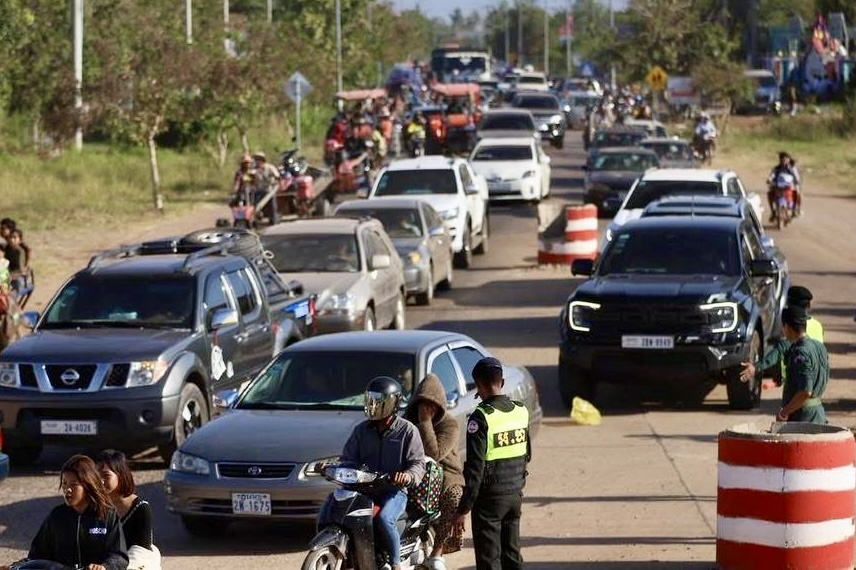
Families flee from the Cambodian border province of Oddar Meanchey
AGENCE KAMPUCHEA PRESSE/EPA
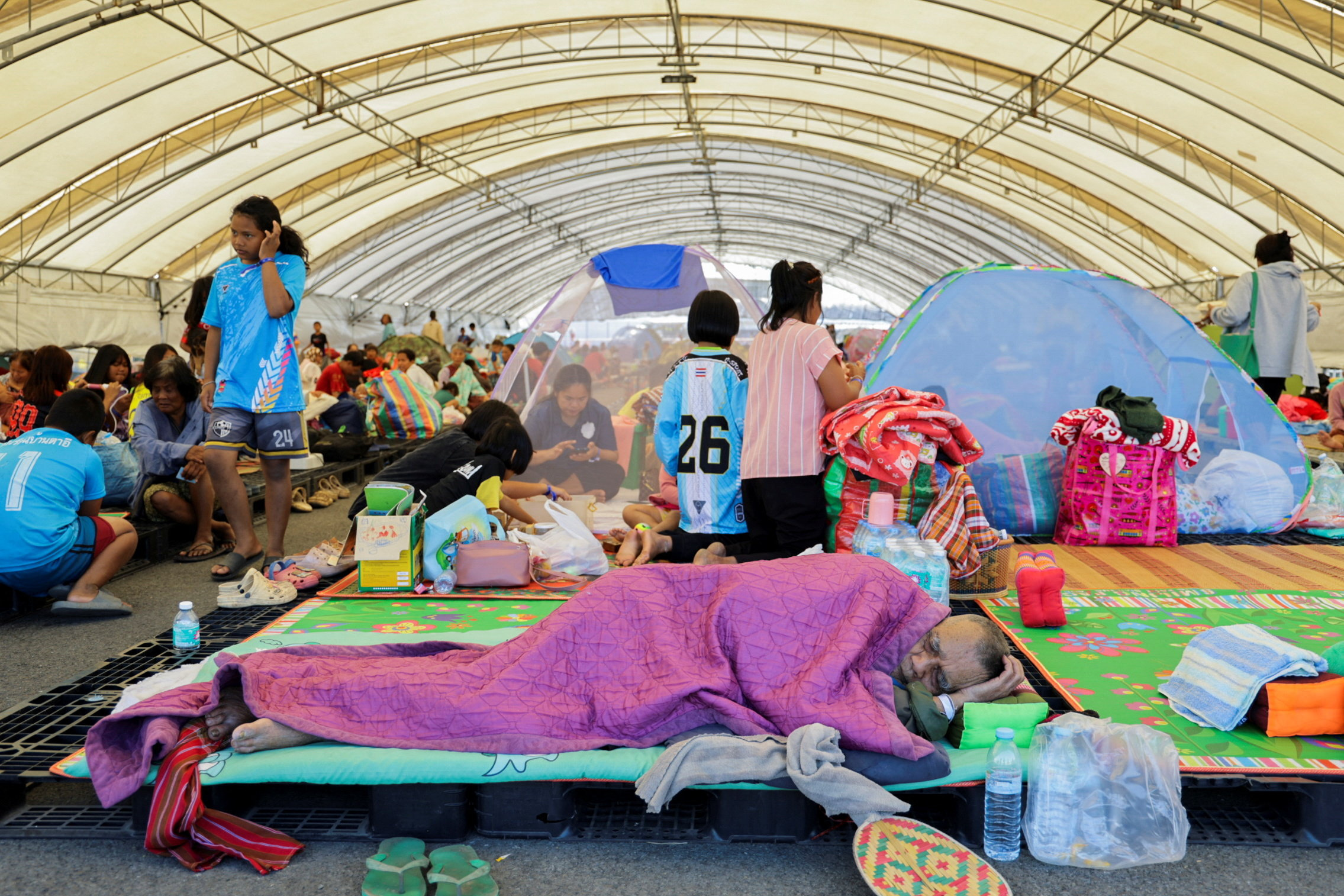
People rest at a shelter in Buriram province, Thailand, amid the renewed violence
PRAJOUB SUKPROM/REUTERS
The Thais said that “air support”, in the shape of fighter jets, was called up after Cambodia fired heavy weaponry and moved combat and support units close to the border. “These developments prompted the use of air power to deter and reduce Cambodia’s military capabilities,” the air force said.
Major General Winthai Suvaree Winthaim, spokesman for the Royal Thai Army, said that one of the targets struck by an F-16 fighter jet was a casino that was allegedly being used as a command centre for Cambodian drone attacks.
He also accused Cambodia of targeting an airport and a hospital in Thailand.
Cambodia’s former prime minister, Hun Sen, who retains influence despite being succeeded by his son, Hun Manet, said on Facebook: “The red line for responding has already been set. I urge commanders at all levels to educate all officers and soldiers accordingly” — although where exactly the red line lies is not clear.
Several civilians killed amid clashes along Thailand-Cambodia border
A statement by the Cambodian armed forces said: “Standing on the spirit of respecting all previous agreements and resolving conflicts peacefully according to international law, Cambodia did not retaliate at all during the two assaults and continues to monitor the situation vigilantly and with utmost caution.”
He said that Cambodian athletes preparing to compete in the Southeast Asian Games, which are due to begin in Thailand on Tuesday, should continue their preparations.
In late July artillery exchanges, cluster bombs, and bombardment by drones and fighter jets in paddy fields, villages and ancient temples left hundreds of thousands displaced and the countryside littered with unexploded munitions.
Border checkpoints were closed and the valuable trade between the two countries all but ceased. The bitterness between the two countries has already led to the collapse of one Thai government and the fall from power of its most powerful political family.
“Some people think that this is a small conflict,” Cambodia’s information minister, Neth Pheaktra, told The Times in September. “But if you don’t take this small conflict seriously [it] can explode with a big impact, between people and people, one country and another country. A big fire can come from a small thing.”
The dispute has complex origins in colonial history, ethnic rivalry and the fraught modern politics of the two countries. As colonial rulers, the French imposed a border, which gave to modern Cambodia areas that Thailand considers its own. In 1962, the spectacular Preah Vihear temple, a world heritage site on the border, was awarded to Cambodia after lengthy arguments in the International Court of Justice. But most of the border between the two countries remains undetermined, and efforts to agree on its course have made little progress.
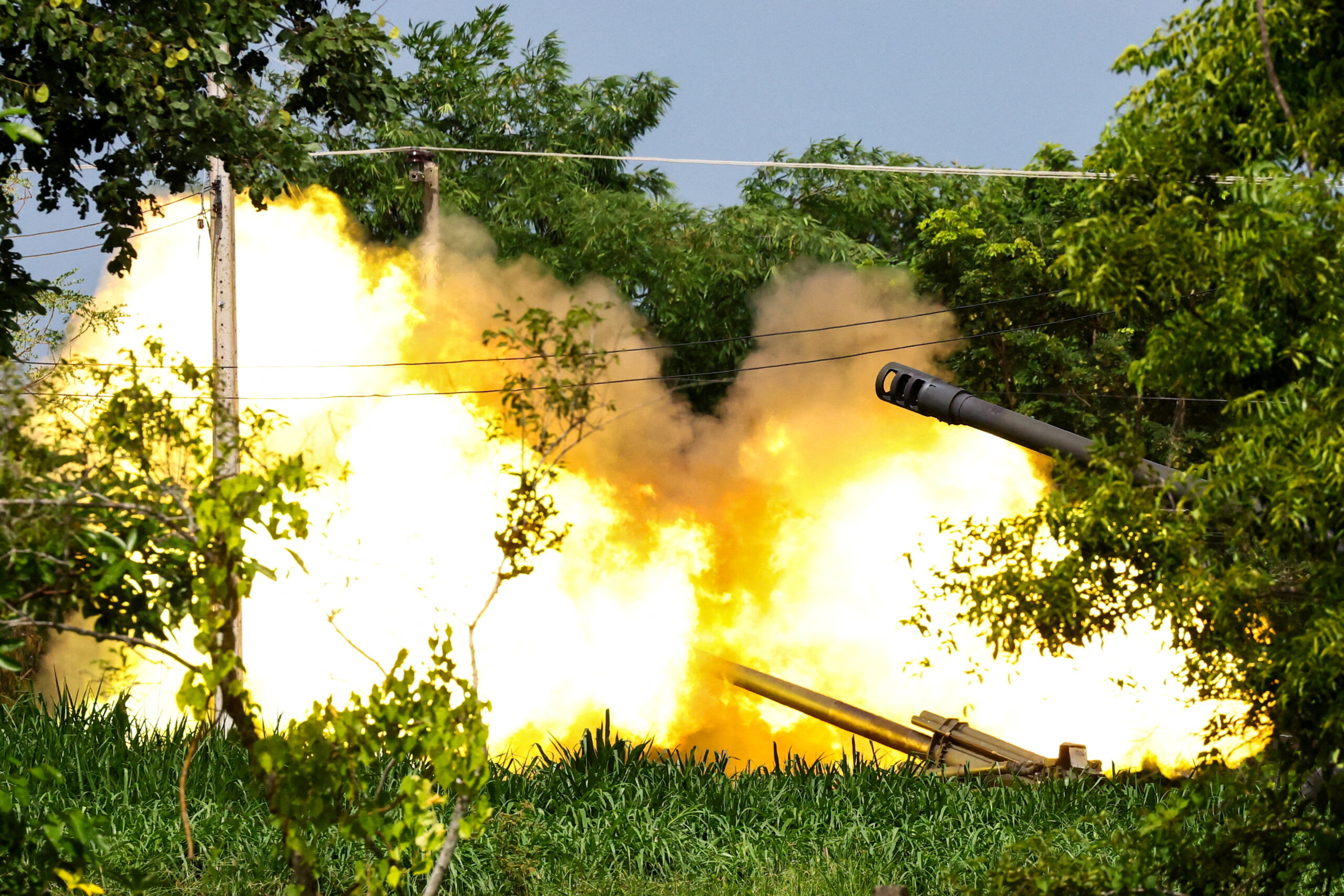
A Thai artillery unit firing into Cambodia in July
ATHIT PERAWONGMETHA/REUTERS
Soldiers on both sides died in fighting at Preah Vihear in 2008 and 2011, but the conflict this year has been the bloodiest ever. A Cambodian soldier was killed in a clash between patrols on May 28. In July, two Thai soldiers were badly injured by landmines — Cambodia says that they were old weapons laid three decades ago during its civil war, but the Thais insist that they were freshly laid.
In the absence of independent corroboration it is difficult to judge who is most responsible. But Cambodia seems to have come off worst.
Thailand reported 30 dead soldiers and civilians in July. Cambodia has announced only 13, but posts on social media by mourning families suggest that at least 50 members of its security services have died, as well as an unknown number of civilians.
Anwar Ibrahim, the Malaysian prime minister, who chairs the Association of Southeast Asian Nations, said: “The renewed fighting risks unravelling the careful work that has gone into stabilising relations between the two neighbours … We urge both sides to exercise maximum restraint, maintain open channels of communication and make full use of the mechanisms in place.”
Richard Lloyd Parry has reported from more than 30 countries, including Ukraine, Iraq, Myanmar and North Korea
