
Africa’s First Mega-Hub: Ethiopian Airlines’ $12.5 Billion Airport To Open In 2030
Ethiopian Airlines has announced that it broke ground on the construction of a new $12.5 billion airport project within the nation, which is set to become the largest airport within the African continent and become Africa’s first mega hub with the capacity to handle over 100 million passengers annually.
With the airline’s current hub set to reach maximum capacity in the coming years, this new airport project will be funded by the airline, along with a few domestic and international credit lenders, and the first phase of the airport should be operational sometime in 2030.
Set To Be Africa’s Largest Airport
Credit: Shutterstock
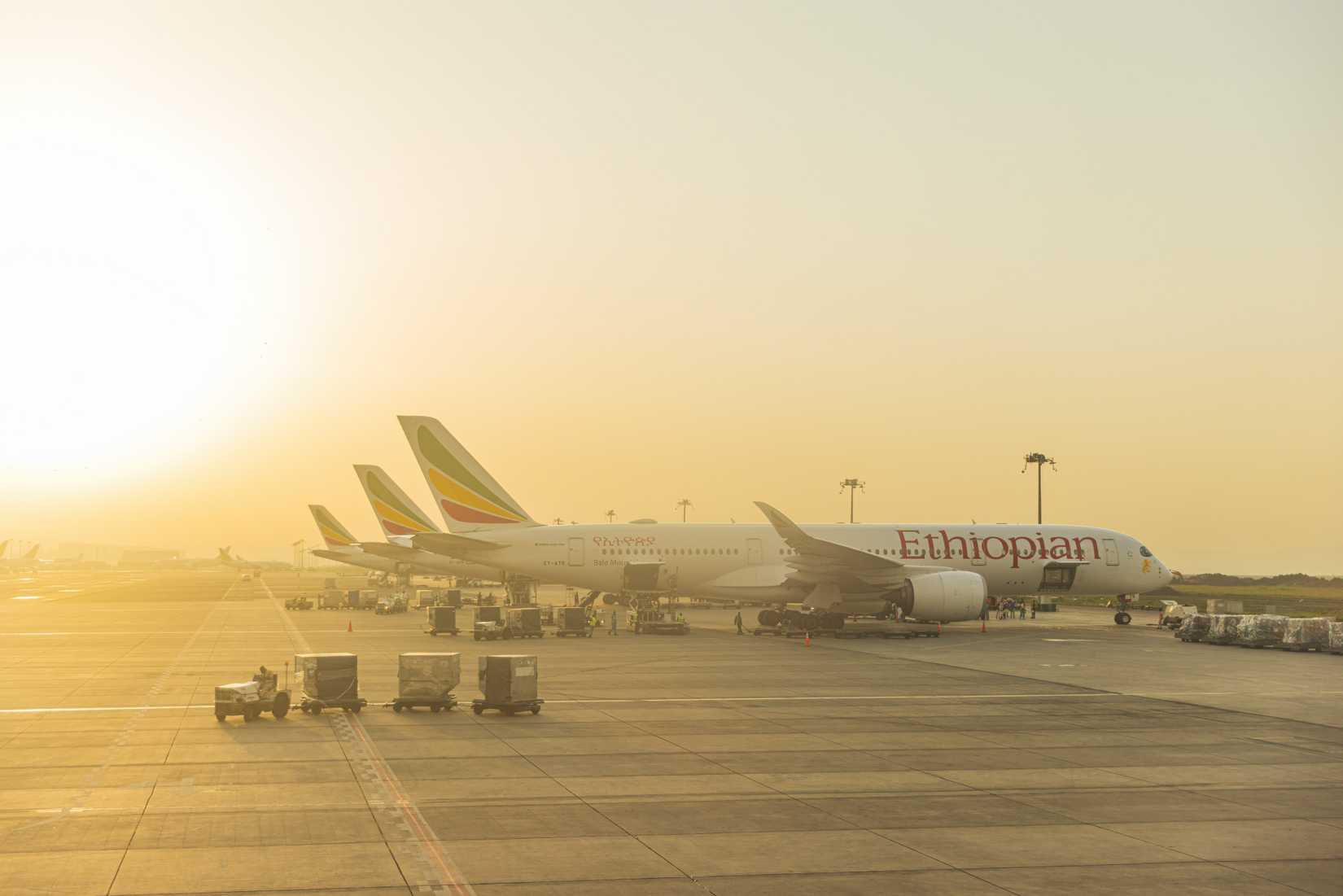
Set to be constructed in the Ethiopian city of Bishoftu, the nation’s carrier, Ethiopian Airlines, broke ground on Saturday as the $12.5 billion construction project started on a new mega-hub airport within the nation, and in fact, the wider continent. Reports from Reuters indicate that Ethiopian Airlines would fund 30% of the project, and that the remaining capital will be credited by the African Development Bank, and other interested parties from regions such as the Middle East, Europe, China, and the USA.
As per the Prime Minister’s social media posts, the new airport, when fully operational, will have four runways, along with terminal capacity to accommodate around 110 million passengers annually, and the airport will have parking facilities to accommodate around 270 aircraft. The first phase, as per Xinhua Net, is set to be operational in 2030, is expected to see two passenger terminals a cargo terminal and two parallel runways.
Considering that the current largest airport in Ethiopia can only handle around 25 million passengers annually, this new project, when opened fully, will be handling over four times the passenger traffic Addis Ababa Bole International Airport (ADD) can handle. The Ethiopian Prime Minister, Abiy Ahmed Ali, on X, stated,
“Bishoftu International Airport will be the largest aviation infrastructure project in Africa’s history.”
What To Expect In Phase One?
Credit: Simple Flying
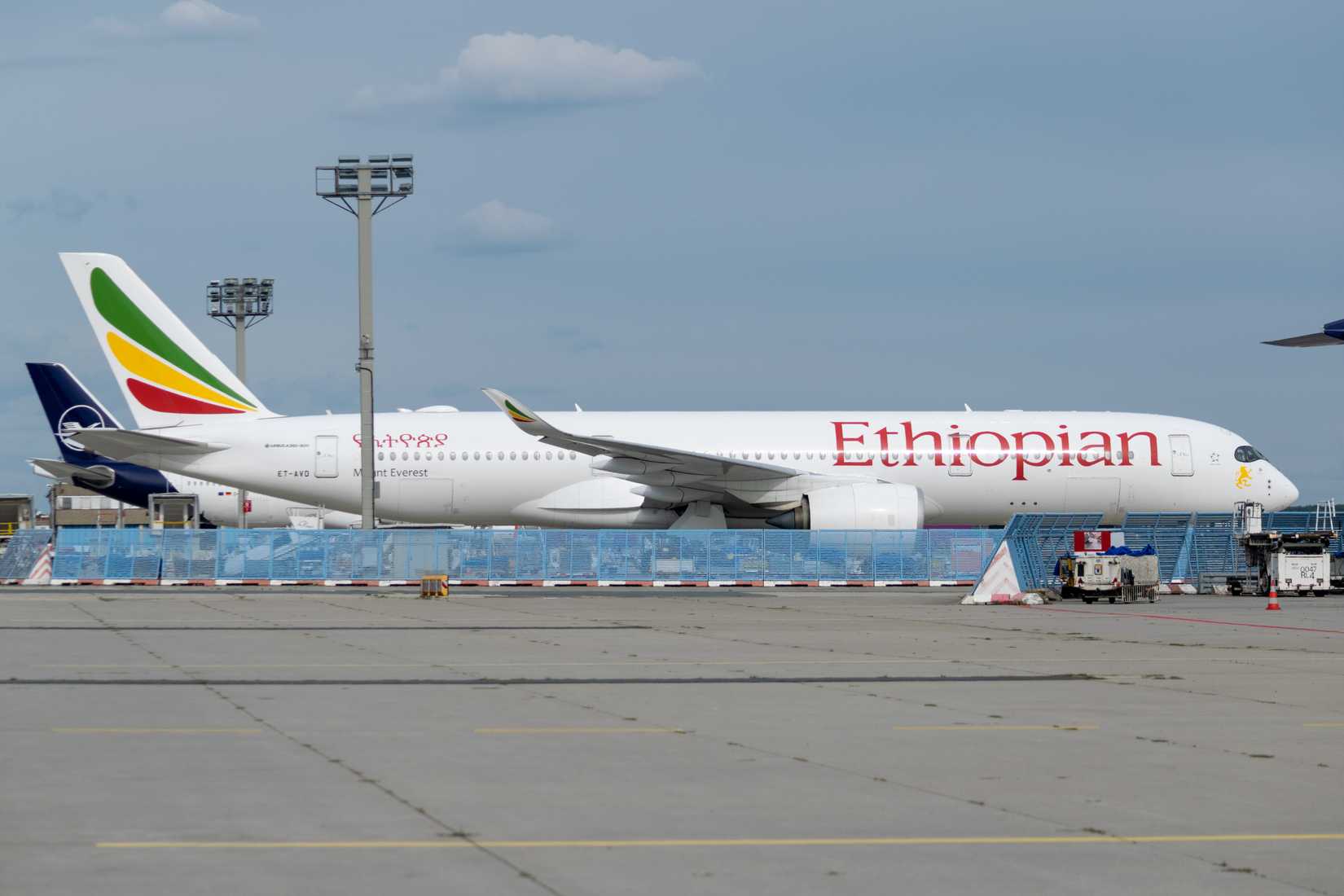
With the airline already allocated $610 million for earthworks, the work is scheduled to commence in August this year, and the earthworks are expected to be completed in a year. Then, going forward, the first phase of the new airport project is expected to be operational in 2030, and the airport by then would have two of the four planned runways operational. Along with the two parallel runways, phase one also includes the completion of two passenger terminals, an airport hotel, and a cargo terminal.
The infrastructure from phase one will be able to accommodate 60 million passengers annually across the two terminal buildings, along with the cargo terminal having an annual capacity of 1.5 million tonnes and the airport having capacity and facilities to accommodate 180 aircraft. As the project progresses, further passenger terminals increase the capacity to handle up to 110 million passengers, accommodate a further 90 aircraft, and see the number of runways increase from two parallel runways to four.
Additionally, the airport, in its first phase, will also see the construction of modern highways providing road links to the capital city of Addis Ababa, as well as a high-speed rail system, with operational speeds of 120 to 200 km per hour, which would increase accessibility to the airport and subsequently increase the airport’s catchment area.
Ethiopian Airlines Signs $6 Billion Contract To Design Africa’s New Largest Airport
The initial phase of the project, costing $6 billion, would result in a new terminal capable of handling 60 million passengers per year.
Ethiopian Airlines Now & Its Future Growth
Credit: Shutterstock
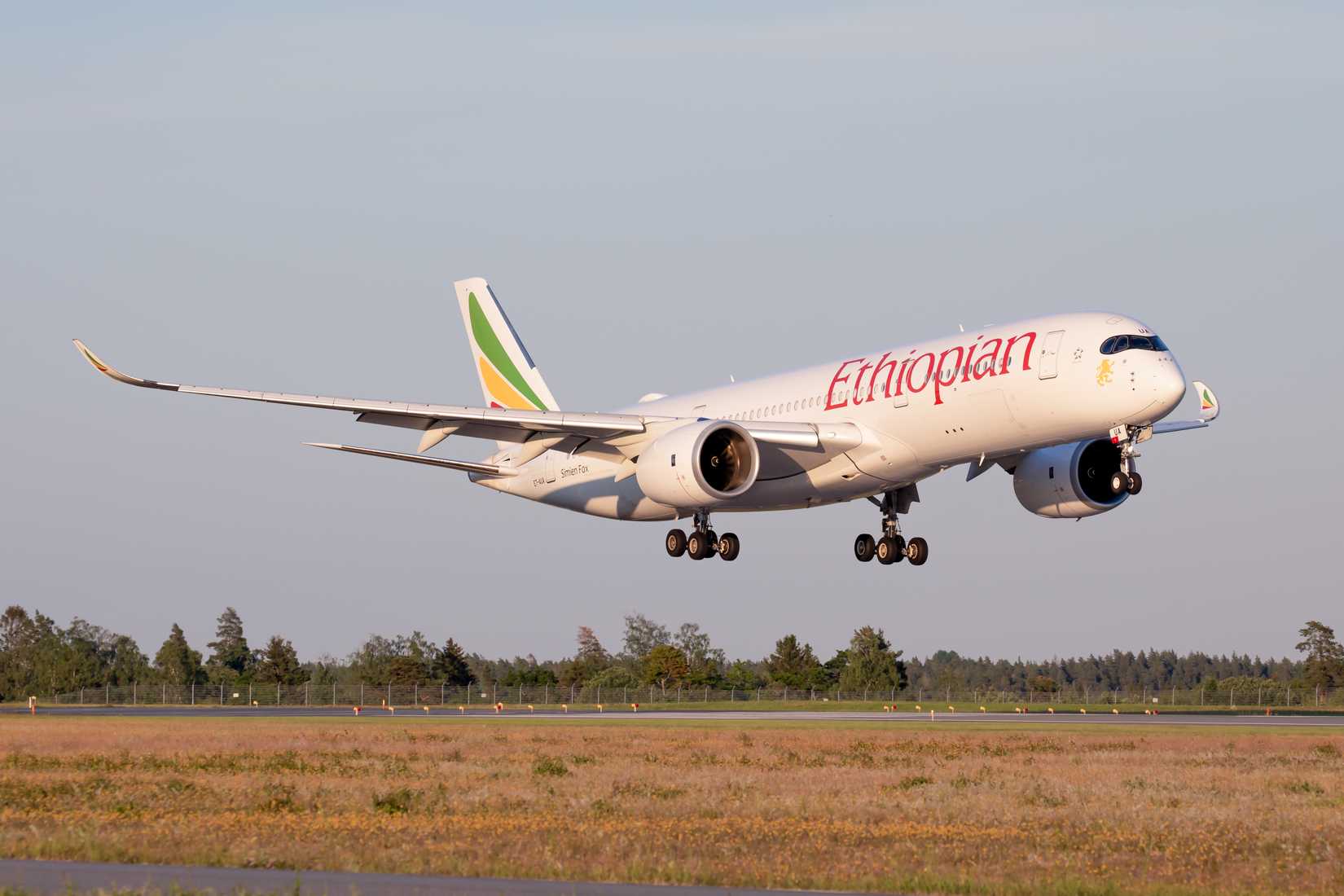
The carrier is currently based in Ethiopia’s Addis Ababa airport, and is known to be one of the continent’s top carriers with significant international presence, with its extensive connectivity from its hub, ADD, and the variety of fifth-freedom service it operates around the world.
As per the airline’s fleet webpage, the carrier operates the youngest fleet in Africa, which consists of a variety of modern narrowbody, widebody, and regional aircraft. The carrier currently operates a fleet of 167 aircraft, which is dominated by Boeing aircraft, except for the 30 Bombardier Q400 prop aircraft for domestic and regional operation, and 26 Airbus A350 family aircraft, which the airline utilizes on long-haul routes. The carrier additionally has 64 aircraft currently on order, which includes 34 Boeing 737 MAX 8s, 11 Airbus A350-900s, 11 Boeing 787-9s, and eight Boeing 777-9s.
Considering the airline’s fleet expansion plans and, naturally, the subsequent increase in network connectivity and passenger traffic, it makes sense as to why there is a need for a new airport in Ethiopia and why Ethiopian Airlines is directly involved in the airport project. This is the perfect opportunity for the airline to create a mega-hub within the African continent, but also create the perfect ground experience for its own customers and chart further growth plans without facing any constraints. The airline could perhaps even turn the new airport into a  Star Alliance hub, which would further bolster connectivity.
