
After Venezuela, another Latin American dictatorship frets about its future
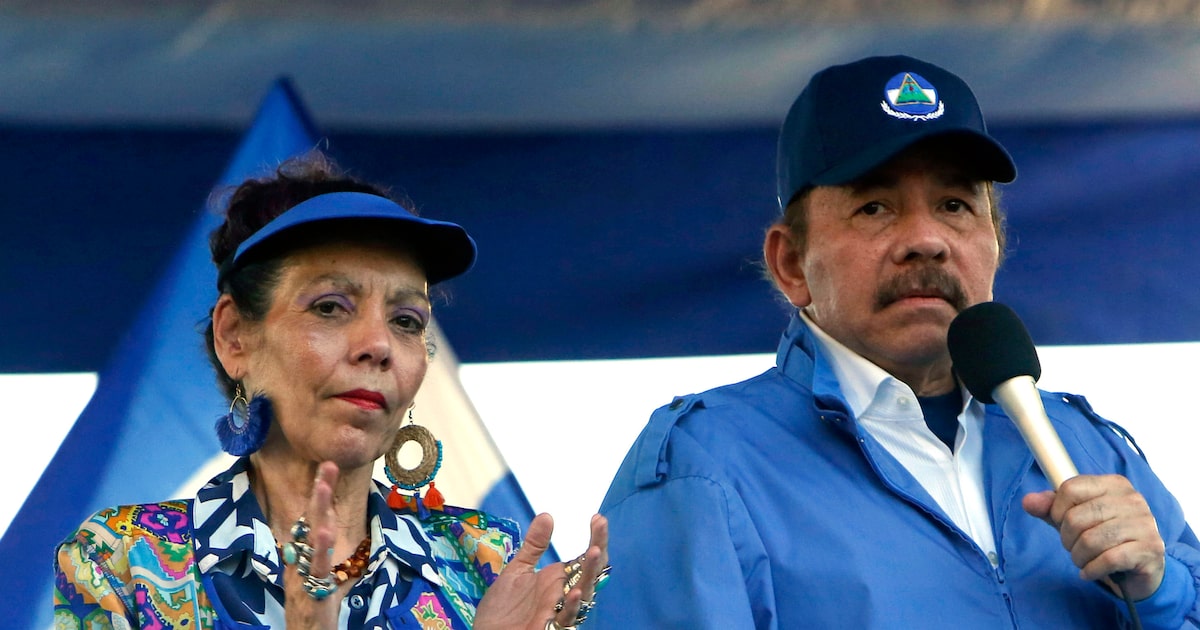
One welcome effect of President Donald Trump’s intervention in Venezuela that led to the capture of strongman Nicolás Maduro is the release of political detainees in the South American nation. It appears that another authoritarian regime, this one in Central America, has taken notice: Nicaragua.
This month, the Nicaraguan government announced the release of dozens of political prisoners after the U.S. ramped up pressure on President Daniel Ortega’s regime. Of course, anything coming from Nicaragua has to be taken with a grain of salt.
Ortega, 80, has been in power for almost two decades.
Without a hint of irony, the government stated the official reason for the prisoner release was to commemorate Ortega’s 19 years of rule. There was no mention of who was released and under what conditions, but a day earlier, the U.S. Embassy lamented that “more than 60 people remain unjustly detained or disappeared, including pastors, religious workers, the sick, and the elderly.”
Nicaragua doesn’t have oil reserves like Venezuela or a strong lobby of exiles like Cuba, but it is as ruthless as the other two dictatorships in the region. Ortega and his wife, Rosario Murillo, who is now “co-president,” have managed so far to remain under the radar of the Trump administration, but there are signs this might be changing.
A recent post from the State Department’s Bureau of Western Hemisphere Affairs stated: “Nicaraguans voted for a president in 2006, not a lifetime of an illegitimate dynasty.” U.S. Sen. Rick Scott, R-Fla., a Trump ally, also said Nicaragua “will get fixed.”
The Ortega-Murillo regime is known for arbitrary detentions of political adversaries, religious leaders and journalists. The couple has stripped hundreds of Nicaraguans of their citizenship and possessions and more than 5,000 religious and civic organizations have been shuttered. Thousands have fled the country.
After Maduro’s fall, the Nicaraguan regime seems to be in survival mode, doing the bare minimum to avoid international scrutiny, but at the same time, repression is still business as usual. A human rights group reported that roughly 60 people were detained for expressing support for Maduro’s capture.
Ortega and Murillo are doubling down on their police state, increasing surveillance in neighborhoods and social media monitoring, El País reported. An analyst interviewed by the Spanish newspaper added that the Nicaraguan “power couple” is increasingly paranoid. This is a sign of weakness that the U.S. could exploit.
There are plenty of reasons why the Trump administration should increase pressure on Nicaragua through political and diplomatic channels. For one, the country has enhanced its ties with Russia and China while remaining defiant in its relationship with the U.S.
Nicaragua is also a transit point for drug cartels. Last year, the Drug Enforcement Administration was set to leave the country due to Nicaragua’s rampant corruption and lack of cooperation, but at least one White House official told Politico that the Central American nation has been changing its tune lately.
The Trump administration should not be fooled. The Ortega-Murillo regime is not interested in drug cooperation, but only in its own survival.
We welcome your thoughts in a letter to the editor. See the guidelines and submit your letter here.
If you have problems with the form, you can submit via email at [email protected]
