
India-EU FTA doesn’t mean cars will get cheaper. Read the fine print
I hate to be the bearer of bad news, but the excitement on social media this past week over the India-EU Free Trade Agreement—especially the hope that Indians will be able access European cars for less—made me do a double take. It’s a great headline, but it won’t work out quite like that.
Sure, some cars will get cheaper. But there are caveats—big ones. For better or worse, I have been covering this industry for a quarter of a century, and I know it pretty well. So I want to use this column to tone down expectations.
The headline claiming that import duties on cars will come down dramatically from 70-110 per cent to 30-35 per cent applies only to what customs describes as ‘Completely Built-Up’ (CBU) vehicles, which is self-explanatory. By the end of the day, notes from Mercedes-Benz India to their dealers and the media highlighted a couple of things. Nearly 95 per cent of all Mercedes-Benz vehicles sold in India are actually assembled at its plant in Chakan outside Pune. When I met Hardeep Brar, President, BMW India, a few weeks ago, he said the very same number. Other than some very specialised or exotic vehicles, most cars sold in India by these carmakers are assembled in India.
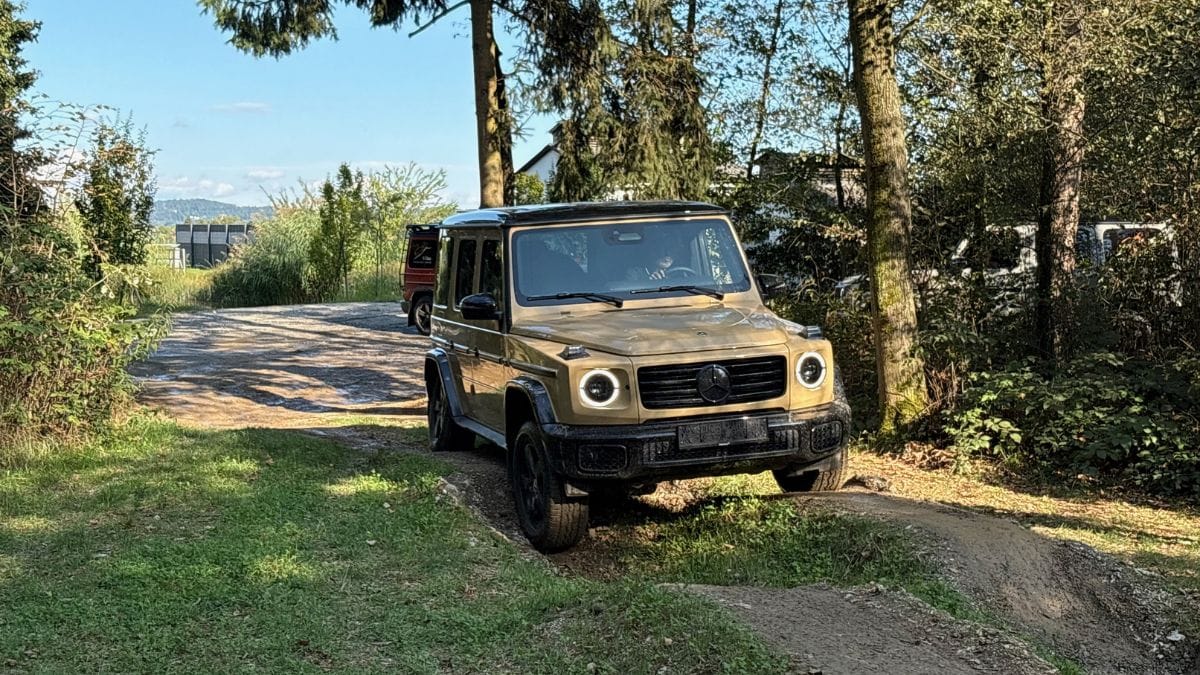
Sure, cars like the Mercedes-Benz G-Class and the Slovakia-made Land Rover Defender may get cheaper, but only after the FTA is ratified. As the European Union notes in the press release, the FTA will first need to be translated into all EU Official languages (no wonder Prime Minister Narendra Modi posted in every EU language on X), then legally vetted, and finally approved by the European Parliament. European carmakers in India have told dealers that this process is unlikely to be completed before 2027 at the earliest.
That said, duties on car parts will be fully abolished after over five to 10 years—so those will get cheaper, right? Not quite. Not every kit comes from Europe. Some of the best-selling models for BMW and Mercedes-Benz, in particular, are their long-wheelbase ones, and there is only one other major market where these are extremely popular—China. Which is exactly where many of those kits come from.
Then there are the SUVs, BMW’s X3, X5 and X7, though assembled in India, get their kits from Spartanburg, South Carolina. Mercedes-Benz SUV kits come from Tuscaloosa, Alabama. Heck, even the BMW M2 Competition, BMW’s most affordable ‘M’ performance car, comes from Mexico.
The European automotive industry is—wait for it—global. And that creates another complication. While India will allow lower-duty imports for up to 2,50,000 cars a year from Europe, if the FTA is any guide, there will be strict clauses about where the value and components come from. So a manufacturer can’t just ship kits from the US or China, assemble them in Germany, France or Belgium, and then claim lower duties.
“The devil is in the details, and we have no clue about those details as yet. I’m sure there will be clauses about engine capacities and whatnot,” said Nitin Kohli, Brand Director, Volkswagen India. “As it is, we have heard that electric vehicles are currently excluded or at least will be for five years after the FTA is ratified, and the European automotive industry is rapidly electrifying, so we will not be able to bring our EVs here with a lower duty.”
Amid all this negativity, Kohli also offered some hope for Indian car buyers: “This will allow manufacturers like us to try out new models more easily.”
Volkswagen India—which brought in the Golf GTI and the Tiguan R-Line as limited imports last year—could see clear benefits. So could several Europe-built performance cars, including Mercedes-AMG models, Audi RS vehicles, and BMW M Performance cars. Then there are brands like Porsche, and Italian supercar makers Ferrari and Lamborghini.
But as a friend who owns a Ferrari told me, “If you get a delivery position from Ferrari, you grab it with both hands, you don’t care about any FTA.”
Also read: BMW’s record 2025 sales show India’s young professionals are moving into luxury cars
A reality check
Most manufacturers can currently sell up to 2,500 imported vehicles in India without the need to ‘homologate’ them. Homologation is the process of meeting Indian standards and can take anywhere from four to six months. This is why right-hand drive variants of German luxury cars launch in India six-eight months after launching in other right-hand-drive markets like the UK and Japan.
Importing cars at scale would not just require homologation but also an assessment of whether it just makes more sense to assemble a vehicle in India. Mercedes-Benz India saw it as a smarter option for the ultra-luxury Mercedes-Maybach GLS. By assembling it at Chakan, the cost of the vehicle was reduced by Rs 40 lakh. Without waiting for any FTA.
“I personally see more opportunity for ‘Made in India’ vehicles to go to Europe rather than the other way around because if the UK FTA is any indication, tariffs on our cars also drop precipitously,” Venkatram Mamillapalle, Managing Director, Renault India, told me during the launch of the Duster. Ergo, one of the biggest beneficiaries of the FTA could be Royal Enfield, which already exports its two-wheelers at volume to Europe.
So, yes, I’m sorry to be a damp squib, but the unabashed glee on social media—without understanding the industry or the trade agreement—was irritating and needed a reality check.
Don’t get me wrong, the FTA is a great thing, and if it makes vehicles like the Volkswagen Golf GTI, BMW M3, Mercedes-Benz AMGs and Audi RS cars cheaper, that will put a smile on my face. It could allow for new, limited-volume units of vehicles like the Skoda Superb and maybe even the re-entry of carmakers like Fiat.
But I don’t think the negotiators under Piyush Goyal are idiots, so I would really, really hesitate before pronouncing judgment and declaring that ‘cars will get cheaper’.
Kushan Mitra is an automotive journalist based in New Delhi. He tweets @kushanmitra. Views are personal.
(Edited by Ratan Priya)
