
China executes Ming and Bai mafia families behind Myanmar’s scam centres: Who are they?
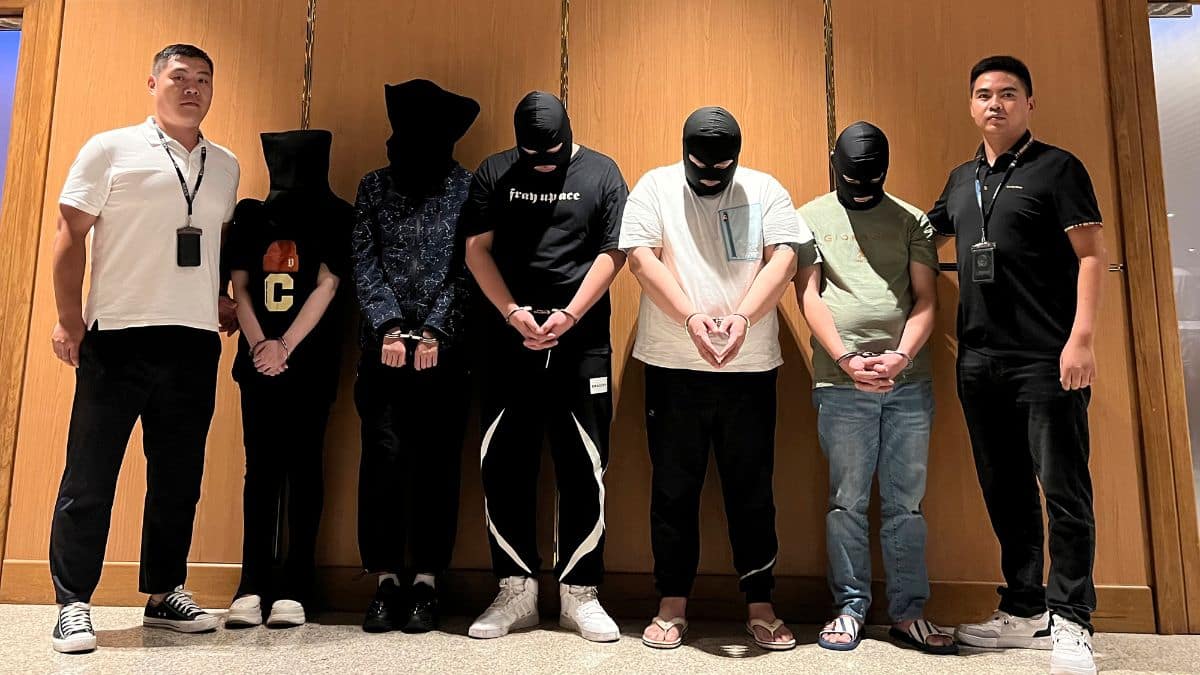
China’s decision to execute senior members of powerful crime families operating scam centres out of Myanmar has put into spotlight the shadowy dynasties that dominate one of Southeast Asia’s most lucrative and violent criminal economies.
The Ming and Bai families, alongside the Wei and Liu clans, presided over an empire of online fraud, gambling, trafficking and abuse that flourished for more than a decade in Myanmar’s lawless borderlands, generating billions of dollars and ensnaring tens of thousands of victims.
The latest sweeping crackdown by Beijing has targeted criminal networks across Myanmar, Cambodia and Thailand.
Executions linked to scam networks in northern Myanmar
On February 2, the Shenzhen Intermediate People’s Court announced that
four individuals convicted of running scam and gambling operations from Myanmar had been executed.
Authorities said the group was responsible for defrauding victims of more than 29 billion yuan, equivalent to approximately $4.2 billion, and for causing the deaths of six Chinese citizens, along with injuries to others.
The court did not specify the exact timing of the executions. It said five defendants — including key figures from the Bai family — had been sentenced to death in November.
One of them, Bai Suocheng, identified as the leader of the group, later died from illness following his conviction.
In its statement, the Shenzhen court described the crimes in stark terms, saying they “were exceptionally heinous, with particularly serious circumstances and consequences, posing a tremendous threat to society”.
The announcement followed news a week earlier that
11 other individuals linked to scam centres in northern Myanmar had also been executed.
China’s state news agency Xinhua said these individuals had been sentenced to death in September, with the executions carried out by a court in Wenzhou, located in Zhejiang province.
Editor’s Picks
The rise of criminal dynasties in Kokang
At the centre of the scandal is Kokang, a remote and mountainous region in northern Myanmar’s Shan state, bordering China’s Yunnan province. The
area has long been associated with illicit trade as part of the Golden Triangle, historically known for narcotics production.
From around 2009, four interlinked families — the Ming, Bai, Wei and Liu clans — came to dominate Kokang’s capital, Laukkaing.
Their rise followed a military operation led by Min Aung Hlaing, now Myanmar’s military ruler, that drove out the Myanmar National Democratic Alliance Army (MNDAA), an ethnic insurgent force that had controlled the area since the 1980s.
After the MNDAA’s removal, the four families consolidated power, shifting the local economy away from opium and methamphetamine production towards casinos and eventually large-scale online fraud.
The families became deeply embedded in local governance and cultivated close ties with Myanmar’s military leadership.
They also entered formal politics. Members of the families held seats in Myanmar’s national parliament and stood as candidates for the military-backed Union Solidarity and Development Party. Their conglomerates expanded across Myanmar, controlling hotels, casinos, real estate and logistics networks.
In December 2021, following the military coup, Min Aung Hlaing publicly honoured Liu Zhengxiang, the head of the Liu clan, awarding him an honorary title for “extraordinary contributions to state development”.
Liu’s Fully Light conglomerate was described as having profitable operations across the country.
The Bai family’s dominance and violent rule
Among the four clans, the Bai family emerged as the most powerful. Bai Suocheng’s son later told Chinese state media, after his detention, that the Bais were “number one” among the families operating in Laukkaing.
Authorities said the Bai family controlled their own armed militia and established 41 compounds dedicated to cyber scams and casino operations. Inside these compounds, violence was systemic. Beatings and torture were routine, according to court findings.
The Bai syndicate was linked to multiple deaths and injuries. Chinese authorities said its activities directly resulted in the deaths of six Chinese citizens, caused one person to take their own life, and left several others injured.
The family’s ascent began in the early 2000s, when the previous warlord controlling Laukkaing was removed in a military operation led by Min Aung Hlaing. Bai Suocheng, who had served as a deputy under the former warlord, was viewed as a cooperative ally and was allowed to expand his influence under military protection.
However, the family’s fortunes collapsed in 2023. Beijing, increasingly angered by the Myanmar military’s failure to curb scam operations targeting Chinese nationals, shifted its stance.
It tacitly supported an offensive by ethnic insurgent groups in Kokang, marking a pivotal moment in both the scam crackdown and Myanmar’s broader civil conflict.
The offensive led to the capture of scam leaders, who were subsequently handed over to Chinese authorities. In China, members of the Bai family became the subject of state-produced documentaries designed to showcase Beijing’s determination to eradicate scam networks.
The Ming family and Crouching Tiger Villa
If the Bai family represented political influence and territorial control, the Ming family came to symbolise the brutality of Laukkaing’s scam industry.
Headed by Ming Xuechang, the family was closely associated with a compound known as Crouching Tiger Villa, located in Kokang’s autonomous region along the Chinese border.
According to Chinese state broadcaster CCTV, the Ming syndicate at its peak employed around 10,000 people engaged in scams and related criminal activities. Laukkaing itself became a central node in a multibillion-dollar fraud industry that thrived in areas beyond effective state oversight.
Thousands of workers — predominantly Chinese — were lured to the region with promises of high-paying jobs. Once inside the compounds, many found themselves imprisoned.
They were forced to carry out complex “pig-butchering” scams, a form of long-term online fraud that involves building trust with victims before extracting money. The victims, in many cases, were also Chinese.
Conditions inside the Ming-run compounds were described as exceptionally harsh. Torture was routine, and attempts to escape were often met with lethal force. In October 2023, several Chinese nationals were killed during what was believed to be an escape attempt at Crouching Tiger Villa.
In another incident that month, four people were killed when members of the Ming syndicate allegedly opened fire inside a scam compound.
CCTV later reported that the group had been transferring workers from the cyberfraud park under armed guard after receiving information that police were planning a raid.
As complaints from victims and their families mounted on Chinese social media, and international media scrutiny intensified, Beijing escalated its response.
How Beijing responded
In November 2023, Chinese authorities issued arrest warrants for Ming family members, accusing them of fraud, murder and human trafficking. Rewards ranging from $14,000 to $70,000 were offered for information leading to their capture.
Ming Xuechang, who had previously served as a member of Myanmar’s state parliament, was captured during a joint operation involving Chinese and local forces. Chinese state media later reported that he killed himself while in custody.
More than 60 relatives and associates of the four families were detained and transferred to Chinese police. During interrogations, one family member was reported to have admitted to killing a person selected at random “just to demonstrate his strength”, reported BBC.
Xinhua later confirmed that Ming Xuechang’s son, Ming Guoping — a leader in the junta-aligned Kokang Border Guard Force — and his granddaughter, Ming Zhenzhen, were among the 11 individuals executed. The report said they were allowed to meet close relatives before the sentences were carried out.
The Ming syndicate was also found to have collaborated with another crime boss, Wu Hongming, who was likewise executed.
Together, authorities said, they intentionally killed, injured and illegally detained scam workers, actions that resulted in the deaths of 14 Chinese citizens.
What next for China’s crackdown and Myanmar’s scam industry
Human rights groups note that China executes more people than any other country, though exact figures remain a state secret.
Following sentencing, appeals by the defendants were swiftly dismissed. The Guangdong Provincial High People’s Court rejected appeals in the Bai case, while the executions of the Ming family members followed a similarly rapid appellate process
after their September convictions.
Chinese state media has extensively publicised the cases, including televised confessions in which gang leaders admitted to ordering killings.
China’s crackdown has extended beyond Myanmar. In recent years, Beijing has intensified cooperation with Thailand, Myanmar and Cambodia, resulting in the repatriation of tens of thousands of suspects involved in online gambling and telecom fraud.
In January 2026, Cambodia extradited tycoon Chen Zhi to China. The United States has said Chen chairs a conglomerate that serves as a front for a multi-billion-dollar cyber scam network.
Chen was simultaneously under investigation by authorities in China,
the US and the UK for financial crimes involving billions of dollars.
The closure of scam centres in Cambodia has led to visible fallout. In Phnom Penh, hundreds of escaped scam workers have been camped near the Chinese embassy, awaiting permission to return home.
China has also pressed Thailand and Cambodia to extradite other figures,
including She Zhijiang, accused of constructing an entire city linked to scam operations in Myanmar’s Karen State.
Despite the scale of the crackdown,
authorities acknowledge that the scam industry has not been eradicated.
While prominent compounds such as KK Park and Shwe Kokko along the Thai-Myanmar border have been forced to shut down, operations have shifted to new areas within Myanmar.
Also Watch:
With inputs from agencies
End of Article
