
Home at Moon in 10 years? Elon Musk’s plan for a self-growing lunar city sounds straight out of ‘Interstellar’
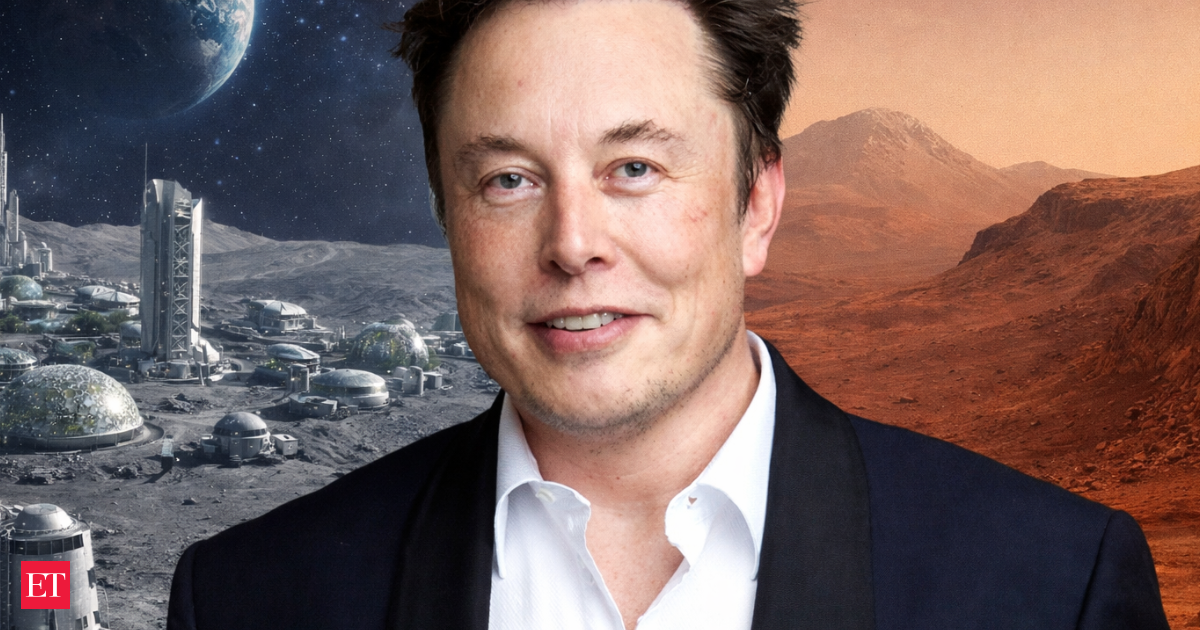
Elon Musk has revealed a bold new vision for SpaceX: establishing a self-growing city on the Moon within the next decade. The announcement, made on his X social media platform, signals a significant shift in the billionaire’s long-standing ambition to colonise Mars.
“The overriding priority is securing the future of civilisation, and the Moon is faster,” Musk said, adding that Mars will remain a target within the next five to seven years.
This move represents a strategic recalibration for SpaceX, which has emerged as a major contractor for NASA. It also aligns Musk’s plans more closely with US President Donald Trump’s renewed emphasis on lunar exploration.
“For those unaware, SpaceX has already shifted focus to building a self-growing city on the Moon, as we can potentially achieve that in less than ten years, whereas Mars would take 20 or more years,” Musk wrote on X, the platform he acquired in 2022.
Why the Moon Takes Priority
Musk cited logistical challenges as a key reason behind the shift. Travel to Mars is constrained by planetary alignment, occurring only every 26 months. By contrast, launches to the Moon can occur every ten days, making it a far more accessible target for rapid development.
SpaceX’s Mars ambitions have long faced scepticism, with critics arguing that Musk’s timelines were overly optimistic. He has repeatedly revised his projections for human missions to the Red Planet. In 2016, he suggested passengers could reach Mars as early as 2024, provided financing and technical hurdles were overcome. This followed his 2011 prediction to the Wall Street Journal that SpaceX astronauts could land on Mars in “best case, 10 years; worst case, 15 to 20 years.”
SpaceX Eyes Moon Before Mars
According to a recent Wall Street Journal report, SpaceX has informed investors it will prioritise lunar missions over Martian exploration for now. The company is reportedly targeting March 2027 for an uncrewed Moon landing, pushing back plans for a Mars mission that Musk previously aimed to undertake by the end of 2026.
This shift comes amid increasing competition from China, which is racing to return humans to the lunar surface. Humanity has not set foot on the Moon since Apollo 17 in 1972, making SpaceX’s plans both ambitious and historic.
AI Meets Space: xAI Acquisition and Energy-Efficient Plans
Musk recently announced that SpaceX has acquired xAI, the artificial intelligence company he also leads. The deal reportedly values SpaceX at $1 trillion and xAI at $250 billion.
Proponents suggest the acquisition could help SpaceX pursue space-based data centres, which Musk claims are more energy-efficient than Earth-based facilities. This aligns with the growing demand for AI computing power, signalling SpaceX’s dual focus on space exploration and technological innovation.
Commercial Ambitions and Starlink Dominance
While NASA remains a key partner, SpaceX holds a $4 billion contract for the Artemis Moon programme, Musk clarified that NASA revenue will account for less than 5% of SpaceX’s total income this year. The majority comes from the commercial Starlink satellite internet system, which Musk heavily promoted in SpaceX’s first Super Bowl advertisement this past Sunday.
SpaceX is also reportedly eyeing a public offering later this year that could raise up to $50 billion, potentially setting a record for the largest IPO in history.
Tesla’s New Direction: Robots and Autonomous Driving
Musk’s ambitions extend beyond space. Tesla, the company he built into a global electric vehicle powerhouse, is now pivoting toward autonomous driving and robotics.
To support this transition, Tesla plans to invest $20 billion this year, including ending production of two car models at its California factory to make room for manufacturing Optimus humanoid robots.
“Tesla is now focusing on a future where robots and self-driving technology complement our existing electric vehicle ecosystem,” Musk explained.
What This Means for the Future
With SpaceX pushing for a Moon-first strategy and Tesla pivoting to robotics and AI-driven vehicles, Musk is shaping the trajectory of multiple industries simultaneously. His vision combines space exploration, artificial intelligence, and autonomous technology, a strategy designed to secure the future of civilisation while creating commercial opportunities.
Whether a self-growing Moon city becomes reality in under ten years remains to be seen, but Musk’s roadmap signals a dramatic rethinking of how humanity might live, work, and compute beyond Earth.
Inputs from agenices
