UK To Join List Of Nations With Strict Laws On Social Media For Kids, Here’s Where India Stands
Last Updated:February 16, 2026, 13:12 IST
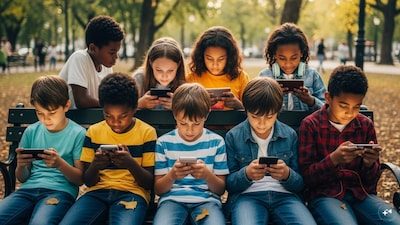
Australia is among the toughest globally on social media usage for children. In 2024, it passed legislation to ban children under 16 from using social media platforms




News18
The UK government, led by Prime Minister Keir Starmer, has announced a package of measures designed to strengthen children’s safety online and ensure tech platforms are held fully accountable for harmful content. This includes closing legal loopholes so that all AI chatbot providers must comply with the Online Safety Act, giving regulators clear powers to act quickly against illegal or dangerous material, and laying the groundwork for rapid action on proposals from an upcoming children’s digital wellbeing consultation. The consultation will look at options such as setting a minimum age for social media use, restricting addictive features like infinite scrolling, limiting children’s use of AI chatbots and VPNs that can undermine safety protections, and improving how platforms prevent the sharing of harmful intimate images.
To support families while broader reforms progress, the government is launching a campaign to help parents talk with their children about online risks and use safety settings effectively. The new powers will also let lawmakers respond more swiftly to emerging behaviours without waiting for lengthy primary legislation, and will strengthen protections — including preserving vital digital data when it’s relevant to serious incidents — as part of a wider strategy to make the UK a leader in online child safety.
Recommended Stories
As the UK works on tougher laws for children safety online, other countries are also working on similar frameworks to make the internet and social media a safer place for children. Several other countries, meanwhile, have strict measures in place for social media usage for children. Here’s a look at them:
Australia
Australia is among the toughest globally. In 2024, it passed legislation to ban children under 16 from using social media platforms. Platforms must verify age and face heavy fines if they fail to prevent underage access. The law targets addictive design features and harmful content exposure. Australia’s approach is currently seen as the most sweeping outright restriction.
France
France has introduced a minimum age of 15 for social media use. It necessitates mandatory parental consent for children under that age. The country has put pressure on platforms to implement effective age verification systems. While the enforcement has been challenging, the legal framework is strict on paper.
United States
The US does not have a nationwide social media ban for kids, but the federal COPPA law restricts data collection from children under 13. Several states (like Florida and Arkansas) have passed or proposed laws requiring age verification or parental consent. The US approach is fragmented, with strong state-level action emerging.
China
China has some of the strictest digital controls in the world. Minors in China face time limits on social media and gaming apps. Real-name registration is mandatory on online networks in China. Platforms must provide “youth modes” that filter content and restrict usage hours.
China’s system is heavily state-controlled and tightly enforced.
South Korea
South Korea previously implemented a “shutdown law” limiting minors’ gaming at night, which was later repealed. But it still enforces strong youth protection and content filtering rules. Online platforms must comply with age-based safeguards in South Korea.
Norway
Norway has proposed raising the minimum social media age to 15, with stricter enforcement of age verification under broader EU digital regulations.
While not a country, the EU’s Digital Services Act (DSA)imposes strict obligations on platforms to protect minors. It restricts targeted advertising to children and requires risk assessments related to child safety.
Where India Stands On Rules For Social Media Usage For Children
India doesn’t yet have a strict legal national age-based ban on social media for kids, but the framework is evolving with parental consent requirements under data protection rules, state-level studies, political proposals, and active discussion about potential age restrictions or regulatory safeguards.
Under the Digital Personal Data Protection Act, 2023 and associated draft rules, the government has proposed that individuals under 18 can only create social media accounts with verifiable parental or guardian consent before their personal data is processed. This is still at the draft stage and open for public feedback (e.g., via MyGov), but signals a direction towards protecting minors online.
Some states such as Goa and Andhra Pradesh have begun exploring policies similar to Australia’s ban for under-16s, studying international regulatory models and considering age-based limits. In Maharashtra, the IT minister has directed a taskforce to study age restrictions and child safety online.
Bodies like the Madras High Court have suggested that India consider an age-based ban like Australia’s to protect children, and public discourse (including expert and celebrity commentary) continues to debate whether such bans make sense alongside concerns about privacy, feasible enforcement, and digital rights.
February 16, 2026, 13:12 IST
Loading comments…
Read More
