
What Is Chinamaxxing And Why Is American Gen Z Obsessed With It? | Explained
Last Updated:February 18, 2026, 13:13 IST
Videos circulating online show participants enthusiastically documenting their attempts to adopt what they describe as a “Chinese phase” of life




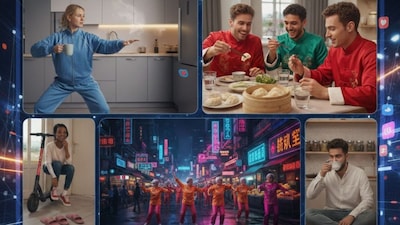
China’s rising global presence and the recent Lunar New Year celebrations have also contributed to the surge in related content. (AI Image)
A curious cultural wave sweeping across social media has caught the attention of observers worldwide, as a growing number of Gen-Z youth in the United States and other Western countries openly express fascination with Chinese culture and lifestyle. The trend, popularly referred to as “Chinamaxxing”, has gone viral on platforms such as TikTok and Twitch, where young users are increasingly seen embracing elements of Chinese daily life, fashion and wellness practices.
Videos circulating online show participants enthusiastically documenting their attempts to adopt what they describe as a “Chinese phase” of life. Some pose in traditional clothing, experiment with dim sum, learn to use chopsticks with precision or sip hot water in the morning, a habit often associated with Chinese health routines. Others practice Tai Chi in their kitchens, take off their shoes before entering rooms, try herbal remedies or wear tracksuits reminiscent of the style seen among elderly residents in Beijing parks. A popular caption repeated across posts reads, “You met me during a very Chinese phase of my life,” a line widely believed to echo the famous dialogue from the 1999 film Fight Club.
Recommended Stories
Supporters of the trend often present their content as admiration for Chinese culture, from its food and fashion to its emphasis on discipline and wellness. Influencers have played a major role in amplifying the movement. Among them is Chinese-American TikTok creator Sherry Zhu, who shares traditional wellness tips with her 7,40,000 followers and encourages them to adopt lifestyle habits she associates with Chinese culture. In one of her widely shared videos, she tells viewers, “From tomorrow, you’re becoming Chinese. I know it sounds scary, but there’s no point fighting it anymore.”
The trend has also gained traction among prominent online personalities. Political streamer Hasan Piker, after visiting China, told his audience he felt deeply connected to the country, saying he had “already become Chinese” in spirit and praising its development and economic progress. Such statements, while partly tongue-in-cheek, have further fuelled conversations online.
Observers say the phenomenon is more than a passing internet joke. Some participants frame their interest in China alongside criticism of life in the United States. Commentators have noted that a section of young Americans appears drawn to what they see as a more stable and community-oriented society. Independent journalist Taylor Lorenz has suggested that some youth view China as a kind of “paradise”, particularly at a time when many feel disillusioned about their own country’s future.
Researchers say social media is playing a key role in reshaping perceptions. Carolyn Ouellette of the University of California, Los Angeles, told TIME magazine that online content often highlights modern public transport, walkable cities, bustling night markets and groups of older women dancing in parks, creating an appealing, everyday image of Chinese urban life that challenges older stereotypes. At the same time, technology analysts have pointed out that products made in China are already deeply integrated into daily life worldwide, from smartphones to electric vehicles, adding to the country’s growing cultural and economic influence.
Some experts link the trend to broader global anxieties. Dr Jennifer Beckett, a media scholar at Melbourne University, has said that in times of political uncertainty and intense debates over identity, people are often drawn to ideas of community and belonging, which may partly explain the fascination with other cultures.
China’s rising global presence and the recent Lunar New Year celebrations have also contributed to the surge in related content. Videos themed around fresh beginnings, tradition and self-improvement have attracted millions of views, further amplifying interest in the culture.
The Chinese government has responded positively to the phenomenon. Officials have highlighted the appeal of the country’s mix of history and modernity, saying they are pleased to see foreigners experiencing the daily lives of ordinary Chinese people. Reports have even suggested that some content creators could receive official encouragement as China’s cultural influence, or “soft power”, expands.
However, critics caution that the trend presents a highly selective picture. They note that it rarely addresses the challenges faced within China, including economic pressures, youth unemployment reportedly above 15%, work-related burnout, housing concerns and social issues. They also point out that public criticism of the government can lead to serious consequences, an aspect often absent from the cheerful online portrayals.
United States of America (USA)
February 18, 2026, 13:10 IST
Loading comments…
Read More
