
72 tigers ‘suddenly’ die in popular wild life park as agency to probe ‘sick’ visitors
More than 70 tigers have died at two Tiger Kingdom wildlife parks in Chiang Mai, Thailand, within just 10 days, with visitors who may have been exposed now being monitored by health authorities
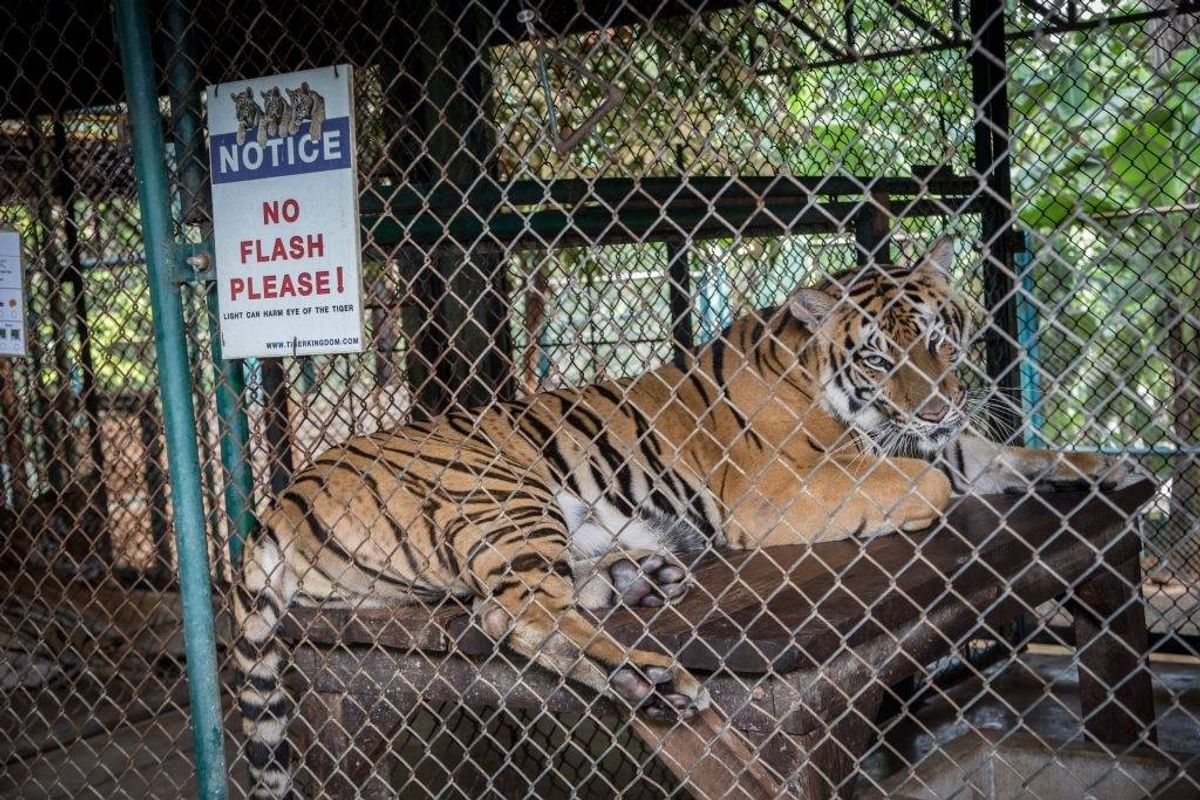
A tiger seen inside a small cage in the tourist attraction ‘Tiger Kingdom’ on September 21, 2019 in Chiang Mai, Thailand(Image: Anadolu Agency via Getty Images)
More than 70 tigers have suddenly perished at a wildlife park – with visitors who may have come into contact with them now under observation. 72 tigers died across two Tiger Kingdom parks in the Mae Taeng and Mae Rim districts in Chiang Mai province, in Thailand, within just 10 days.
The reason behind the deaths remains unknown, but park staff are frantically disinfecting enclosures and tending to surviving animals. The carcasses of the tigers have now been cremated and buried.
Earlier this month, the Chiang Mai regional livestock office revealed that post-mortems of the animals discovered genetic material of canine distemper virus (CDV) and signs of bacterial infection – but no avian influenza type A virus, also known as bird flu.
“If we detect any sick persons, we will prepare for a nationwide monitoring measure,” said Monthien Khanasawat, director-general of the Public Health Ministry’s Disease Control Department. “This will include contact tracing and treatment as necessary.”
Mr Monthien spoke at a news conference in an apparent effort to reassure the public that the tigers’ deaths did not come from bird flu, which has been resurgent in parts of Asia. Thailand witnessed 17 fatalities among 25 infected patients from poultry-caused influenza from 2004 to 2007, according to the Public Health Ministry, reports the Mirror.
CDV, which affects both dogs and cats, can trigger more severe symptoms in felines and tigers and spreads via bodily fluids and through the air. Thai officials stated that tigers in captivity, already weakened by stress and inbreeding, might be especially susceptible to this viral disease.
However, Visit Arsaithamkul, a vet taking part in the investigation, voiced worries that the source of the infections remains unknown.
Writing on Facebook, he suggested that since the two facilities are just 18 miles apart, tainted food from a shared supplier might have sparked the outbreak.
Both attractions, run under the Tiger Kingdom brand, stay shut. Thai officials continue monitoring the risk of an avian flu epidemic.
Mr Monthien called on Thais to exercise caution when eating poultry after a person in a nearby nation tested positive for bird flu.
The initial animal-to-human bird flu transmission was documented in Hong Kong in 1997 before an epidemic swept Asia in 2003.
Across Thailand, tens of millions of poultry were destroyed during previous outbreaks, whilst consumption dropped dramatically due to infection fears.
For the latest breaking news and stories from across the globe from the Daily Star, sign up for our newsletters.
