
Trump calls for naval coalition to secure Strait of Hormuz: Can it work amid global risks?
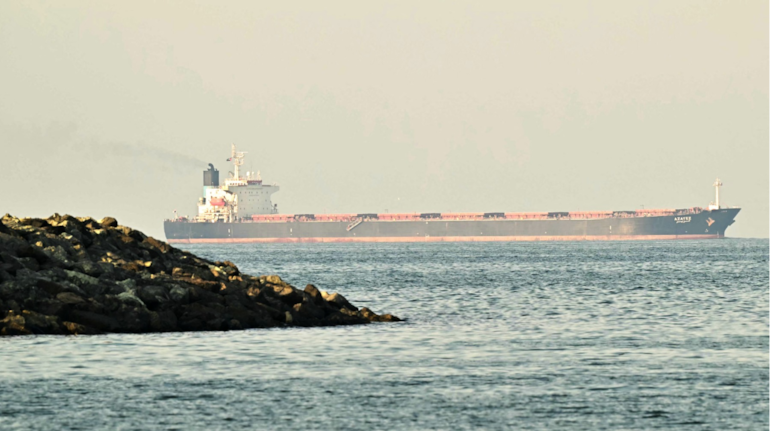
The Strait’s blockade has sent global oil prices soaring by 40 to 50 percent, with crude trading around $100 per barrel as the Middle East conflict entered its third week.

- Trump urges NATO, China, allies to secure Strait of Hormuz
- Global oil prices surge 40-50% as Hormuz blockade continues
- Japan, Australia decline warship deployment; Iran issues warning

Sixteen days into the West Asia conflict, U.S. President Donald Trump has now urged NATO allies, China, and other major oil‑importing nations to form a naval coalition to secure the Strait of Hormuz, a critical maritime artery that Iran has effectively closed in retaliation for the US-Israeli military campaign against Tehran.
Trump claimed that the U.S. has already destroyed “100% of Iran’s military capability,” but he warned that Tehran could still “send a drone or two, drop a mine, or deliver a close-range missile somewhere along, or in, this waterway”. “Hopefully China, France, Japan, South Korea, the UK, and others… will send ships to the area so that the Hormuz Strait will no longer be a threat by a nation that has been totally decapitated,” Trump wrote on his Truth Social platform.
“In the meantime, the United States will be bombing the hell out of the shoreline, and continually shooting Iranian boats and ships out of the water. One way or the other, we will soon get the Hormuz Strait OPEN, SAFE, and FREE!”
Trump argued that nations benefiting from the strait should help secure it and warned that failure to respond would be “very bad for the future of NATO.” He also threatened to delay a planned summit with Chinese President Xi Jinping if Beijing does not cooperate.
However, Japan and Australia have both stated they will not deploy warships.
Meanwhile, Tehran has cautioned against foreign intervention.
In a call with French President Jean-Noel Barrot, Iranian Foreign Minister Abbas Araghchi urged countries to “refrain from any action that could lead to escalation and expansion of the conflict.” On social media, Araghchi described the U.S. security presence in the Gulf as “inviting rather than deterring trouble” and called on neighboring countries “to expel foreign aggressors.”
The Strait’s blockade has sent global oil prices soaring by 40 to 50 percent, with crude trading around $100 per barrel as the Middle East conflict entered its third week.
Story continues below Advertisement
The International Energy Agency (IEA) announced last week that 400 million barrels of oil will be released from strategic reserves, beginning with Asia-Oceania nations, followed by Europe and the Americas. Japan, which depends on the Middle East for 95% of its oil imports, instructed managers of its reserves to release stockpiles immediately.
The impact of the blockade is being felt globally.
In Asia, several countries have introduced work-from-home mandates and fuel-saving measures.
Thailand’s Prime Minister Anutin Charnvirakul ordered civil servants to work remotely, suspend overseas trips, and use stairs instead of elevators. Vietnam has also urged businesses to encourage employees to work from home whenever possible to reduce transportation needs, according to the country’s trade ministry.
Pakistan has implemented a four-day work week and mandated work-from-home for half of its public sector workforce, while key sectors such as banking remain exempt. Prime Minister Shehbaz Sharif said the measures aim to lower national fuel consumption and preserve foreign exchange reserves. Schools and universities in the country have been closed for at least two weeks, with online classes recommended to continue education.
In India, while petrol and diesel supplies have remained stable, the disruption of shipping through the Strait of Hormuz has begun to affect liquefied petroleum gas (LPG) deliveries. Experts warn that if the conflict continues, more countries could adopt remote work and other fuel-saving measures to mitigate the economic impact of rising energy costs and constrained oil and gas supplies.
In Australia, officials have warned against price-gouging and panic buying, while in India, restaurants are adapting menus to conserve cooking gas.
The challenge of reopening the Strait
The Strait of Hormuz is just 21 nautical miles (39 km) wide at its narrowest point, with shipping lanes even narrower and vulnerable to attacks. It separates Iran from Oman and the UAE, forming a chokepoint for about one-fifth of global oil shipments. Since the onset of hostilities, Iran has struck over a dozen vessels attempting passage.
Maritime security expert Alexandru Hudisteanu, a former Romanian Navy officer, as cited in an Al Jazeera report, stated that a multinational coalition faces significant hurdles, “Interoperability is the biggest hurdle… coordinating different navies, units, and doctrines would be extremely difficult. The Strait of Hormuz is a very unforgiving environment to sail with wartime threats, especially under missile threats and asymmetric potential mines or unmanned systems that could damage or destroy ships.”
Providing escorts would be costly and risky, potentially escalating the conflict. Hudisteanu added that Iran’s proximity to the shoreline and narrow maritime passage gives Tehran a strategic advantage.
“The security of the strait could be achieved. It’s just a matter of how much time you need and how many assets you need… rushing could have negative implications for the security of the mission and the region.”
The global hesitation
No country has publicly agreed to Trump’s call for warships.
Britain is “intensively looking” at what can be done, according to Energy Secretary Ed Miliband. China has urged cessation of hostilities and calls for a stable energy supply.
Japan, on the other hand, said the threshold is “extremely high” to deploy forces, and France confirmed a defensive posture. South Korea stated it is monitoring the situation and considering measures to ensure the safety of energy routes.
Some nations have negotiated limited exceptions with Tehran.
Two Indian-flagged LPG tankers have sailed through the strait, while a Turkish vessel was cleared after direct negotiations. Fourteen additional Turkish vessels are awaiting permission. Reports indicate France and Italy have engaged Iranian officials, though no agreements have been confirmed.
“Iran is affecting maritime supply, the security of the region, and the global oil and gas market,” Hudisteanu noted.
While Trump hopes a naval coalition could reopen the Strait of Hormuz, the operation faces immense operational, geopolitical, and security challenges. Iran’s geographic advantage, combined with asymmetric capabilities, makes the mission risky, believe geopolitical analysts.
Reopening Hormuz is theoretically possible, but it would require careful planning, extensive resources, and international coordination, none of which are guaranteed amid the ongoing conflict.
