
Iran war enters energy phase: Qatar’s Ras Laffan LNG hub hit. Is India’s gas supply at risk?
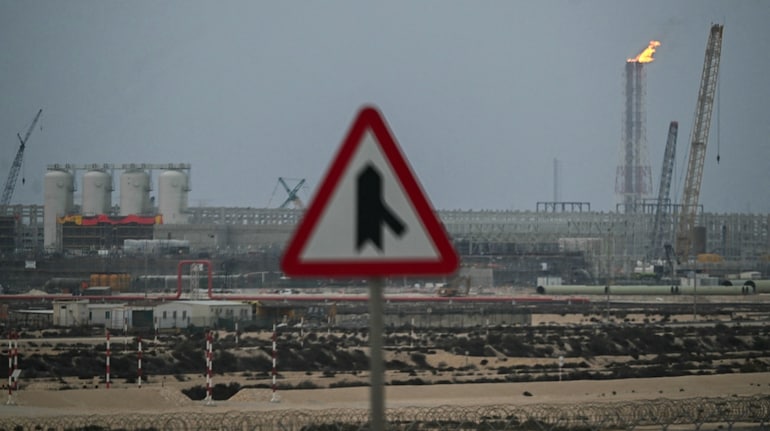
This photo shows QatarEnergy’s operating facilities in Ras Laffan Industrial City on March 2, 2026. (Photo by AFP)


As the US-Israel-Iran conflict deepens, it is beginning to spill into the global energy system. What started as military strikes has now expanded into attacks on critical oil and gas infrastructure, raising concerns about supply disruptions and price volatility. For India, which depends heavily on imported energy, the developments are significant, though not yet alarming.
The latest escalation saw Israeli strikes on Iran’s South Pars gas field, followed by Iran targeting Qatar’s Ras Laffan Industrial City, the world’s largest LNG hub. The back and forth has shifted the conflict into what analysts are calling an emerging “energy war.”
US President Donald Trump warned Iran to stop attacks on Qatar, threatening to “massively blow up the entirety of the South Pars Gas Field”.
In a post on social media, he said Washington “knew nothing” about the Israeli attack on South Pars, saying it had “violently lashed out” in “anger”.
He said that “no more attacks will be made by Israel” on South Pars unless Iran continues to attack Qatar, in which case the United States “will massively blow up the entirety” of the gas field.
Ras Laffan attack and global energy shock
Qatar confirmed damage to its key LNG infrastructure after the strike.
QatarEnergy said there was “extensive damage” to its main gas facility. The country’s foreign ministry called the attack a “flagrant violation of the state’s sovereignty, as well as a direct threat to its national security.”
Story continues below Advertisement
Ras Laffan is central to global gas supply. Qatar exports around 80 million tonnes of LNG annually, accounting for nearly one-fifth of global LNG trade. A disruption here has immediate ripple effects across energy markets.
Following the attack, oil prices rose sharply, with Brent crude moving to around $110 to $112 per barrel. Natural gas prices also climbed amid fears of supply tightening.
Because a significant portion of LNG flows through the Strait of Hormuz and originates from Qatar, even temporary disruptions can push up prices in Asia and Europe.
Market reaction: Global and Indian impact
Financial markets reacted quickly to the escalation.
In the United States, the S&P 500 fell 1.36 per cent, the Dow Jones dropped 1.63 per cent, and the Nasdaq declined 1.46 per cent. Asian markets followed suit, with Japan’s Nikkei and South Korea’s Kospi falling 2.74 percent and 2.50 per cent respectively.
India also saw sharp declines. The Sensex dropped by 1,722 points while the Nifty50 fell over 522 points in early trade, tracking global losses and rising oil prices.
These movements reflect investor concerns about higher energy costs and potential economic slowdown if the conflict continues.
Why Qatar matters so much for India
Qatar is India’s largest LNG supplier, making it a critical partner in the country’s energy mix.
India imported about 27 million tonnes of LNG in 2024-2025, with Qatar accounting for roughly 40 to 47 percent of those supplies. Long-term contracts, including a major deal between Petronet LNG and QatarEnergy, ensure stable flows and relatively predictable pricing.
LNG is essential for several sectors in India, including power generation, fertiliser production, city gas distribution, and industrial fuel use.
Because of this dependence, any disruption in Qatar’s production or exports has a direct impact on India’s energy availability.
What happens if disruptions continue
The full extent of the damage at Ras Laffan is still unclear. QatarEnergy has reported “extensive damage,” and some reports suggest operations may take time to fully resume.
If supply disruptions persist, India could face several challenges.
Pressure on LNG supply and prices: Reduced availability of LNG would push Indian buyers toward the spot market, where prices have already surged. This increases import costs and adds pressure on the overall energy bill.
Impact on key sectors: Fertiliser production, which depends on natural gas, could face higher costs or reduced output. City gas systems and CNG supplies may also tighten, affecting urban consumers and transport.
Inflation risks: Higher oil and gas prices tend to feed into transport costs and commodity prices. This can gradually push up inflation, even if retail fuel prices do not immediately rise.
What it means for households
For most households, the impact is indirect but noticeable over time.
Fuel costs influence transportation, food prices, and everyday goods. Electricity tariffs may also come under pressure if power generation costs rise.
Fertiliser price increases can affect agriculture, which in turn impacts food prices.
However, these effects typically unfold gradually rather than immediately.
India’s current position
The government has sought to reassure citizens that supplies remain stable.
Officials say crude oil and refined fuel stocks are sufficient for current needs. At the same time, authorities have acknowledged that the LPG situation is “still worrisome” and have urged people to conserve energy.
Steps are being taken to manage the situation. These include sourcing alternative supplies, prioritising household LPG distribution, and encouraging expansion of piped gas networks to reduce dependence on cylinders.
A manageable but evolving risk
While the situation presents clear risks, it is not yet a crisis for India.
The country has diversified energy sources, strategic reserves, and long-term supply contracts that provide a buffer against short-term disruptions.
That said, the conflict’s shift into the energy domain adds a new layer of uncertainty. If attacks on infrastructure continue or escalate, the impact on global prices and supply chains could become more pronounced.
For now, India is in a position to manage the shock, but it will need to stay prepared for a prolonged period of volatility in global energy markets.
