
Baidu robotaxis freeze in Wuhan traffic, raising fresh questions over driverless tech
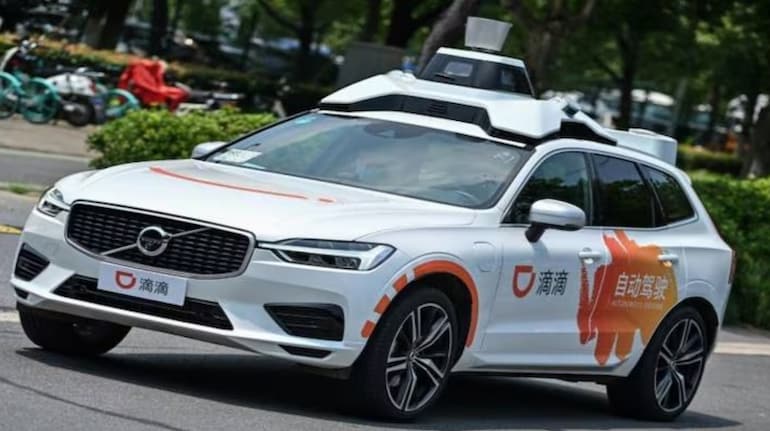
Baidu robotaxis stall in Wuhan, sparks concern
The spotlight is back on how reliable autonomous vehicles really are in real-world conditions following a large-scale technical failure involving driverless taxis in China.
Several robotaxis, operated by Baidu’s Apollo Go service, suddenly stopped earlier this week in the middle of roads in China’s Wuhan. The cars sat motionless in live traffic, forcing other vehicles to manoeuvre around them and creating temporary gridlock.
Videos of this incident that took place in one of China’s biggest test hubs for driverless mobility are now circulating online
Reports suggest that more than 100 robotaxis just came to a halt, some of them on busy city roads and even high-speed routes. Local police say the disruption was caused by a “system failure”.
Passengers inside the vehicles were able to exit safely, but the situation was far from comfortable. Some riders reportedly hesitated to step out into moving traffic and had to call authorities for assistance. In a few cases, passengers were stuck inside the vehicles for close to two hours before they could leave.
While no injuries were reported, the incident caused significant disruption and quickly went viral on Chinese social media, triggering concern as users wondered whether the technology is ready to be used widely yet.
Baidu has been operating hundreds of robotaxis across Wuhan, which has become the company’s “test lab” for its autonomous driving plans as it tries to scale driverless transport. The company has been pushing hard to scale this up, clocking millions of rides and now looking beyond China, with plans to expand into the Middle East and parts of Europe.
But moments like this expose where things can still go wrong. Unlike human drivers, these cars depend entirely on software, sensors and constant connectivity. If something in that chain fails, it’s not just one vehicle that’s affected. Multiple cars can end up stuck at the same time, which is much harder to deal with in the middle of live traffic.
Story continues below Advertisement
And this isn’t just a China-specific problem. Similar incidents have played out in the United States too, where driverless cars have occasionally stalled or behaved unpredictably. It points to a broader issue with the technology itself, rather than a one-off glitch tied to a single company.
Authorities are still trying to figure out exactly what triggered the Wuhan outage. But the bigger takeaway is fairly clear. Autonomous driving has come a long way, but it’s still not foolproof. Edge cases, unexpected failures and real-world complexity continue to test how reliable these systems actually are when scaled up.
