
The Japan train mistake that instantly shows locals you’re a ‘rookie’ tourist
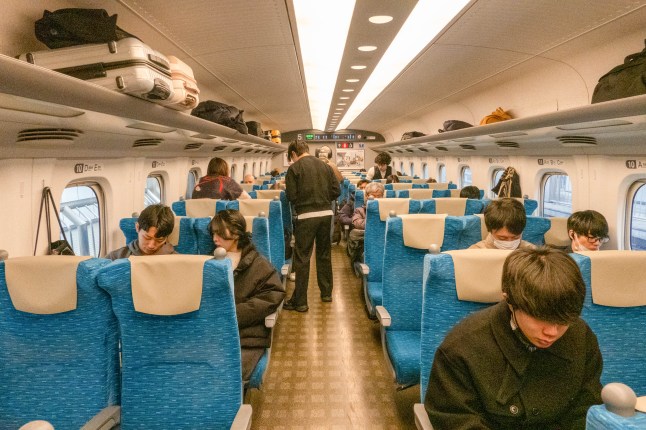
A bum bag and a confused look on your face isn’t the only thing that can single you out as a tourist.
Japan is a famously polite and rule-following nation, and it seems that visitors are falling short when it comes to public transport etiquette.
Metro previously shared the results of a study which found that locals are fed up of foreign travellers ‘speaking loudly on trains, buses, or subways’.
Commissioned by the Japan Private Railway Association, a body made up of 72 rail companies nationwide, a whopping 69% of the 5,202 people surveyed stated that loud behaviour hugely bothers them.
However, Chieki Ikemoto, a Tokyo tourism expert, has told Metro about another frustrating travel habit — one she wishes visitors would educate themselves about.
The Japan resident shares: ‘One thing I’d love for travellers to know about is the “reserved seat with oversized baggage area” policy.
Best of Metro Deals
Get exclusive discounts with Metro Deals – save on getaways and spa days. Powered by Wowcher
Bannatyne Spa: Spa day for two with treatments, lunch & prosecco — save up to 57% off.
Mystery Escape: Hotel stay with return flights from as low as £92pp — save on worldwide holiday packages.
Beach Retreat (Lanzarote): 4* Lanzarote beach holiday with flights — save up to 58%.

‘Long-term travellers usually have a lot of luggage. To keep the aisles clear, I’d highly recommend they book the seats at the very back of the car where there’s extra space for large bags’.
The policy Chieki is referring to mainly concerns the various routes available on the bullet train lines.
A must-do for anyone visiting Japan, the country’s famous high speed trains serve around 432,000 passengers each day, taking just two hours to get from Tokyo to Osaka (compared to between 8 and 10 hours on local trains).
A number of TikTok videos have shown tourists struggling with their luggage squished against their legs or blocking the aisle because they were not aware of this ticket option.
Those in the know have called it a ‘rookie mistake’, while another regular bullet train user said: ‘Look around you and can see most of those people with big luggage are foreigners.’
And, unsurprisingly, this mishap tends to be inconvenient for everyone, with 42% of the survey’s respondents saying they have low tolerance for tourists carrying oversized suitcases and bags.
Japanetic, a Japanese etiquette blog written by resident Niko Mezuro, explains that public transportation in Japan operates on a culture of silence and mutual respect.
‘This unwritten rule stems from the Japanese concept of not bothering others (meiwaku wo kakenai) and maintaining harmony in shared spaces’.
How do the oversized baggage tickets work?
These particular tickets are marketed for anyone travelling with luggage with a total of three dimensions between 161 and 250 cm.
They’re the same price as reserved seats in ordinary cars, but they are in pretty high demand.
The amount of tickets available vary, with an average of just five seats up for grab per train. They can be purchased either online or from a JR station ticket office.
Located behind the back row of seats, there should be signage on the floor which shows where the ‘reserved seat with oversized baggage area’ ticket holders can place their luggage.

However, due to the rather complicated baggage system on-board the Shinkansen line trains, it can sometimes become confusing as to who is entitled to use this space.
To avoid any awkwardness, make sure to check your ticket (which will say ‘Your reservation is seats with an oversized baggage area’).
If you haven’t been able to make a reservation, you are still allowed to store luggage in baggage racks, footwell spaces, and deck baggage storage areas.
What if I can’t get an oversized baggage ticket?
Some users on TikTok have encouraged tourists to try an alternative method.
In the comments of one video documenting some bullet train baggage drama, @KazaMarie wrote: ‘Shipping luggage from hotels has been a game changer for us.’ And @Oliwia called these services a ‘life saver.’
Luggage forwarding is incredibly common in Japan, with major platforms like Yamato and Bounce offering affordable options for people who want to send their bags between airports, hotels, or other destinations.
Do you have a story to share?
Get in touch by emailing [email protected].
MORE: Eurostar launches flash sale with train tickets to 5 destinations for £35
MORE: I flew 27 hours to get to Japan — and spent just 18 hours there
MORE: I’ve visited Italy 21 times, but no other city beats this little-known gem
