
The protein debate: Rujuta Diwekar vs the rest of the world
Every few months, India’s nutrition discourse finds a new villain. Carbs. Sugar. Seed oils. Gluten. But right now, the spotlight has settled squarely on protein, not just as a nutrient, but as a cultural debate about food, authority and who gets to decide what goes on the Indian plate.
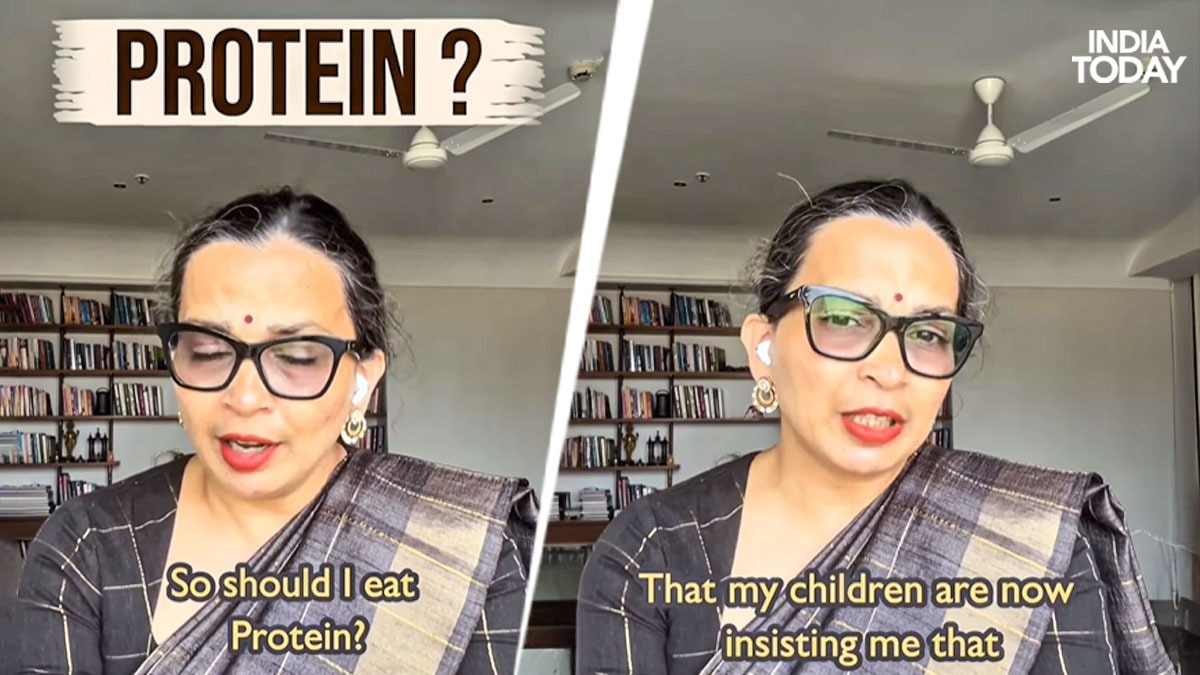
Celebrity nutritionist Rujuta Diwekar’s recent Instagram reel, released on April 1, has set social media ablaze.
advertisement
In the video, Diwekar addressed a scenario she said many parents shared with her: their sons urging them to add more protein to meals. Her response? Ignore them. Diwekar’s logic – Until children started cooking meals for multiple people daily, their inputs on protein, collagen, creatine or Omega-3s didn’t count.
“Bachha hai, bada hone do (they are children, let them grow),” she signed off.
The caption added another line that stoked the debate further: “Sorry to break your heart, but protein is not the silver bullet it’s made out to be.”
Within hours, the reel had travelled far beyond Instagram’s wellness circles.
But the reaction it triggered was interesting. Instead of outrage, many doctors and nutritionists responded with explanations.
But first, let’s understand what protein is and why it’s being talked about.
THE PROTEIN INDIA REALLY NEEDS
Protein is not a fad nutrient imported from Western gyms. It is a fundamental building block of human health.
Every cell in the body depends on protein. It helps build and repair muscles, maintain bones, regulate hormones, support immunity and stabilise blood sugar. Adequate protein intake also prevents muscle loss with age, improves recovery from illness and supports metabolic health.
Still protein remains one of the most missing components in the average Indian diet.
Most Indian meals revolve around carbohydrates such as rice, wheat, potatoes, while protein sources appear in much smaller quantities. Even vegetarian staples like dal often provide only modest protein unless eaten in sufficient amounts.
India’s national nutrition guidelines acknowledge this gap. The National Institute of Nutrition, operating under the Indian Council of Medical Research, recommends that adults consume at least 0.83 grams of protein per kilogram of body weight daily.
That means a person weighing 65 kilograms should consume minimally 54 grams of protein every day.
In reality, many Indians fall far short of that number.
Evidence from the ICMR-INDIAB Study 2025, one of the country’s largest surveys on diabetes, paints a worrying picture: Indian diets are dominated by low-quality carbohydrates and contain very little protein, a pattern strongly linked to the country’s rising diabetes rates.
And that reality is visible everywhere, from fatigued middle-aged adults to rising metabolic diseases in younger populations.
WHEN CHILDREN START CORRECTING PARENTS
Many nutritionists saw something deeper in Diwekar’s reel.
Some argued that younger Indians pushing their parents to eat more protein are not being disrespectful, they are responding to what they see around them.
Nutritionist Nandita Iyer pointed out that an entire generation has watched parents eat traditional meals yet develop diabetes, joint problems and declining mobility.
It is a familiar sight in airports across the country: Indian travellers in their sixties lining up for wheelchairs, while older passengers from other countries like China stride past them.
For younger Indians exposed to global nutrition science, the question arises: could diet be part of the problem?
Another expert, Dr. Vartika Vishwani, a Gurugram-based oncologist, put it bluntly in a response to the controversy.
“Protein is not a trend. It’s basic nutrition,” she wrote.
She pointed out a reality many households recognise but rarely discuss.
Women frequently eat last, skip meals or survive on tea and leftovers, prioritising the family’s needs above their own nutrition. This results in fatigue, hair fall, low energy and muscle weakness.
No one is demanding protein powders in every kitchen, she said. But foods like dal, curd, paneer, eggs and nuts should not be treated as optional extras.
The deeper issue: who carries the burden of food
The debate did not stop at nutrition.
Nutritionist Sangeetha Aiyer argued that the controversy reveals a deeper social tension inside Indian homes.
Food, she said, is rarely just about food.
In many households, women still carry the invisible labour of planning meals, cooking and feeding the family. At the same time, boys are often not taught cooking or household skills.
So when younger men suddenly enter the conversation about nutrition, armed with Instagram reels and podcast advice, it can feel less like helpful input and more like criticism of years of unpaid labour.
Aiyer pointed out another telling pattern from her practice.
When male clients seek nutrition help, women in their families frequently join consultations, follow meal plans and support the process. When female clients seek help, the rest of the household rarely gets involved.
The result? Health becomes an individual burden rather than a shared family responsibility.
As she put it, no diet, no matter how scientifically correct, can work in isolation from the household system around it.
A DEBATE WORTH HAVING
The truth, as usual, lies somewhere between the viral clips and the outrage they generate.
Protein is not a miracle nutrient that will single-handedly fix India’s health crisis. But neither is it a Western obsession irrelevant to Indian kitchens.
India’s dietary imbalance, high carbohydrates, low protein, has been flagged repeatedly by researchers and public health experts. Correcting that imbalance does not require abandoning traditional food.
It simply means rebalancing the plate.
A bowl of dal large enough to matter. A serving of curd. A handful of nuts. Eggs, paneer, legumes. Small additions that quietly improve the nutritional profile of everyday meals.
But perhaps the real lesson from this internet storm lies beyond protein.
Because the debate revealed something larger about the Indian household: who decides what we eat, who cooks it, and who sacrifices their own health along the way.
So maybe the real question India should be asking is not whether protein is a fad.
It is this: in a country battling diabetes, muscle loss and lifestyle diseases, can we afford to keep ignoring what is missing from our plates, and who is paying the price for it?
– Ends
Must Watch
