
Meet the Maga disciples tearing up the diplomatic rule book across Europe
Donald Trump has never pretended to be a conventional statesman. The US president negotiates peace deals and trade agreements over social media and relishes ripping into long-standing allies rather than criticising Washington’s old adversaries.
The 2025 class of ambassadors Trump has appointed across Europe, stacked full of political loyalists, friends, wealthy campaign donors and his son-in-law’s father, appear to have been given license to disregard the traditional diplomatic rule book.
Several of Trump’s diplomats have caused political storms in their first few months in situ.
France dramatically announced it was cutting off US ambassador Charles Kushner’s line of communication to French government officials, after he didn’t turn up to a summons for talks from the foreign ministry, a break in normal diplomatic protocol.
Paris described the apparent snub by Trump’s man on the ground as a failure to grasp the “basic requirements” of serving as an ambassador.
Kushner, appointed to one of the prime postings in Europe, reportedly donated $1 million to a pro-Trump super Pac in 2023. His son, Jared Kushner, is married to Trump’s daughter Ivanka, and remains a key figure in the president’s orbit, recently acting as his representative in peace negotiations in Ukraine and the Middle East.
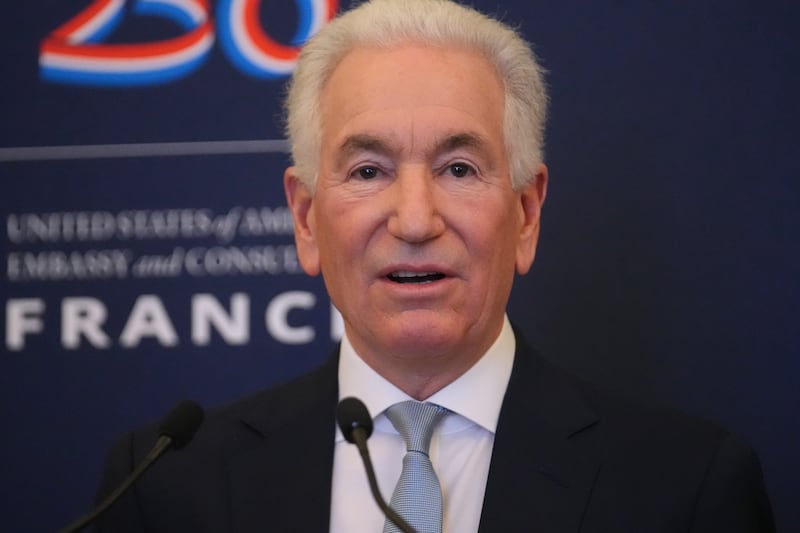
The row kicked off when the US embassy to France reposted comments from the US State Department on X, warning about “violent radical leftism” in response to the killing of a young far-right activist in clashes in Lyons in February. The French government took serious issue with attempts by Washington to politicise the killing.
Paris had already been put out by an earlier open letter Charles Kushner penned to the Wall Street Journal, where he accused president Emmanuel Macron of not doing enough to fight anti-Semitism.
Following the article’s publication, the ambassador was summoned to the French foreign ministry at the Quai d’Orsay, but sent a lower-level official in his place. Failing to respond to a second request for a formal meeting from the foreign ministry prompted Paris to temporarily cut off Kushner.
[ France bans US ambassador Charles Kushner from meeting French ministersOpens in new window ]
The dispute was patched up shortly afterwards and diplomatic access restored when Kushner said he wouldn’t interfere in domestic politics.
Kushner, a New Jersey real-estate developer, has a pretty colourful past. He pleaded guilty to more than a dozen counts of tax evasion and witness-tampering charges in 2005. The court case involved revelations he had hired a sex worker to seduce his brother-in-law, who was co-operating with federal investigators, and have a video recording of the encounter sent to the man’s wife, who was Kushner’s sister.
One former senior diplomat from an EU state, who served in Washington during Trump’s first term, said many of the new ambassadors “considered themselves diplomatic warriors for Trump”. Some had a tendency to refer to themselves as “ambassadors of Trump” rather than the United States, he said. “They all belong to the Mar-a-Lago club. They have the president’s phone number, they are in touch with each other,” the former European ambassador said.
Washington has always been comfortable throwing its weight around and using leverage it holds over other countries to pursue its agenda. Beijing has done the same in recent years. That strong-arming traditionally happens behind closed doors, rather than on social media.
Bill White described his first 100 days as US ambassador to Belgium as among the best of his life in a video pushed out by the embassy this February.
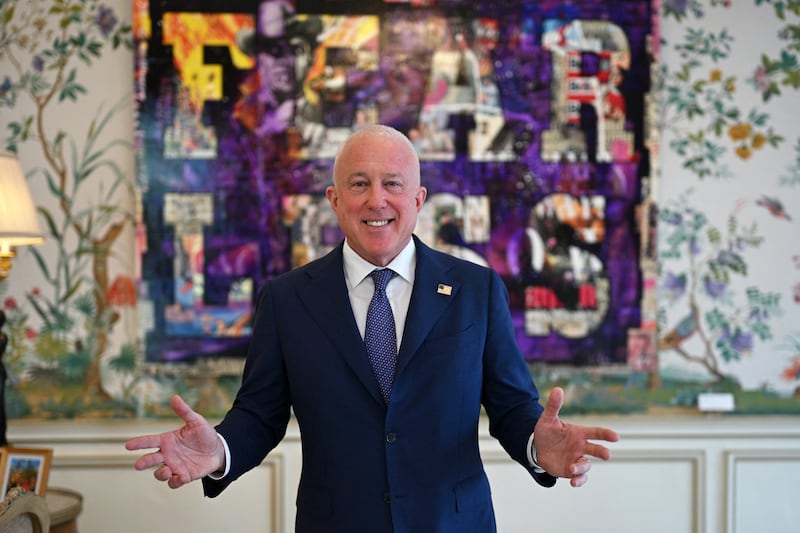
It took the former New York businessman 103 days to get embroiled in a blazing row with the Belgian government over anti-Semitism. The spat dominated the political agenda in Belgium for days.
He clashed with the government over reports three Jewish mohels were being investigated in Antwerp for allegedly performing circumcisions without medical training, contrary to national laws.
In Trumpian all-caps fashion, the ambassador took to X, formerly Twitter, to protest the police investigation. “TO BELGIUM, SPECIFICALLY YOU MUST DROP THE RIDICULOUS AND ANTI SEMITIC ‘PROSECUTION’ NOW,” White wrote.
White rounded on health minister Frank Vandenbroucke, from the Flemish left-wing Vooruit party, calling him “very rude and … quite obnoxious” for not intervening.
The full-blown diplomatic spat played out over social media. Belgium’s foreign minister Maxime Prévot said any suggestion Belgium was anti-Semitic was “false, offensive and unacceptable”, adding that so were the US diplomat’s comments.
“An ambassador accredited to Belgium has a responsibility to respect our institutions … Personal attacks against a Belgian minister and interference in judicial matters violate basic diplomatic norms,” Prévot said.
The controversy widened when White took offence to comments made by another politician, Conner Rousseau, leader of Vooruit, who had drawn parallels between Trump and Adolf Hitler. The ambassador declared Rousseau would be barred from future travel to the US.
Bart De Wever, Belgium’s nationalist prime minister, hit back at the US ambassador for trying to “stir things up” in the country’s domestic politics.
Once a backer of the Democratic Party and Barack Obama, White switched sides and doubled down on team Trump during the president’s first term. He previously ran the Intrepid military museum, located aboard a second World War-era aircraft carrier in Manhattan. He and his husband, Bryan Eure, moved into Whitlock Hall, the US ambassador’s residence in Brussels, in early November.
The public nature of the controversy shocked people in Belgium’s diplomatic circles. There is an unwritten rule in Belgian politics that the US ambassador of the day enjoys unparalleled access to the highest levels of government, due to the weight placed on transatlantic relations. That preferential treatment was based on an understanding any grievances would be aired in private.

“I think the greatest sin you could commit as a Trump appointee is to look like a standard State Department ambassador or official,” said Nick Bisley, professor of international relations at La Trobe University in Melbourne. The new crop of US ambassadors were “very shouty, very attuned to certain cultural issues centred around traditional western [values], anti-Semitism of a particular kind,” he said.
They seemed to see a “virtue in behaving badly, bursting norms and sticking it to the elite”, he said.
Anthony Gardner served as US ambassador to the European Union under Obama from 2014 to the start of 2017. “This stuff generally is counterproductive. Tough messages should be delivered in private. Criticising your host country in the press is not going to go down well,” he told The Irish Times.
Gardner, who is a senior adviser to lobbying and advisory firm Brunswick, said the ambassadors appointed by the Trump administration seemed to “love the attention”.
European governments should do their best to resist taking the bait if publicly criticised by Trump’s envoys. “Ignore them, or remind them what they’re doing is not conducive to the relationship,” the former ambassador said.
White and Kushner are not rogue diplomats on solo runs. Marco Rubio, the US secretary of state, reportedly sent out missives to the administration’s envoys in Europe, directing the new ambassadors to bang the drum about cases involving migrants committing violent crimes and anti-Semitism.
The White House has openly aligned itself to populist and extreme-right parties in several European countries: outgoing prime minister Viktor Orbán’s Fidesz in Hungary, the far-right Alternative for Germany, Law and Justice in Poland.
The disregard for traditional protocol has drawn comparisons with a strategy China pursued a decade ago, known as “wolf warrior” diplomacy, which involved its ambassadors and emissaries adopting a more combative tone. The approach from Beijing was to “ruffle feathers for the sake of ruffling feathers” and project a powerful outward image of a China that wasn’t overly concerned about diplomatic niceties, according to Bisley. “It backfired,” he said.
Bisley said he felt the wolf warrior strategy, which China has since mostly abandoned, was in part for domestic consumption and driven by ambassadors wanting to send signals to president Xi Jinping.
He saw a lot of that in the behaviour of the Trump administration’s top diplomats. “They are playing to the boss … They want to please him,” he said.
In Poland, US ambassador Tom Rose announced he was cutting all contact with Włodzimierz Czarzasty, speaker of the parliament, after the deputy said he did not think Trump deserved the Nobel Peace Prize.
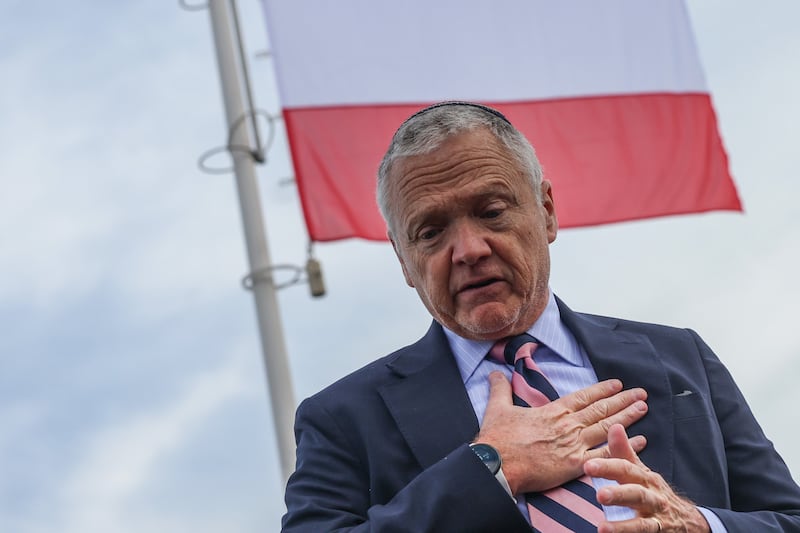
Rose, who was previously an adviser to former US vice-president Mike Pence, accused the Polish politician of making “despicable, disrespectful and insulting comments” about the US president. Poland’s rime minister Donald Tusk was drawn into the fray to publicly rebuke the US ambassador. “Allies should respect, not lecture, each other,” he said.
Stacey Feinberg, a businesswoman, Republican donor and Broadway musical producer, was nominated as ambassador to Luxembourg. She chastised the small country during her appointment hearing for being “naive” about its relations with China, which drew pushback from Luxembourg.
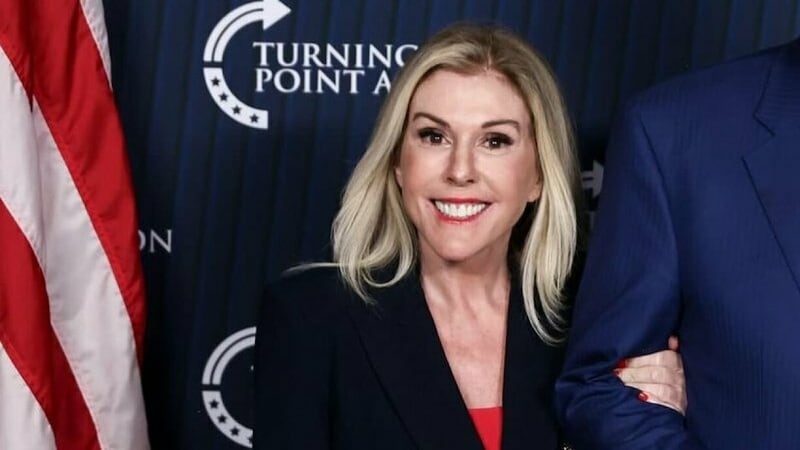
Gardner, the Obama-era ambassador, pointed the finger at a practice in American politics that saw diplomatic postings handed out as a “thank you” to generous campaign donors. The system had been “degraded” over many years as a result, under Democratic and Republican presidents. “Many embassies are ‘sold’ to wealthy donors who might not have any prior knowledge about the country,” he said.
Gardner donated and fundraised for Obama, but before his appointment had spent many years working in Europe. He said there had previously been a policy of “shielding” key postings from being used as “cherries” to give out after an election. That was no longer the case.
Bisley, the Melbourne-based academic, said that though this patronage culture had existed before, the current administration was more blatant about it. “In typical Trump fashion they’ve put the accelerator on the floor,” he said.
