
From Lululemon to Birkenstocks, viral videos are urging shoppers to buy direct from China. Should you do it?
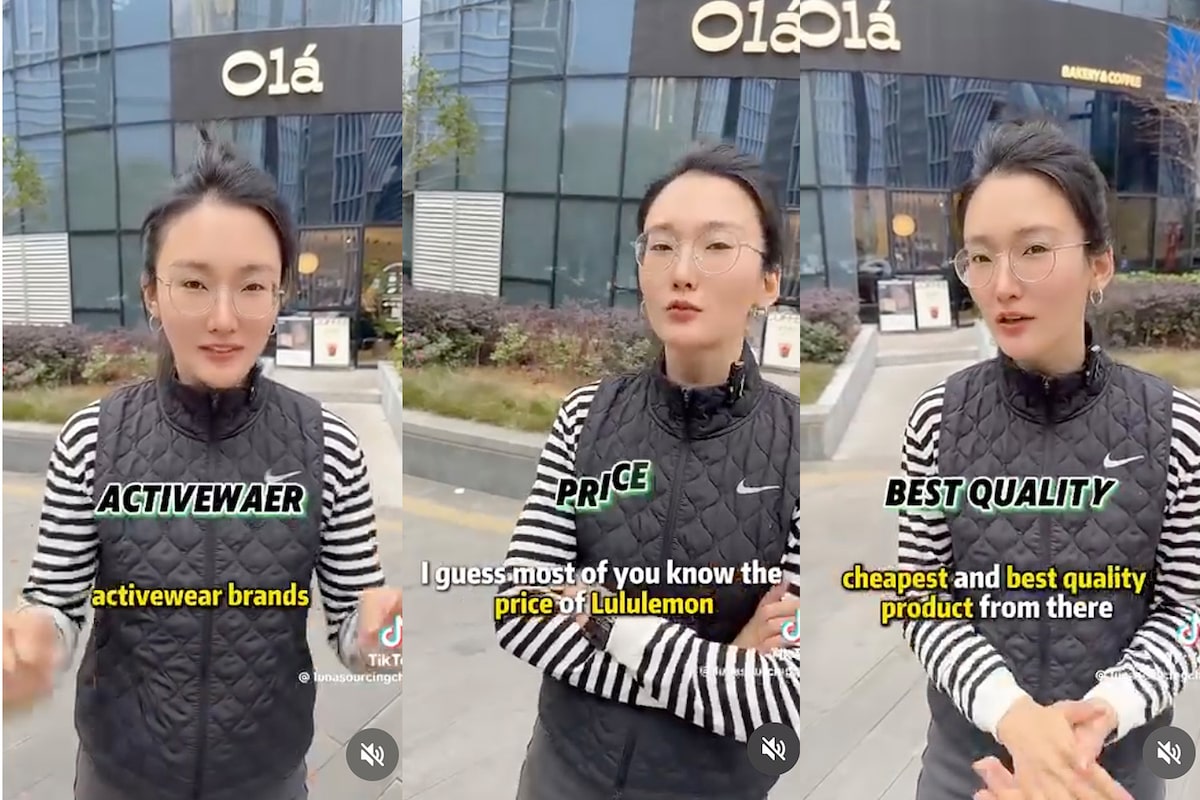
TikTok videos such as these have multiplied in the wake of U.S. President Donald Trump’s 145-per-cent tariffs on Chinese goods, with creators claiming to work with factories behind major brands such as Lululemon, Nike and Dior.Supplied
Standing outside what appears to be a shopping centre in the Chinese city of Yiwu, a woman eagerly tells TikTok viewers that the same factory making a pair of $100 Lululemon Athletica Inc. leggings can sell them directly to customers for just $5 to $6.
“The material and craftsmanship are basically the same because they’re from the same production line,” says the TikTok creator behind @lunasourcingchina, who calls herself an “expert in factory sourcing in China.”
The original clip has since been taken down but not before being re-shared countless times by other creators. Videos like it have resurfaced and multiplied in the wake of U.S. President Donald Trump’s massive tariffs on Chinese goods, with creators claiming to work with factories behind major brands such as Lululemon, Birkenstock Holding PLC and even Hermès SA.
Shoppers in both the U.S. and Canada have been heeding their call to buy straight from the source – even though experts say they’re unlikely to get what they bargained for. April data from Google Trends showed that searches for DHgate, a Chinese wholesaler, were up 900 per cent over the past four days – it was also number two on the app store as of Thursday, second only to ChatGPT.
But experts say the trend of buying cheaper imitations of brand-name products is a new take on an age-old phenomenon – with platforms such as AliExpress and Taobao offering similar options for years.
Brands such as Lululemon have denied that their products are made by the manufacturers touting their wares in these social-media videos. Yet shoppers in both the U.S and Canada, driven by economic headwinds and the impact of tariffs on prices, appear to be hooked on the deals.
“My TikTok feed was absolutely flooded with videos of these Chinese manufacturers showing what seemed like all of this inside information on how these higher-end and luxury brands actually operate,” said Canadian shopper Holly Touring in an e-mail to The Globe and Mail.
Ms. Touring ended up purchasing $32 worth of shoes from a seller claiming to manufacture for a major shoe brand – a purchase that would’ve saved her around $180 compared with buying retail in Canada.
She messaged the TikTok creator, who shared their WhatsApp – a common way manufacturers offer to connect.
“They responded in a short amount of time. They let me know that I could order directly from them for whole orders, and the price would be $10 [per] pair,” she said. “If I just wanted one pair or a few pairs, they could facilitate that order via their storefront on the AliExpress.com site.”
After reading reviews, she ordered two pairs. “I ordered on Monday, and immediately received order confirmation,” she said. “It was a very easy process.”
While the shoes haven’t arrived yet – shipping can take over a month – she was reassured by the many positive reviews the product received online.
Yet consumers are unlikely to get anything close to the same item they buy at the retail counter, experts say. While manufacturers can have access to a brand’s intellectual property and designs, there are other factors prohibiting them from producing exact replicas.
Ming Hu, a distinguished professor of business operations and analytics at the University of Toronto, said many Chinese factories make products for multiple brands, including luxury ones, and manufacturers can access some brand designs and specifications fairly easily.
“These things existed in the past,” he said. “It’s just that traditionally, these brands, their products were still priced at a reasonable level … so there was less incentive for consumers to look for counterfeits.”
But the risks for major manufacturers producing replicas are enormous, including potentially losing lucrative deals with brands. And even if they access their designs, there’s a reason why knockoffs often feel like fakes.
“The thing that may prevent them from making a 100-per-cent copy is the materials,” Mr. Hu said. “That’s usually what the company controls.”
Fabric, material quality and consistency are barriers to creating exact replicas.
Manufacturers are often sent little more than the precise amounts of materials needed to create an order. Even when manufacturers get access to leftover fabric, there’s little incentive to avoid cutting corners in order to raise margins.
“They’ll want to find a relatively cheaper option to substitute,” said Mr. Hu.
Major brands sometimes have similar goals. But there is more oversight when it comes to quality control.
“Brands have specific requirements for the manufacturers – they will say you have to use particular materials,” said Nicolas Lamp, a law professor at Queen’s University. “They have higher standards in terms of what they expect from the manufacturers because they command a much higher price.”
Economic strain caused by tariffs will likely further drive up the market for counterfeits.
And whether consumers are even seeking the authentic item in the first place is dubious.
“We’re seeing a shift in consumer values, given macroeconomic pressures, geopolitical strain and rising prices, which has driven consumers to adopt cost-conscious behaviours,” said Joëlle Grünberg, a partner at McKinsey’s apparel, fashion and luxury group in North America.
McKinsey’s 2025 State of Fashion report showed one in three North American adults say they intentionally bought a dupe of a premium or luxury product with half buying it for cost savings, while 17 per cent said they’d continue to purchase dupes even if they could afford the original.
And consumers don’t always care about the logistical challenges or time involved in obtaining them.
“The rise of Shein has introduced the culture of getting direct shipments from Asia even if they take longer to come,” said Ms. Grünberg, referring to the global e-commerce platform.
With reports from Matthew Frank

