
Trump announces 35% tariffs on all Canadian goods starting Aug. 1
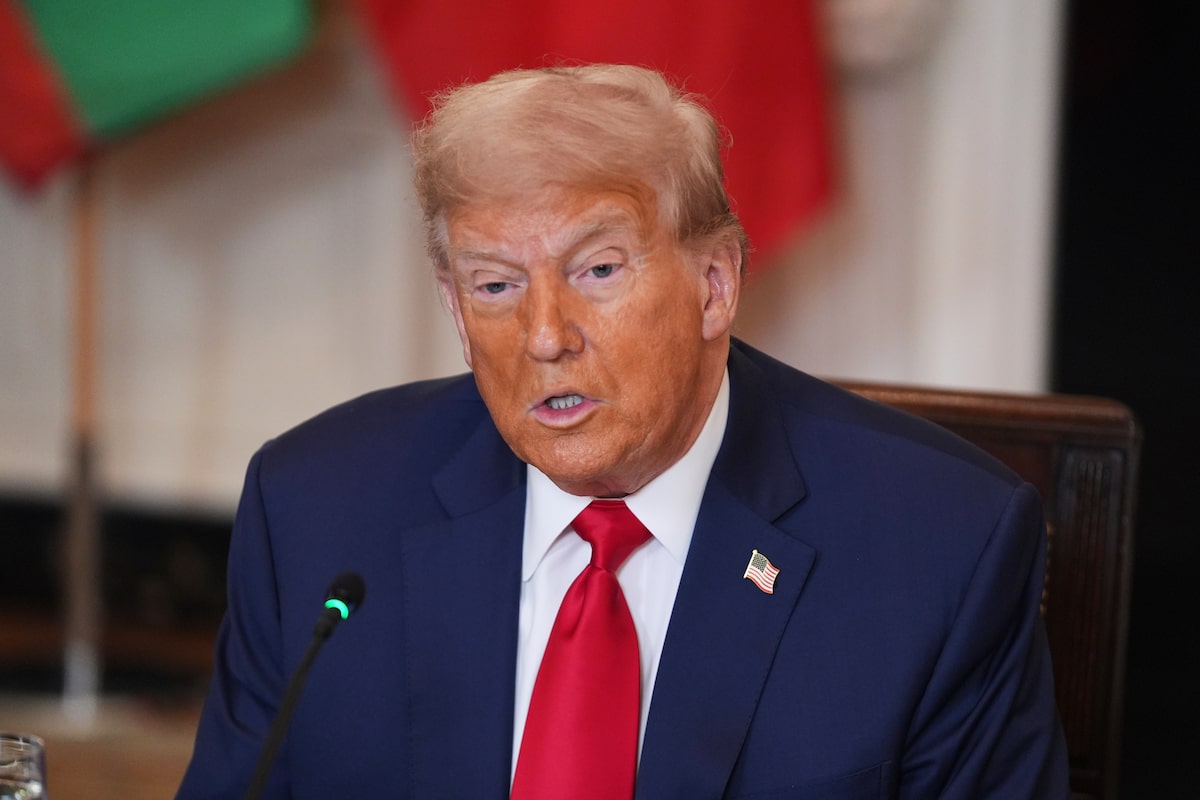
U.S. President Donald Trump says the U.S. will impose 35 per cent tariffs on Canada starting Aug. 1 in a letter posted on his social media site Truth Social.Evan Vucci/The Associated Press
U.S. President Donald Trump said he would impose 35-per-cent tariffs on imports from Canada starting Aug 1, upping pressure on Ottawa as it seeks to secure a deal with the White House over the next week.
In a letter posted on his website Truth Social on Thursday evening, Mr. Trump said he would increase the tariffs that were imposed on Canada in March and currently stand at 25 per cent. Mr. Trump justified the levies as an effort to force Canada to do more to address U.S complaints about fentanyl trafficking and illegal migration.
“If Canada works with me to stop the flow of Fentanyl, we will, perhaps, consider an adjustment to this letter. These Tariffs may be modified, upward or downward, depending on our relationship with Your Country,” Mr. Trump wrote.
Ottawa is making a final push to reach a trade and security deal with the United States by a self-imposed July 21 deadline. Canada has said it wants all tariffs removed, but Mr. Trump has given no indication he’s willing to relent.
U.S. President Donald Trump said on Thursday the U.S. would impose a 35% tariff on imports from Canada next month and planned to impose blanket tariffs of 15% or 20% on most other trade partners.
Reuters
Mr. Trump has sent similar letters to nearly two dozen other trade partners in recent days, outlining the tariff levels they will face if they do not strike deals with Washington before Aug. 1.
In his letter, Mr. Trump said he would increase levies on Canada if it retaliated against the U.S.
Prime Minister Mark Carney in a post on X Thursday defended Canada’s record, saying the country has “made vital progress to stop the scourge of fentanyl” in North America. “We are committed to continuing to work with the United States to save lives and protect communities in both our countries.”
He said Ottawa will continue to defend Canadian interests, adding the new deadline for negotiations is August 1 instead of July 21.
“Throughout the current trade negotiations with the United States, the Canadian government has steadfastly defended our workers and businesses. We will continue to do so as we work towards the revised deadline of August 1.”
Mr. Carney said Canada is looking after its interests too: reducing internal barriers to trade and planning big economic projects.
“We are building Canada strong. The federal government, provinces and territories are making significant progress in building one Canadian economy. We are poised to build a series of major new projects in the national interest. We are strengthening our trading partnerships throughout the world.”
After the imposition of the so-called fentanyl tariffs in March, the U.S. exempted all Canadian goods that comply with the rules of origin outlined in the continental free trade agreement – significantly reducing the impact of the tariffs. The letter made no mention of this. Both Bloomberg and the Wall Street Journal reported that the White House intended to keep the exemption in place.
These tariffs referred to in the letter are separate from the sectoral tariffs Mr. Trump has imposed on steel, aluminum and automobiles.
The Canadian government, which announced $1.3-billion over six years in new border-security measures last December, including helicopters, surveillance gear and more staff, has repeatedly disputed the significance of fentanyl smuggled into the U.S., noting it comprises a tiny fraction of illegal imports into U.S. territory.
It also appointed a fentanyl czar to co-ordinate efforts to disrupt illegal production and distribution.
A July 1 report by the Manhattan Institute, a U.S. think tank, said illegal fentanyl smuggled into the U.S. from Canada plays a minor role in U.S. fentanyl trafficking.
“Whatever the merits or drawbacks of tariffs on imports from Canada − a question of economics and international relations that goes far beyond our analysis − such actions cannot be justified as part of a pragmatic and data-informed response to the threat of fentanyl to the United States,” the institute said.
Opinion: Don’t panic, Canada. Rushing into a deal with Trump would be our worst mistake
Alongside complaints about fentanyl, Mr. Trump highlighted Canada’s supply-managed dairy market and complained about the U.S. trade deficit with Canada.
“The flow of Fentanyl is hardly the only challenge we have with Canada,” Mr. Trump said.
“Canada charges extraordinary Tariffs to our Dairy Farmers up to 400 per cent – and that is even assuming our Dairy Farmers even have access to sell their products to the people of Canada. The Trade Deficit is a major threat to our Economy, and indeed our National Security,” he said.
Canada imposes duties of more than 200 per cent on U.S. dairy imports, but it’s only applied to shipments above a negotiated tariff-free quota in the North American trade pact.
Canada is in a different position from most other countries receiving letters as it was exempt from the so-called “reciprocal” tariffs Mr. Trump announced in April then paused for three months. This was because Mr. Trump had already imposed tariffs on Canada, Mexico and China, citing concerns over border security.
New fentanyl data undercut White House’s portrayal of Canada’s role in U.S. drug crisis
Since then, Mr. Trump has imposed a number of sectoral tariffs that affect Canada disproportionately, including a 50-per-cent tariff on steel and aluminum and a 25-per-cent tariff on automobiles, with a carve-out for U.S. parts. Earlier in the week, Mr. Trump said he would also impose a 50-per-cent tariff on copper and 200 per cent on pharmaceuticals.
Both the “reciprocal” tariffs and the “fentanyl” tariffs were imposed using the International Emergency Economic Powers Act. Last month, a U.S. court ruled that Mr. Trump’s use of IEEPA was illegal, which would undercut the basis of many of Mr. Trump’s tariffs – although not his sectoral tariffs.
This ruling was paused until an appeal can be heard by a higher court.

