
SCO Optics: Sharif Snubbed, Modi-Xi-Putin ‘Powerplay’ In China – India’s Rising Heft A Message To Trump?
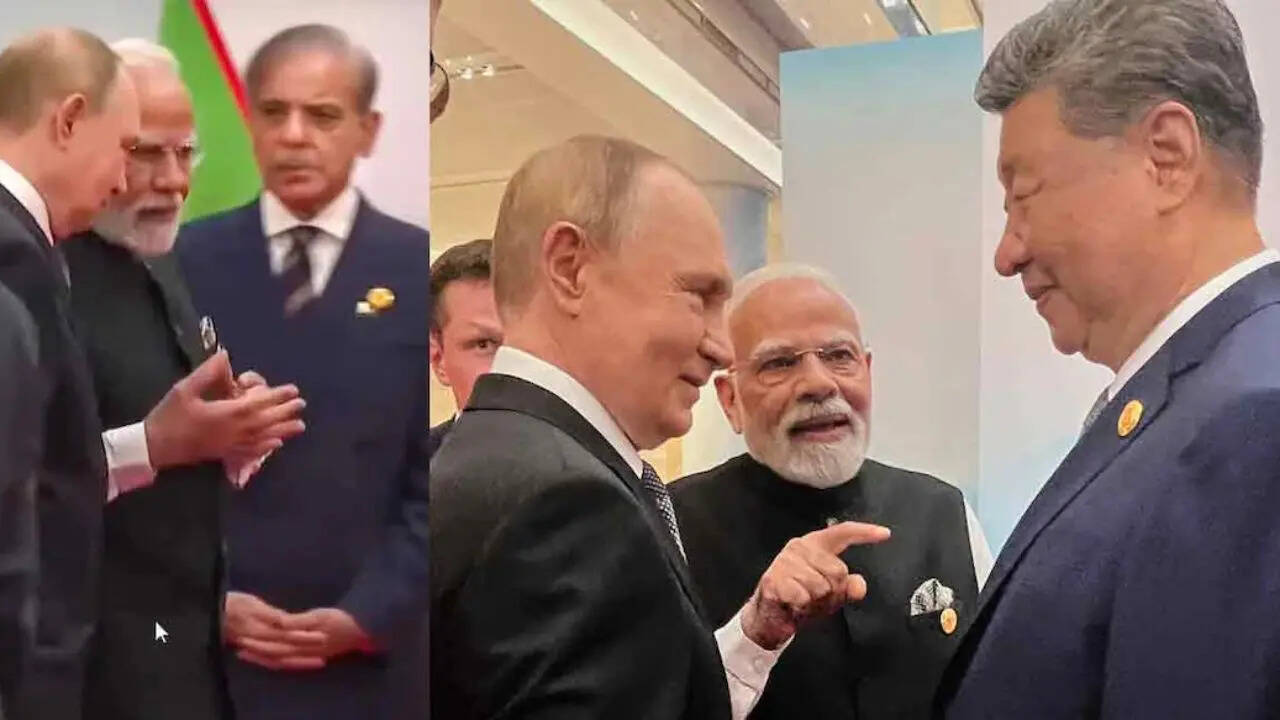
At the Tianjin SCO summit, India, China, and Russia projected rare camaraderie, signalling a potential new Eastern power axis — while Pakistan, despite US President Donald Trump’s overtures, appeared sidelined and isolated.
Is a new power axis taking shape in the East? The Shanghai Cooperation Organisation (SCO) summit in Tianjin may have offered more than just routine diplomacy as India and China, once bitter rivals, joined Russia, a long-time partner to both, in projecting rare warmth and camaraderie on the global stage. Together, the Eurasian heavyweights – PM Narendra Modi, Xi Jinping and Vladimir Putin – appeared as the nucleus of an emerging Eastern power bloc with India’s ever rising geopolitical heft clearly on display.
Pakistan Left Out Of The Frame?
In sharp contrast, Pakistan seemed largely sidelined, with PM Shehbaz Sharif seeming conspicuous by his absence from the circles of influence. He seemed largely left out of the frame. One video showed PM Modi and Putin striding past without acknowledging Sharif, who lingered in the background. Another video showed Xi and Putin walking past Sharif in a reception line — Xi barely acknowledging him, while Putin pauses briefly to shake hands.
Another shot captured PM Modi, Xi, and Putin in deep conversation minutes before the plenary session, as Sharif stood apart. At the formal “family photo”, PM Modi, Putin, and Xi occupied the prime front-row positions at the center, while Sharif was placed far apart, with at least eight leaders between them.
‘Video Of The Day’
Russia’s Foreign Ministry itself amplified the optics by calling it the “video of the day” — posting a clip of PM Modi greeting Putin with a firm handshake before the two leaders walked together toward Xi. The trio at the heart of Eurasia’s power axis then chatted informally and shared camaraderie.
‘Burnol Moment’ For Trump?
The optics amount to a diplomatic snub for Pakistan at a time when US President Donald Trump has been openly wooing it.
In June, Trump hosted Pakistan’s army chief, Field Marshal Asim Munir, at the White House in an unprecedented move — a lunch without any civilian leaders. Trump told reporters afterwards that he was “honoured” to meet Munir and had thanked him for “ending the war with India,” claiming his intervention prevented a nuclear conflict.
“Two very smart people decided not to keep going with that war; that could have been a nuclear war,” Trump said, referring to Munir and PM Modi.
India Resists, Pak Buckles
India, however, firmly denied any US role in ending the four-day conflict in May this year. Pakistan, by contrast, went as far as nominating Trump for the Nobel Peace Prize.
Weeks later, Munir used US soil to issue nuclear threats against India during a diaspora event. Yet, Washington did not condemn the remarks — a silence that raised eyebrows in New Delhi.
Trump Further Antagonises India
Meanwhile, Trump’s tariff offensive strained ties with India further, with his administration controversially dubbing the Ukraine conflict as “Modi’s war”. The remark drew sharp reactions not only from New Delhi and Moscow but also within the US itself. India rejected the charge as unfair and hypocritical, pointing out that China remains the biggest buyer of Russian oil. Moscow, too, clarified that its energy exports are part of normal trade and “do not amount to funding war.” Now, India is all set to raise oil imports from Russia in September in open defiance of Washington’s pressure.
The Big Picture
Day One of the SCO summit, in effect, turned into a Modi-Xi-Putin show of unity. On Monday, Modi and Putin were even seen sharing a car as they headed to their bilateral meet.
For Pakistan, once China’s “iron brother” in the SCO, the images tell another story: of a Prime Minister sidelined, with camaraderie reserved for new allies.
And for Trump, who has invested political capital in courting Islamabad, the Tianjin summit could well be, as social media quipped, a “Burnol moment.”
