
Pragmatism key for Takaichi to navigate ties with China
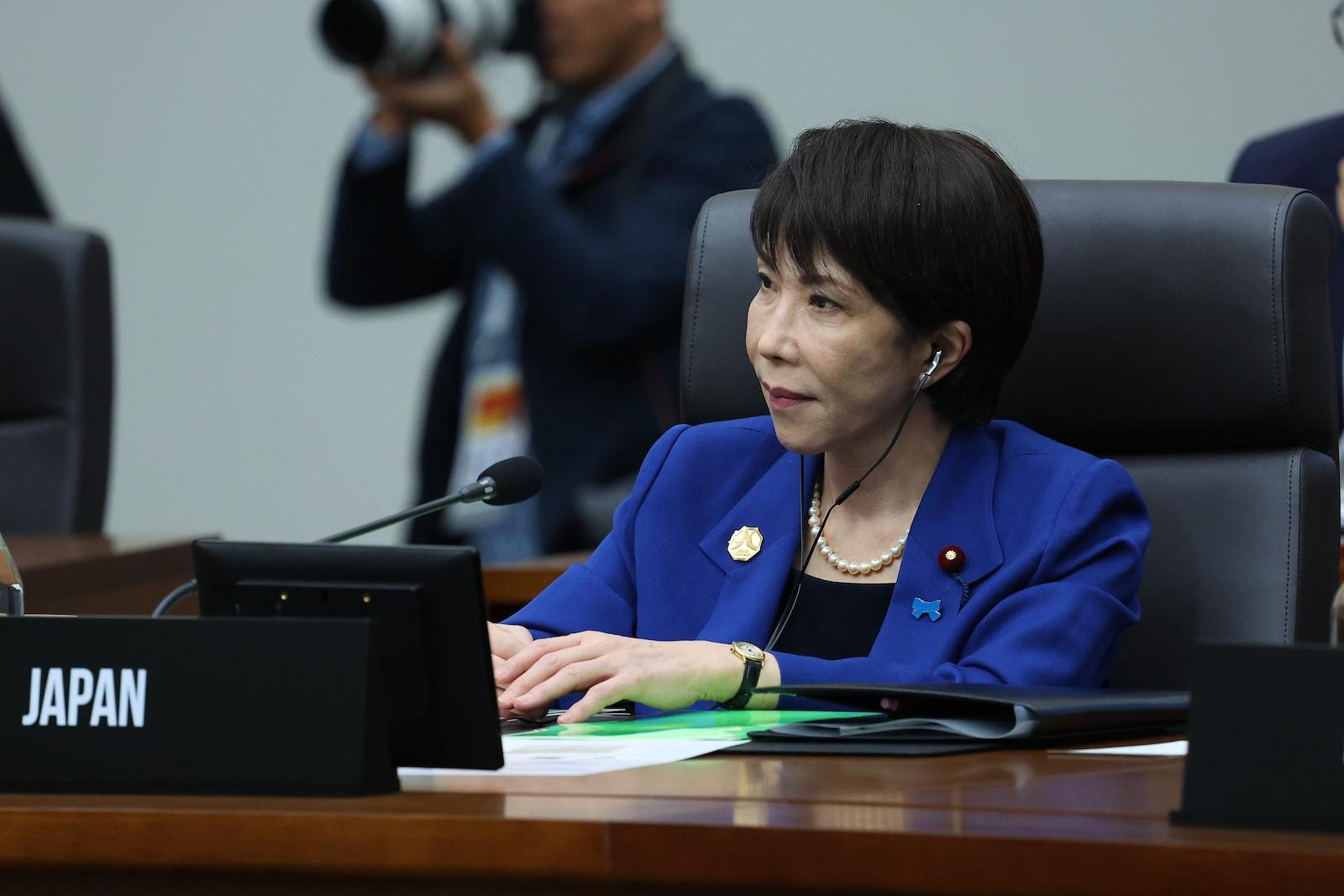
With Beijing wary about how new Japanese Prime Minister Sanae Takaichi, known as a China hawk, will handle policies toward the country, she could draw lessons from her mentor, the late leader Shinzo Abe, who sometimes succeeded in improving bilateral relations through pragmatism.
In their first official talks in Gyeongju, South Korea, on the sidelines of a regional summit, Takaichi and Chinese President Xi Jinping reaffirmed the countries’ shared policy of promoting “a mutually beneficial relationship based on common strategic interests.”
Observers warn that Sino-Japanese ties, which had stabilized somewhat over the past year under Takaichi’s predecessor Shigeru Ishiba, risk deteriorating again should she stick to conservative views and “cross the red line” on sensitive issues such as history, a bilateral territorial row and Taiwan.
Stephen Nagy, a professor at International Christian University in Tokyo, said he expects the relationship between the two Asian neighbors will “remain relatively stable” if Takaichi follows pragmatic approaches taken by Abe, such as stepping back from visiting the war-linked Yasukuni shrine.
Abe stopped visiting the Shinto shrine, seen by Japan’s neighbors as a symbol of its past militarism, after doing so once as a sitting prime minister in December 2013 to mark the first anniversary of his return to office.
Japan’s longest-serving prime minister, who was in office for about a year from 2006 and between 2012 and 2020, was fatally shot in 2022 during a speech for a Liberal Democratic Party candidate at an election campaign rally.
Takaichi has regularly paid tribute at the shrine that honors Japan’s wartime leaders convicted as war criminals as well as millions of war dead, with the latest visit made on Aug. 15 this year, the 80th anniversary of Japan’s World War II defeat.
But after being elected leader of the ruling LDP in early October, she refrained from visiting the shrine during its autumn festival, apparently over concern about a negative diplomatic impact.
Nagy also pointed out Abe tried to stabilize the Japan-China relations by striking accords with Beijing on some 50 infrastructure projects in third countries in 2018, after the ties frayed following the 2012 purchase by the Japanese government of the Senkaku Islands in the East China Sea, which China claims and calls the Diaoyu.
Ken Jimbo, a professor at Keio University, said Takaichi’s appointment of Takaya Imai as a special adviser to her Cabinet has drawn attention, as the former industry ministry bureaucrat is known to have worked behind-the-scenes as an Abe aide to bring about significant improvement in the two countries’ relations in 2018.
In October that year, Abe made the first official visit to China as a Japanese leader in nearly seven years.
With the departure of the Komeito party, which has long maintained friendly ties with Beijing, from the ruling bloc following Takaichi’s election as the LDP head, and the LDP’s new partnership with the Japan Innovation Party, China “may not be so certain about” the stability of Japan’s policies toward it, Jimbo said.
An agreement struck between the LDP and the JIP — a conservative party also known as Nippon Ishin — in forming their coalition indicated their willingness to revise the war-renouncing Constitution and craft anti-espionage legislation, actions believed to “increase tensions” in the Japan-China relationship, he added.
As long as Takaichi refrains from taking provocative measures that are set to anger Beijing, such as a visit to Yasukuni shrine, “China will likely take a wait-and-see stance toward Japan basically, but may not try to seal a big deal” with Tokyo, Jimbo said.
Takaichi and some of her Cabinet members maintain close ties with Taiwan, a self-ruled democratic island claimed by the Communist-led China. She visited Taipei in April and met with President Lai Ching-te, whom Beijing condemns as a separatist.
In an apparent demonstration of her pro-Taiwan stance, Takaichi on Friday posted on social media a picture of herself exchanging greetings with the island’s former vice premier, Lin Hsin-i, before the start of the Asia-Pacific Economic Cooperation forum summit. Lin represents Taipei in the gathering of 21 regional economies.
But Minoru Kihara, who assumed the post of chief Cabinet secretary, skipped a trip to Taiwan as a member of a cross-party lawmakers’ group in early October before assuming the post in an apparent consideration for China.
Jimbo said such caution suggests a Takaichi government policy of avoiding “unnecessary flare-up” of tensions with China, but that she may call for upgrading Japan-Taiwan relations in a bolder manner than her predecessor Ishiba.
“For example, (Takaichi) may propose higher-level exchanges between the two sides and deeper cooperation in areas such as semiconductors and defense technology development,” the Keio University professor said.
In the absence of official diplomatic relations, Japan and Taiwan maintain unofficial ties, with lawmakers playing a key role in promoting bilateral relations.
China regards Taiwan as a renegade province to be unified with the mainland by force if necessary. They have been governed separately since they split in 1949 due to a civil war.
John Lim Chuan-tiong, a research fellow at the University of Tokyo, also called on Takaichi to pursue “realism” on diplomacy like Abe did in his first term in 2006, when he opted to visit Beijing rather than Washington for his first foreign trip as a premier to improve bilateral ties.
Lim, well-versed in Japan-Taiwan relations, said Beijing has been “extremely alert” for Taiwan-friendly members in Takaichi’s Cabinet and the LDP leadership and warned, in the absence of trust, an incident usually considered minor could develop into major trouble between Beijing and Tokyo.
China is also watching whether Takaichi publicly supports Abe’s claim that “any emergency surrounding Taiwan would also be an emergency for Japan” as a premier, Lim said.
“If she makes this stance public (as a prime minister), it will surely have a serious impact on the Japan-China relations,” he added. Abe proposed the concept in 2021 after stepping down as the Japanese leader.
Still, China sees the merits of stabilizing its ties with Japan while it fiercely competes with the United States, the research fellow said. “Rejecting Ms. Takaichi from the outset would be disadvantageous” for Beijing, when its relations with Washington remain unstable, Lim pointed out.
© KYODO
