
YouTube subliminals want to make you perfect
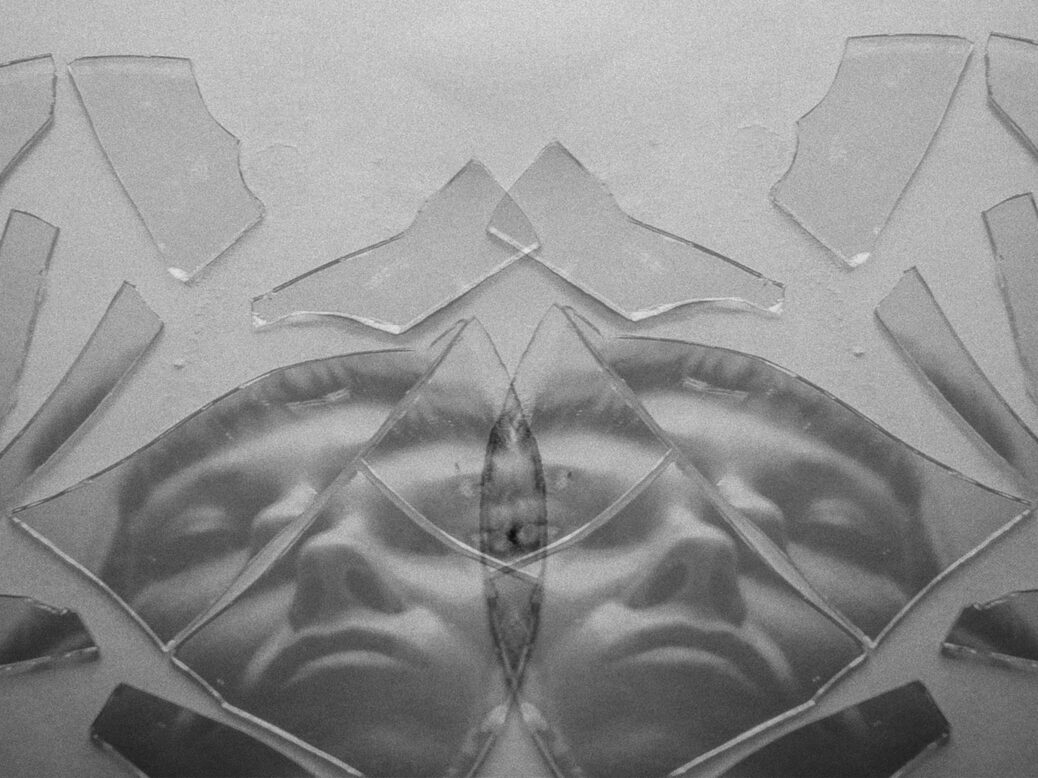
One wrong turn on YouTube could change your life. Click on too many videos about women’s self-confidence and strange recommendations will start to pop up. The titles contain phrases like “princess aeolian beautification”, “ANGELMAXXING” and “Play this once. The next 3 days will feel like a dream.” When you click, you’ll hear fields of static and snatches from the Lana Del Rey oeuvre.
These videos are subliminals. Their creators are young, female, usually faceless – and inspired by research conducted by the CIA in the late 1950s. They claim to be able to rewire your brain with positive affirmations, which appear both in conventional therapy and on the woo-wooey outer reaches of TikTok. If you repeat something to yourself, goes the logic, you will start to believe it. If you believe it, it will come true.
“It is enough to have done my best,” suggests one of the affirmations in a self-esteem guide provided by the Oxford Health NHS Foundation Trust. “I deserve to be loved.”
“Your face is perfectly symmetrical,” says a subliminal with over a million views. “Your facial features are mirrored completely.”
Subliminal enthusiasts feed their affirmations into text-to-speech websites, raise their speed, and mask the robotic results with pre-made binaural beats. These experimental frequencies are supposed to lower stress and heighten concentration and creativity. Some creators add rain noises and static for effect. You’re meant to listen to these sound collages over and over again; eventually their hidden suggestions will penetrate your brainwaves and you’ll see results. The jury is still out on whether they really work.
I try watching “TITAN! Instant Growth Spurt&Height Increase.” It sounds like a tropical storm. Sparkly butterflies are superimposed over a minute of footage from the children’s game Roblox. Every few seconds an affirmation pops up on screen. “I am so happy!” says one bit of floating text. “Everything in my life is perfect,” says another.
“Just listen to the sub and feel the tingling over your legs,” says one commenter. “I grew from 5’1 to 5’7 over 2 weeks. I promise you everything and anything is possible.” After three viewings I am still only five feet tall.
There are videos you’re meant to listen to if you want to be eternally lucky, to charm every man you meet, to get good grades and to remove the melanin from your skin. (“Full b_dy whitening,” says the title, self-censored in case YouTube’s content police are watching; there are 214,755 views). There are subliminals that promise a rich boyfriend and no more acne, ever. There are subliminals that say they’ll get you your first period. Their comment sections teem with 13-year-old girls who are scared they’ll get left out at school if they don’t hurry up. There’s another channel, one with 50,000 followers, on which every video claims to substitute for a specific sort of plastic surgery.
“ღ your eyes are so upturned! ~” goes one. “upper lateral canthoplasty procedure 💉.”
Another video promises a “desired skull and face shape.” It has over half a million views; its anonymous creator uses the description box to promise viewers their “desired frontal, sphenoid, zygomatic, maxilla, mandible, [and] parietal bone.” I stare for a full minute at a carefully labelled diagram of a human skull as static crackles in the background.
It’s the sounds that purportedly do the work, but the visuals help. “Vision boards” are a staple of women’s online self-help. They follow the same logic as verbal affirmations: imagine something hard enough and you’ll eventually have it. Searching for “subliminals” feels a bit like scrolling through the wrong side of Pinterest. The higher-effort videos feature clips of stretch limos, darkened nightclubs, and 1990s catwalks. For each plastic surgery-simulator subliminal there exists a corresponding woman on the thumbnail with upturned eyes, a symmetrical face and an “angel skull,” an alarmingly common new phrase coined by TikTok but with shades of the Third Reich. Most of the photos are doctored selfies; the women are sometimes K-pop idols and sometimes anonymous Instagram models.
Over on Pinterest, a young woman picks Monica Bellucci as her “desired face” and watches subliminals to help her get there. In three weeks she manages to change her race, or at least steps into direct sunlight, changes her makeup and puts on what is obviously a wig. Overt transracialism is a YouTube niche. One teenage user has overlayed soft piano music on pictures of pagodas and clips from Disney’s Mulan. The video has 74,000 views and claims it can turn you Chinese. As I scroll, we get more and more specific. Nine thousand subliminal enthusiasts have tuned into a DnB-soundtracked clip that promises to turn you Thai, but only on your dad’s side. A list of affirmations in the description box are so detailed that they function as a sort of fanfiction for the self. “Fathers side of the family mainly lives in your desired area of Thailand,” says one bullet point. “Never be discriminated against for being 50% Thai,” says another. Slightly fewer people have attempted to make themselves Kazakh.
The website’s never-ending recommendation system is meant to move with your interests, but it sometimes twists you in surprising directions. I click on a subliminal promising full marks on school exams. After a bit of scrolling there’s another one that’s supposed to get you a thigh gap; just one scroll below that one is a video named “xxs.” The title is decorated with a bone symbol taken from the millennia-old Mycenaean writing system Linear B; the thumbnail is of a woman wearing a corset. “This video serves as an auditory, sensory and relaxation video,” says the anonymous creator. “There is no other intent to this video except for auditory relaxation ASMR.” But they’ve hidden a link in the description box. It directs me to a file-sharing site; I click through to find another link to the same website, then another one, then another one. Eventually I find a Google Doc. “benefits,” it says in pastel pink text, before embarking on around three thousand words of extreme anorexic ideation.
“U r completely, overwhelmingly underweight,” goes one run-on excerpt, “beyond any biological normalcy, ur body exists in a permanent, unrelenting state of being underweight, u r irreversibly destined to be underweight…”
The video was put online four months ago, is not age-restricted, and already has 110,699 views. Its less clued-in commenters admit to being legal minors, and claim to have listened for hours; those in the know are aware they have to censor words like “benefits”, “lose”, “throbbing” and “overnight.” This sense of communal secrecy only underlines the idea that you’re partaking in a sort of occult ritual. It must be attractive if you are a teenage girl who feels left out. It also means the videos are virtually impossible to chase off YouTube’s servers, despite flouting the website’s outright ban on content “promoting or glorifying… eating disorders.”
We must pity the subliminal enthusiasts. Some of these channels are cashing out on the pursuit, either charging for special requests or signing up to YouTube’s revenue-sharing scheme. The girls stuck listening to these videos on loop are only pushing them up in the algorithm, paying tiny indulgences to a pretend church. Many will go online in search of better grades or more pocket money and end up learning that they have the wrong skull structure. YouTube’s in-house recommendation system will push them towards insecurities few ever dreamed they could have.
“You are completely content,” the computerised voices should say, “with your lateral canthal angle.”
[Further reading: How to fix the internet: break the oligarchy]
<!–
googletag.cmd.push(function() { googletag.display(‘div-gpt-ad-3393934-1’); });
–>
