
Donald Trump approves Nvidia chip sales to ‘vetted’ Chinese customers
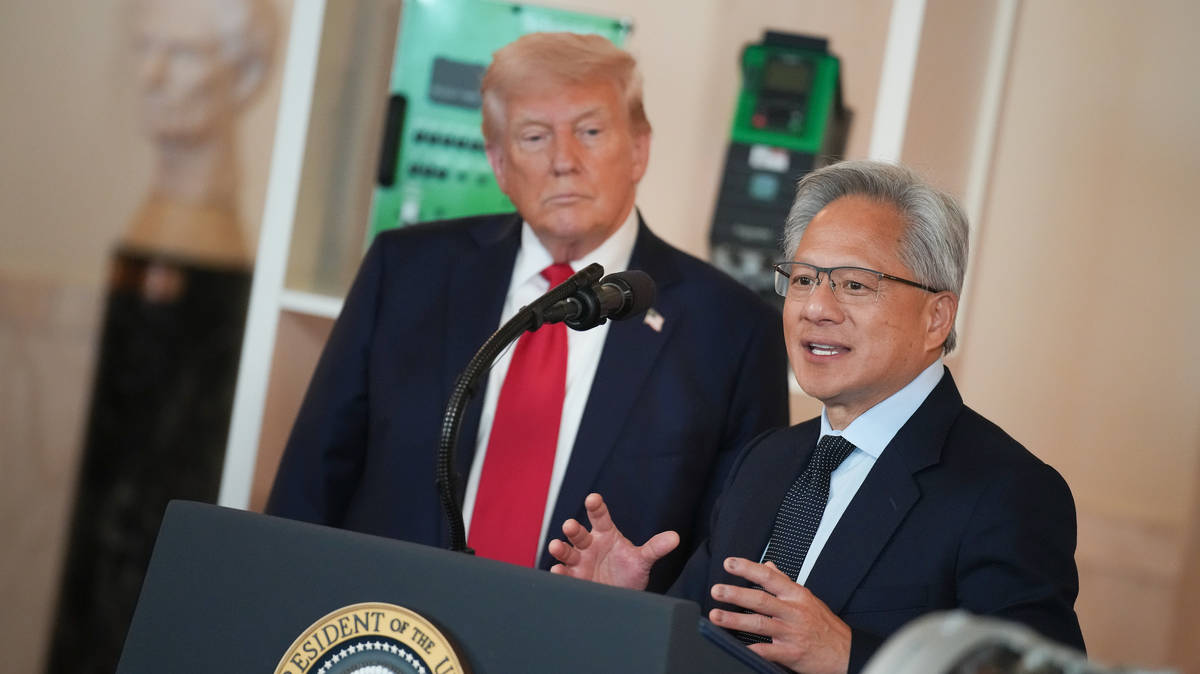
The US President announced the plans to sell the H200 chips to Beijing-based firms on social media on Monday, saying it would help “protect National Security, create American Jobs, and keep America’s lead in AI”.
The decision will also apply to other US chip companies like AMD.
It ends the US Government’s ban on Nvidia selling its AI chips to China, following extensive lobbying by the firm’s boss Jensen Huang, who visited Washington last week.
The company – whose $5 trillion market value is larger than Germany’s entire GDP – has been at the centre of the ongoing trade dispute between the US and China in recent months.
After initially prohibiting Nvidia from selling its product to China over national security concerns, Trump reversed his decision in July, but only if the company paid 15 per cent of its Chinese revenues to the US government.
Upon hearing this, China told its tech companies to stop buying Nvidia chips manufactured for use in the Chinese market.
Nvidia’s H200 is not as powerful as its leading Blackwell chip, considered to be the world’s most advanced AI semiconductor.
Mr Huang warned Mr Trump in September that the US needed “to make sure that people can access this technology from all over the world, including China”.
He also claimed that China was closing the gap to America in the chip development market, having generated a chip production ecosystem of its own.
Hailing the President’s announcement, Nvidia said in a statement: “Offering H200 to approved commercial customers, vetted by the Department of Commerce, strikes a thoughtful balance that is great for America.”
The H200 chips deal gives the US some more breathing room to negotiate a proposal with China over rare earth minerals and prevent major disruptions to global supply chains.
Rare earth minerals are essential for the production of electronic goods, with the vast majority being found in China.
While its technology sector will likely benefit from access to the H200 chip, Beijing is still expected to work towards reducing its dependence on the US.
Chinese tech firms had previously been encouraged by their own government to buy domestically produced semiconductors.
But some have also benefited from the chips designed by US companies, with China’s People’s Liberation Army using them to gain a “battlefield advantage” by developing its own AI-enabled military capabilities.
