
Trump’s reasons for banning state AI laws don’t add up
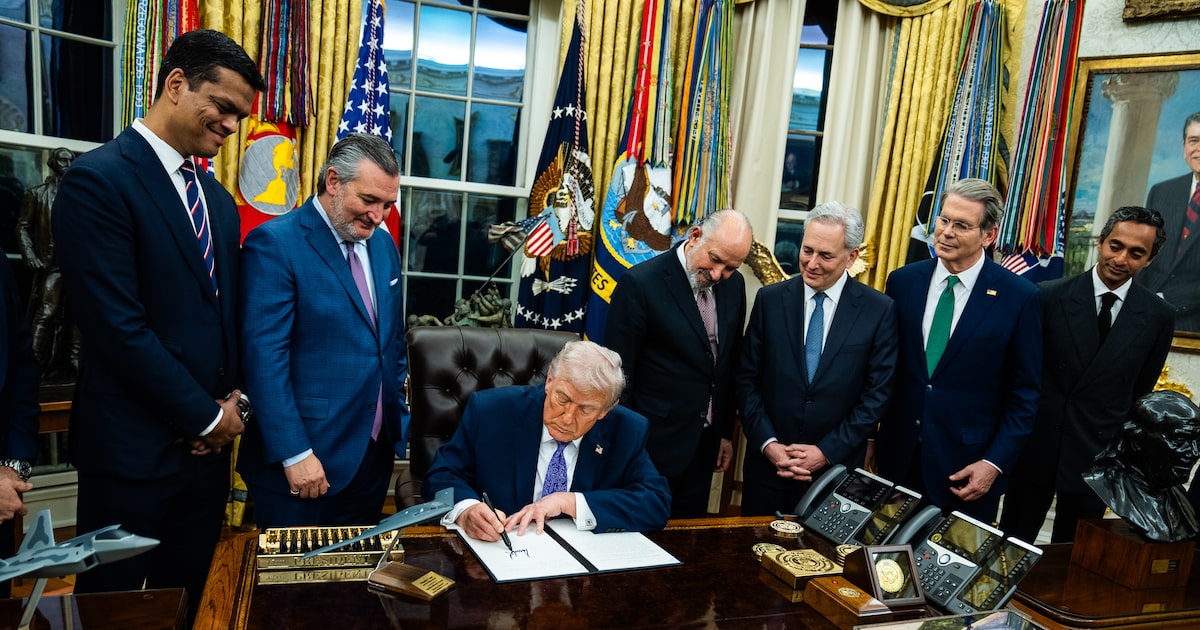
One of President Donald Trump’s latest edicts is that states are forbidden to enact or enforce their own artificial intelligence regulations.
The president this month signed an executive order banning state AI laws. The purported reason is to avoid “a confusing patchwork of regulations.”
Yes, ideally, Congress would do its job and create a framework of regulations that protects children and consumers while allowing the AI industry to flourish. In the absence of congressional leadership, however, state lawmakers had to intervene.
The president is on shaky legal ground trying to torpedo state laws he doesn’t like. His pretext for the executive order is even more wobbly given his financial entanglements with the AI industry.
Where to start? Americans should be legitimately concerned about China’s AI capabilities and how it may use them to target Americans and undermine U.S. interests. Yet Trump in December authorized tech giant Nvidia to sell more advanced semiconductors to China.
The president wants us to believe he’s concerned about American dominion over the AI industry, so why is he making it easier for China to build its AI arsenal? Well, the White House engineered a deal to get 25% of the sales revenue. If you want the president’s signature, don’t talk about national security. Talk about dollar signs.
Another December headline shows how Trump and his family stand to benefit financially from the unfettered growth of AI. Trump’s social media and crypto company announced a merger with TAE Technologies in a $6 billion deal. TAE is trying to make nuclear fusion commercially viable at a time when AI companies are gobbling up power. Meanwhile, Trump Media and Technology Group has reported hundreds of millions in operating losses in recent years, according to The Wall Street Journal.
For evidence of conflict of interests look no further than David Sacks, Trump’s AI czar and reported author of the executive order. Sacks is a billionaire Silicon Valley investor and longtime friend of fellow tech billionaires Elon Musk and Peter Thiel. It’s the fox guarding the hen house.
If there is a silver lining in Trump’s executive order, it is that it has done the seemingly impossible by uniting Texas Republicans and Democrats in speaking up to defend a new state law, as the Texas Tribune recently reported. The Legislature passed rules this year to prohibit the use of AI for behavior manipulation, discrimination and the creation of child pornography and deep fakes.
Trump said his order wouldn’t apply to rules about child safety, but even those rules that are not specifically about child pornography would shield children by protecting consumers more broadly. The Texas law also specified the creation of an AI council and a “sandbox” program that would allow AI companies to experiment in the Texas market with oversight, showing that states can protect residents while boosting business.
“I think a measured approach to things, especially when we already know they’re dangerous, makes all the sense in the world,” state Sen. Angela Paxton, R-McKinney, told the Tribune.
We wholeheartedly agree.
