
Trump’s Plan to Run the Hemisphere Scares Friends and Puzzles Foes
President Trump’s new “Donroe Doctrine”—loudly proclaimed by the seizure of Venezuelan leader Nicolás Maduro and the president’s assertion that Washington now “runs” the Latin American country—seeks to establish U.S. hegemony over the entire Western Hemisphere.
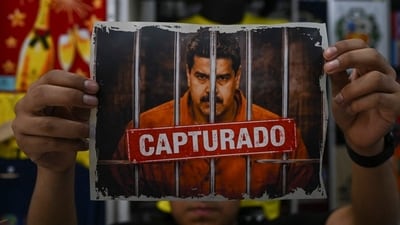
The question America’s adversaries and allies are asking themselves in the aftermath of the Caracas raid is whether this embrace of 19th-century-style imperial thinking also means a pivot away from the rest of the world that would give China and Russia greater sway in their neighborhoods.
“It’s not a world dominance that Trump is trying to achieve, but a hemispheric dominance,” said German lawmaker Norbert Röttgen. “His worldview seems to be thinking in categories of spheres of influence—and dominance by those in other hemispheres who are the most powerful there, irrespective of rules, laws and alliances.”
Buoyed by the success of the Jan. 3 operation in Venezuela, Trump has already signaled potential American intervention in Cuba, Colombia, Mexico, the Danish possession of Greenland—and, outside the Americas, Iran.
Russia and China, which have invested tens of billions of dollars and considerable diplomatic capital in the Maduro regime, have reacted with restraint. In part, that is because they hope Washington will now be more accommodating of their own aspirations in Europe and Asia respectively, either by design or because of inherent limits on American resources.
“Beijing is captivated by Trump’s interest in spheres of influence of major powers,” said Tong Zhao, a senior fellow at Carnegie China. “It’s interested in exploring whether the U.S. is willing to make major compromises in the Western Pacific, including on the issue of Taiwan and the South China Sea,” if China shows greater deference to the U.S. in the Americas.
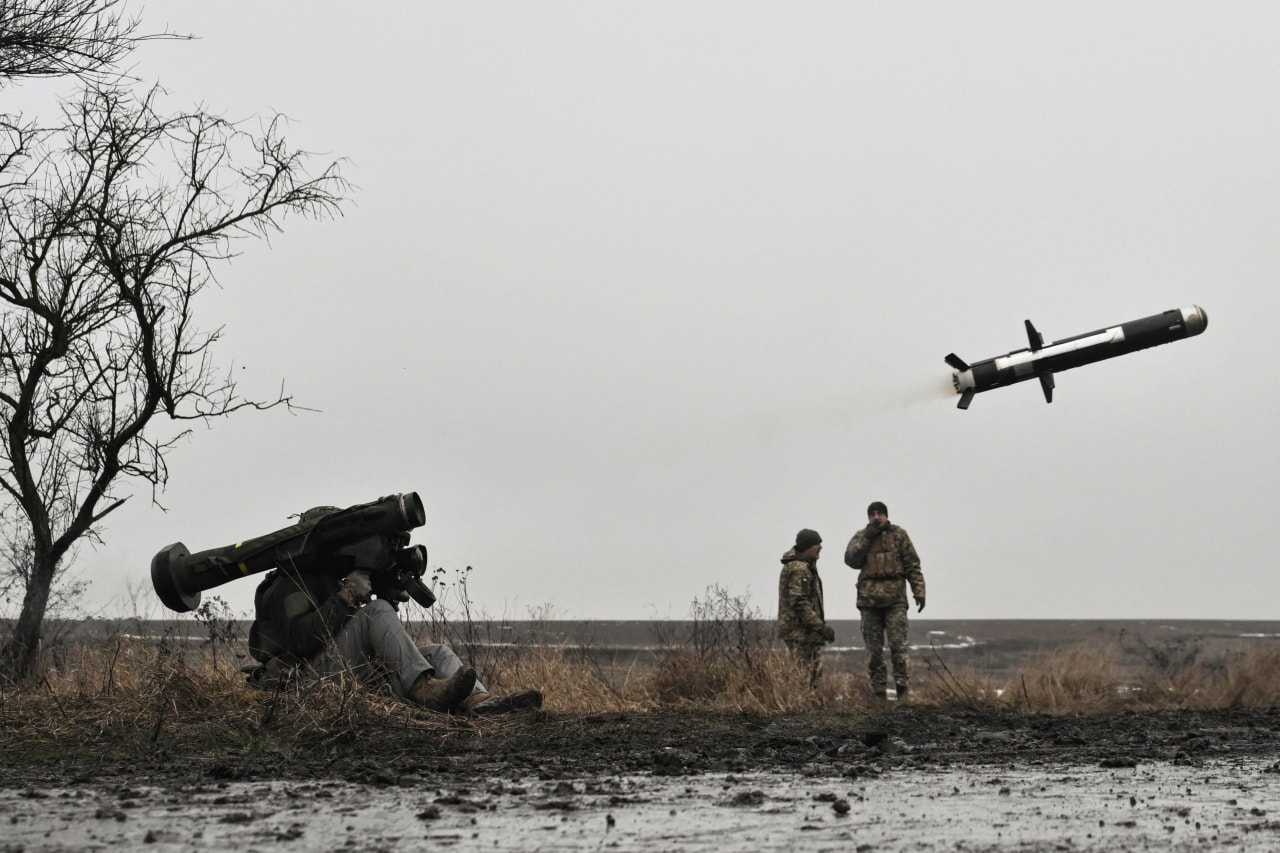
The same calculations are in play in Moscow, as Washington pushes Ukraine to accept a peace deal that would satisfy some of Russia’s key demands, including a surrender of territory that Russian forces haven’t been able to capture in four years of war.
Fyodor Lukyanov, chairman of Russia’s Council on Foreign and Defense Policy, a body that advises the Kremlin, pointed out in an interview with the Kommersant newspaper that President Vladimir Putin, despite his longstanding close relationship with Maduro, is focused on dealing with Trump “on an incomparably more important issue—Ukraine,” and is therefore unlikely to disrupt that endeavor for “secondary topics” such as Venezuela. Putin, in fact, has yet to make any remarks on Maduro’s fate.
The Kremlin’s chief negotiator on Ukraine, Kirill Dmitriev, meanwhile, appeared positively giddy in social-media posts about Trump’s renewed aspirations to annex Greenland, especially after Danish Prime Minister Mette Frederiksen warned that any U.S. military action to seize the island would mean the end of the NATO alliance. Such a breakup, in turn, would create a major boon for Russian ambitions to regain former satellites and possession in Europe, starting with the Baltics—while also spurring an inevitable rapprochement between European nations and China.
“Trump is tough with the weak but weak with the tough, and the only people for whom he has respect are Putin and Xi, which is why he is seeking deals with them,” said Raphaël Glucksmann, a prominent French member of the European Parliament who has called for European nations to deploy troops to Greenland as a show of support for its democracy. “Even if the U.S. doesn’t intervene in Greenland, this whole talk of the town about Greenland already represents a very powerful message to Moscow,” he said. “The suicide of the West would be an invitation for Putin to act, telling him that our doors and windows are open.”
Regardless of the scope of Trump’s ambitions, the demise of what used to be called the “rules-based international order” is no longer in doubt, even among its last defenders in Europe and elsewhere. While the shape of the emerging international system is far from clear, much of it resembles the distant past—with a different cast of principal players.
“People are talking in terms like imperialism, neocolonialism, viceroy, terms that they haven’t used in 80 years. There is a new world order and there are spheres of influence in it,” said Sumantra Maitra, founder of Virginia-based Clio Strategic Consulting and a senior fellow at the Center for Renewing America think tank. “We are not going to go to war with other great nuclear powers in their own neighborhood, and it is quite understandable that no one is going to come to the Western Hemisphere because we will mess them up.”
In this new setup, raw strength—military and economic—matters more than ever. And the key reason for Trump’s focus on the Western Hemisphere, his supporters say, is precisely because of the current limits of American power, especially when compared with a rising China.
“The discussion about spheres of influence is distracting from what this is really about. This is about giving priority to what is most important to the U.S. in a world where we are dealing with a record national debt, a depleted stockpile of munitions only recently getting rebuilt, and the fact that the U.S. pursued a foreign policy for the past 30 years that has not made us stronger or more prosperous. In this environment, we have to do things differently lest we risk a major national-security catastrophe,” said Dan Caldwell, senior policy fellow at the American Moment conservative organization who served as senior adviser to Defense Secretary Pete Hegseth. “If you are an American ally or partner in a place like Europe or East Asia, you should not be surprised at all. This doesn’t mean the U.S. is abandoning them, but it does mean that they should pick up the slack and do more, especially when they have the resources and capabilities to do so.”
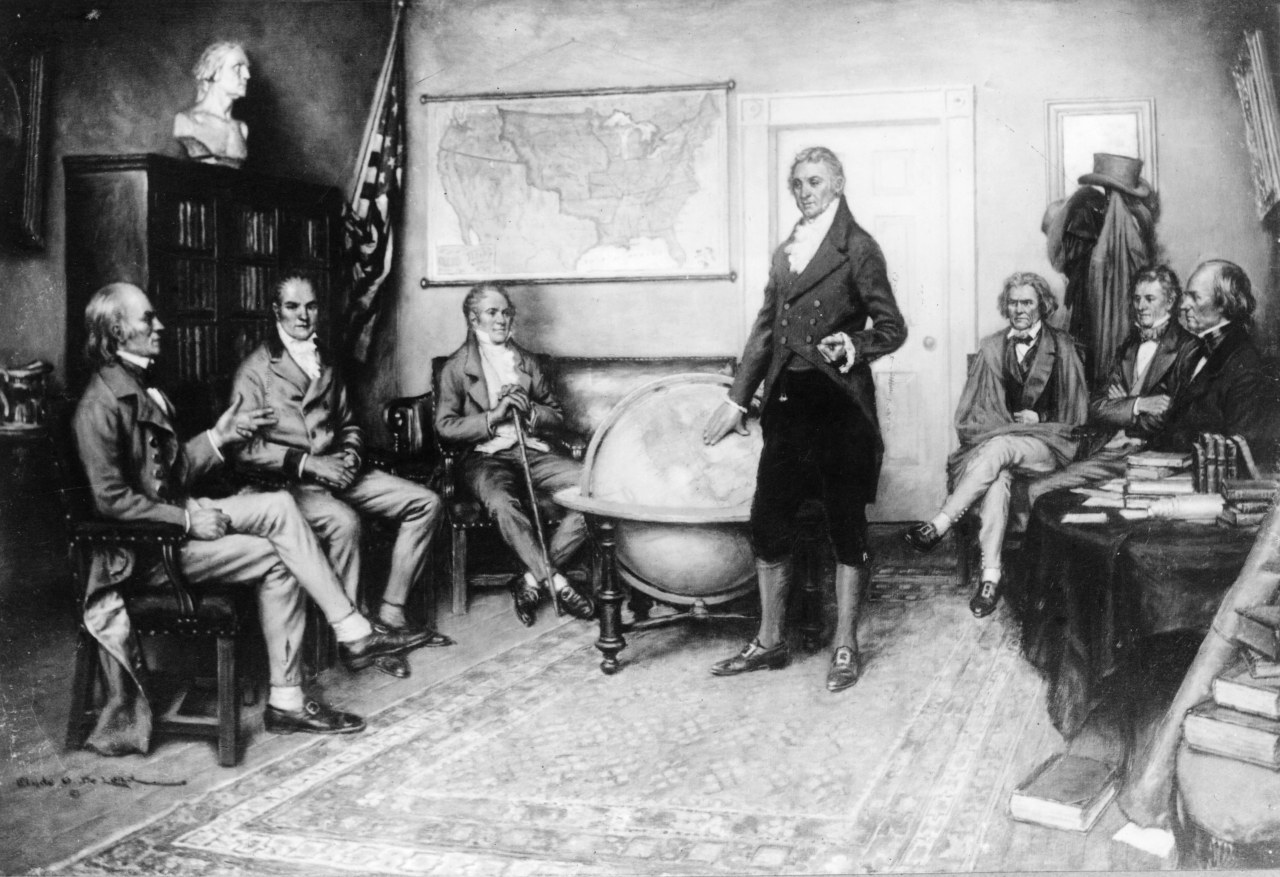
The problem for many of these American allies is that they find themselves on the receiving end of the Donroe Doctrine. (Trump’s demands expand the original Monroe Doctrine, named for President James Monroe’s declaration in 1823 that the U.S. won’t allow outside powers to interfere in the Western Hemisphere.) Trump has claimed Canada as the 51st state. The people of Greenland, whose autonomous government, elected last year, firmly rejected Washington’s entreaties, hold full Danish—and therefore European Union—citizenship.
The Donroe Doctrine “leaves us with the question of whether President Trump sees Europe, the Kingdom of Denmark, Greenland, and the NATO countries as allies and partners in security, or as adversaries and enemies,” said Jeppe Kofod, who served as Danish foreign minister during the first Trump administration.
It also isn’t clear that the Donroe Doctrine precludes interventions outside the Western Hemisphere. Polish strategist Slawomir Dębski, a professor at the College of Europe in Natolin, Warsaw, said that just in recent weeks the U.S. carried out military action in Syria and Nigeria, in addition to Venezuela, while also politically intervening in Ukraine. “I don’t see any kind of retreat of the U.S. from the world,” he said. “They are hyperactive, perhaps chaotic, there is a lot of uncertainty about where they are going to land, but the overall outcome is quite clear: America is not withdrawing from anywhere.”
Wang Dong, executive director of the Institute for Global Cooperation and Understanding at Peking University, agreed. “I have a sense that Trump probably has an opportunistic imperialism, and so the whole world should be worried about it,” he said.
That isn’t always the case. Those unperturbed by this turn in Washington include countries that have hegemonic sphere-of-influence ambitions of their own, such as India or Saudi Arabia. New Delhi, unlike all the EU nations except Hungary, refrained from even the most veiled criticism of the operation against Maduro.
“It’s not like we haven’t exercised power in this region, or are strangers to building spheres of influence. And if we had the kind of power that America has, we would probably use it more than before,” said Indrani Bagchi, CEO of the Ananta Aspen Center, a think tank in New Delhi. “Also, nobody’s unhappy here that China has been checkmated in South America.”
Sergey Radchenko, a professor at Johns Hopkins University, recalled how before the 2022 full-scale invasion of Ukraine senior Russian strategists frequently talked of using security presence in Venezuela as a pressure point against the U.S.
“Now, America has shown to Russia what a ‘special military operation’ is supposed to look like,” he said. “Now, it’s clear that Russia doesn’t have the kind of muscles it wanted the rest of the world to believe it possesses. This has been a humiliation, for Russia and for China: they proclaimed loudly that they are establishing a new world order, and yet proved unable to exert influence even in countries that are as important to them as Venezuela.”
Write to Yaroslav Trofimov at [email protected]
