

‘Jiak Ba Buay?’: 56 migrant domestic workers graduate from basic Hokkien classes
SINGAPORE – Ms Hilda Tunliu has worked as a domestic helper in Singapore for 20 years, but it was only at her last job, caring for an elderly couple, when she felt a pressing need to learn Hokkien.
While caring for the 88-year-old woman and her 97-year-old husband, she could at first communicate with them using body language only. She took the initiative to slowly pick up basic Hokkien phrases when the couple spoke to each other.
“The first time I spoke to Ah Gong (grandpa) in Hokkien, he was very surprised, but he was so happy,” recounted Ms Hilda, 51, who is from Indonesia. “Since then, he would always speak Hokkien to me. Ah Ma (grandma) understands some English, but she’s very happy that I am putting in the effort to speak Hokkien.”
She has since learnt phrases such as “jiak ba buay”, which means have you eaten, and has also learnt to ask if her employer was feeling any discomfort or pain.
On Feb 8, Ms Hilda was one of 56 domestic helpers who graduated from a conversational Hokkien class conducted by the Singapore Hokkien Huay Kuan Cultural Academy (SHHKCA), in collaboration with NTUC’s Centre for Domestic Employees (CDE).
At a graduation ceremony at the SHHKCA’s Sennett Road campus on Feb 8, Senior Parliamentary Secretary for Manpower Shawn Huang said better communication can foster understanding and empathy between domestic workers and their employers.
“This learning exchange builds harmonious relationships, creates mutual respect and a sense of belonging for everyone involved,” he said. “When we create spaces for learning and sharing, we strengthen the bonds that make Singapore a caring and inclusive society.”
With Singapore
becoming a super-aged society in 2026
– where at least one in five Singaporeans are 65 or older – catering to the needs of senior citizens is also a priority, he added.
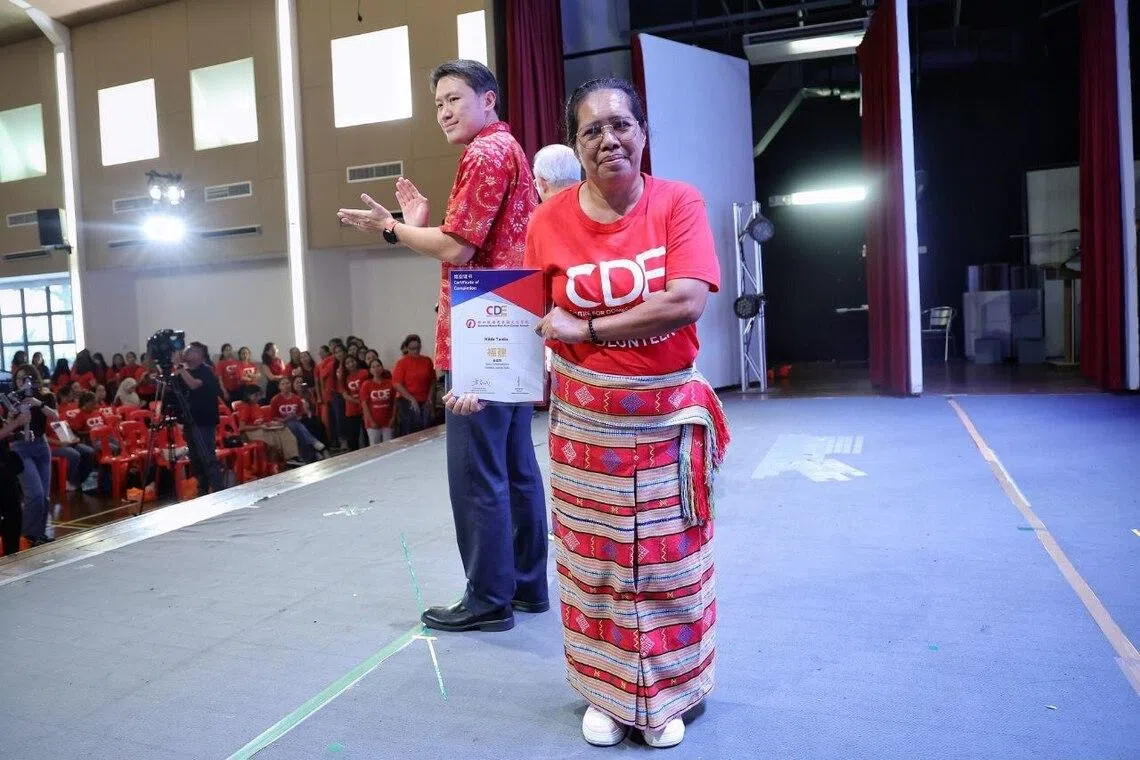
Ms Hilda Tunliu collected her certificate from Senior Parliamentary Secretary for Ministry of Manpower Shawn Huang at a graduation ceremony on Feb 8 for those who completed the conversational Hokkien class.
ST PHOTO: KEVIN LIM
Ms Hilda said that since she started the classes – which consisted of two, four-hour sessions that included role-playing real life scenarios – she could connect better with her current employer, Ms Jileen Ng’s 69-year-old mother.
Ms Ng agreed, noting that the communication gap between Ms Hilda and her mother had shrunk significantly. She previously had to step in to translate between them.
“This initiative is really useful, because the elderly at home are usually more comfortable speaking in dialect, and sometimes they cannot express themselves well in English and Mandarin,” said Ms Ng.
“There’s really been a big change – now, I can see that it’s a lot easier for Hilda and my mother to communicate on a daily basis.”
Another domestic helper who graduated from the course was Ms Thiri Phone Htut, a 33-year-old Myanmar national.
Like Ms Hilda, Ms Thiri had come across NTUC CDE’s Facebook post about the Hokkien classes on Facebook, and had jumped at the chance to improve her daily communications, as she cares for an 88-year-old lady with dementia.
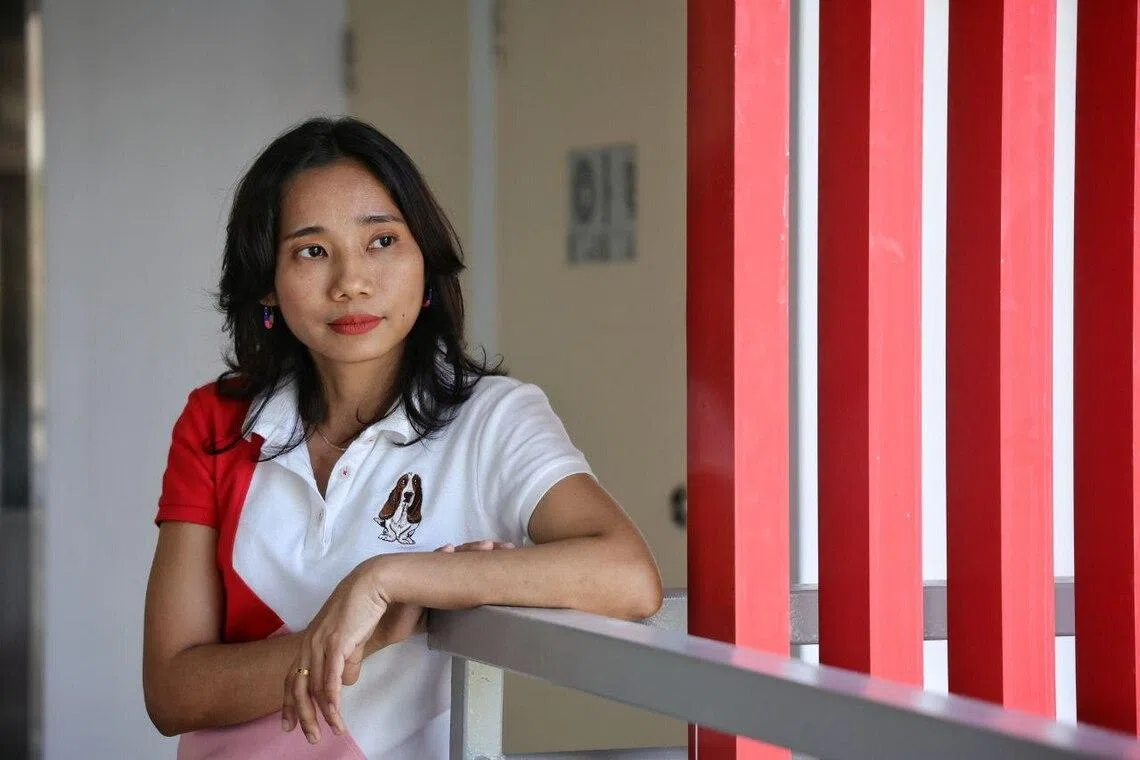
Ms Thiri Phone Htut jumped at the chance to improve her daily communications as she cares for an 88-year-old lady with dementia.
ST PHOTO: KEVIN LIM
“Ah Ma can’t speak Mandarin or English. So I decided to learn some Hokkien to be able to converse with her and learn more of her needs,” said Ms Thiri, who has been working in Singapore for three years.
She recounted how the elderly lady used to get frustrated, as the pair were unable to communicate properly.
“It was very difficult at the start, but slowly over time we improved our relationship after I learned how to speak to her. We are much closer and she also recognises me and my name,” said Ms Thiri.
She added that her employers were very supportive when they found out she wanted to take the class.
“They took care of me when I was attending the lessons, even bought food for me so I didn’t have to worry about cooking after,” she said.
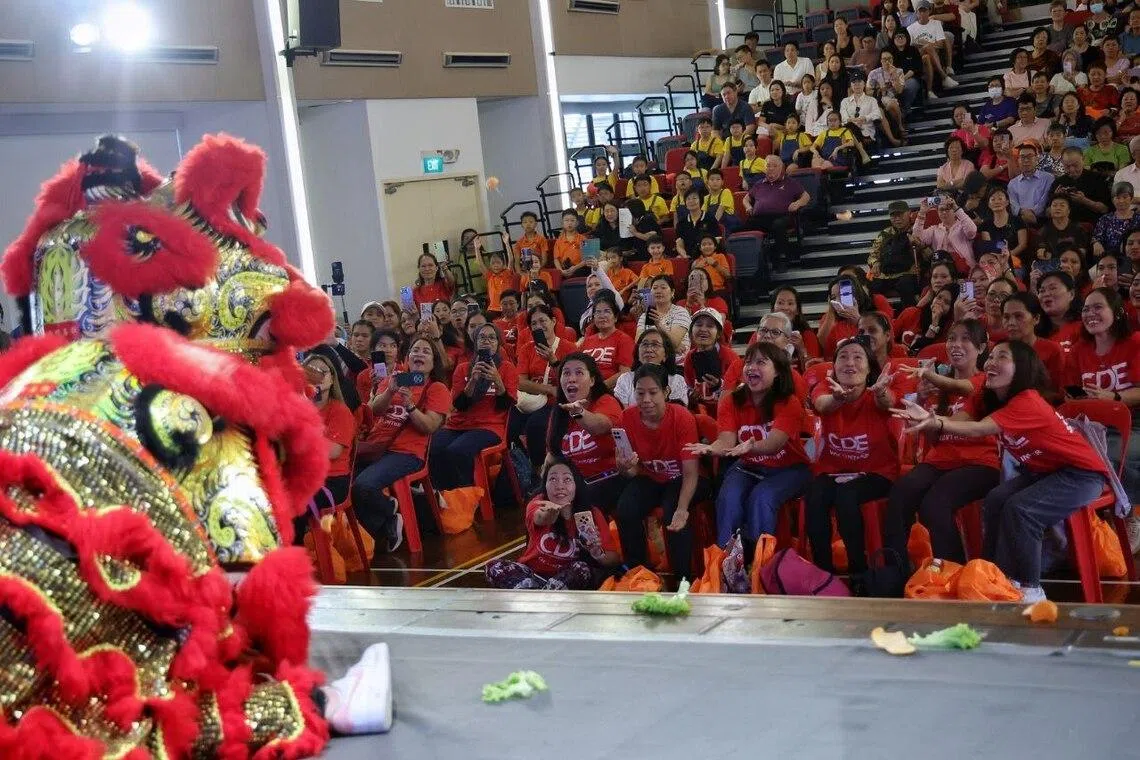
Migrant domestic workers at the graduation ceremony held at the Singapore Hokkien Huay Kuan Cultural Academy’s campus on Feb 8.
ST PHOTO: KEVIN LIM
The conversational Hokkien classes were started in July 2025, after CDE and SHHKCA
signed a partnership agreement
a month earlier at the NTUC and CDE’s annual May Day domestic workers’ celebration.
CDE also signed an agreement with The Salvation Army to hold similar Cantonese classes for migrant domestic workers here.
The formal introduction of the courses followed earlier pilot runs of classes conducted by CDE, where 25 participants took part over two runs of Cantonese classes and another 11 attended one Hokkien class.
Director of NTUC’s migrant worker segment Michael Lim said that since the initiative began, about 80 domestic workers have gone though the Hokkien classes. Another 60 have taken the Cantonese classes.
The success of the pilot classes means that the initiative will be continued for another year, until June 2027 at least, he added.
“Having run through the pilot period, together with the feedback we’ve received from the employers and the migrant domestic workers, I can say we are planning to continue this for at least the next year,” said Mr Lim.
