
Russia moves to block WhatsApp after Telegram curbs: What’s behind the crackdown?
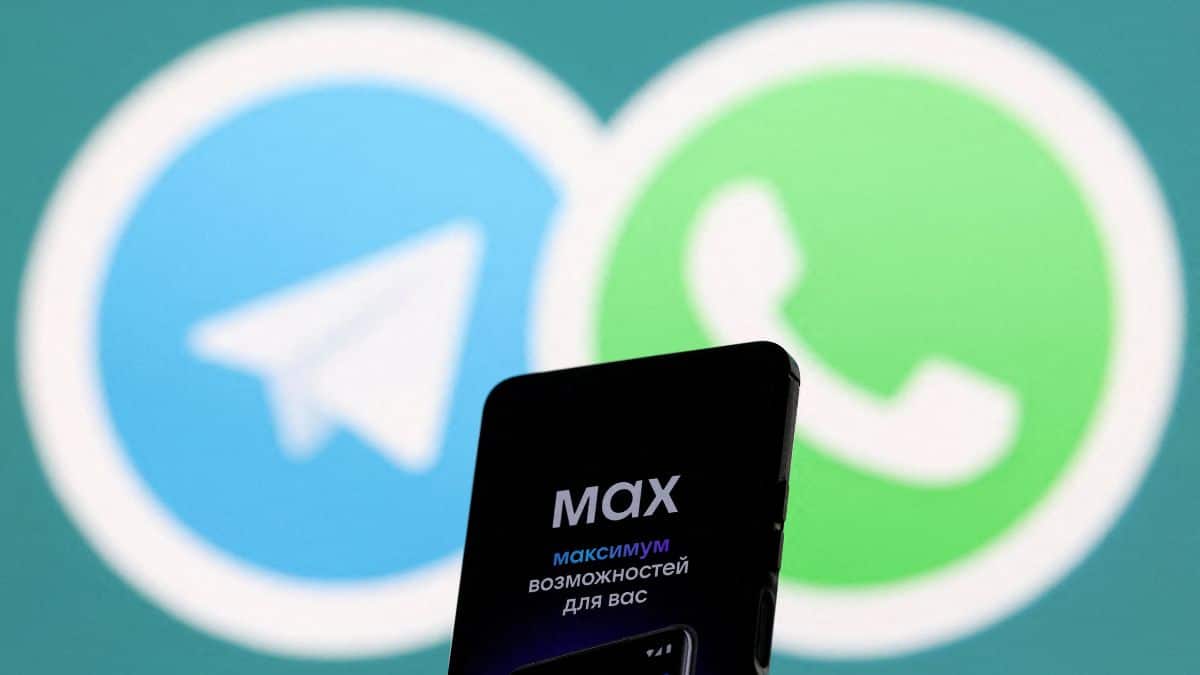
On Wednesday, February 11, Meta-owned WhatsApp
disclosed that Russian authorities had taken steps to block the service across the country. The company characterised the move as a deliberate effort to shift users toward a government-supported competitor.
“Today the Russian government attempted to fully block WhatsApp in an effort to drive people to a state-owned surveillance app,” WhatsApp posted on X.
The company stated, “Trying to isolate over 100 million users from private and secure communication is a backwards step and can only lead to less safety for people in Russia. We continue to do everything we can to keep users connected.”
In separate remarks, a spokesperson reiterated that the action appeared aimed at pushing users toward what it described as a “state-owned surveillance app.”
While WhatsApp confirmed the attempted block, it did not provide details about how it was implemented or how effective it had been at the time of the announcement.
With roughly 100 million users in Russia and around 3 billion monthly users globally, WhatsApp is one of the country’s most widely used communication tools.
The development follows reports that Russian authorities removed WhatsApp from an online directory overseen by Roskomnadzor, the country’s communications watchdog. The Financial Times had earlier reported that the app was taken off the regulator’s official listing, a step often viewed as a precursor to more severe restrictions.
State-owned TASS had also reported earlier this year that
WhatsApp was expected to face a permanent ban in 2026, although officials have not formally confirmed a timeline for such a measure.
Editor’s Picks
How has Kremlin responded?
According to Moscow, foreign companies operating within the country must comply with domestic legislation, including data storage requirements and cooperation with law enforcement investigations.
Roskomnadzor has issued repeated warnings to WhatsApp, urging it to align with local regulations. Authorities have argued that both WhatsApp and Telegram have declined to store Russian users’ data inside the country, as mandated by law.
When asked whether Meta could restore WhatsApp’s operations in Russia, Kremlin spokesperson Dmitry Peskov indicated that a resolution would depend on the company’s willingness to engage with authorities and meet legal obligations.
“This is again a question of fulfilling the legislation. If the Meta corporation fulfils this and enters into dialogue with Russian authorities, then we have the possibility of reaching an agreement,” Peskov told TASS in a video released by the state news agency.
He added, “If the corporation [Meta] sticks to an uncompromising position and, I would say, shows itself unready to align with Russian legislation, then there is no chance.”
Russian official Andrei Svintsov defended the potential for strict measures, stating that “Such harsh measures” are “absolutely justified” given that Russia designated Meta as an extremist organisation in 2022.
Following that designation, Facebook and Instagram — also owned by Meta — were blocked in Russia and have since been accessible primarily through virtual private networks (VPNs).
What is MAX: Russia’s state-backed alternative?
The Kremlin has positioned
MAX as a home-grown substitute for foreign messaging services.
The application has been described as similar in concept to China’s WeChat — a so-called “super app” integrating messaging functions with broader digital services. However, critics have noted that MAX does not offer end-to-end encryption.
Allegations that the platform could be used to monitor users have circulated among rights groups and opposition figures, although state media have dismissed such claims as unfounded.
Since 2025, Russian authorities have required that MAX be pre-installed on all newly sold devices in the country. In addition, public sector employees, teachers and students have reportedly been directed to use the service.
The app has gathered a significant user base, with estimates placing its reach at approximately 55 million users nationwide. Moscow has actively encouraged Russians to adopt MAX as part of a broader policy shift towards greater technological self-reliance.
The strategy aligns with the Kremlin’s vision of a “sovereign internet,” an online environment more insulated from Western technology companies and less susceptible to foreign influence.
What happened with Telegram in Russia?
The attempt to block WhatsApp came shortly after
Russian regulators imposed new constraints on Telegram, another widely used messaging service.
Roskomnadzor announced that it would introduce “phased restrictions” on Telegram, citing the company’s alleged failure to comply with Russian laws.
Users across the country reported slower traffic and difficulties downloading videos and images. Telegram is estimated to have as many users in Russia as WhatsApp, with more than 60 million Russians reportedly using the service daily.
Telegram’s founder, Russian-born billionaire Pavel Durov,
responded publicly to the pressure. “Restricting citizens’ freedom is never the right answer,” he said, adding, “Telegram stands for freedom of speech and privacy, no matter the pressure.”
In another statement, Durov also noted that Iran had previously attempted a similar strategy by banning Telegram and promoting a state-run alternative, though users had found ways to circumvent restrictions.
While Telegram was founded by a Russian entrepreneur, it operates internationally and has often resisted government demands related to encryption and data sharing.
What next for WhatsApp users in Russia?
Russian authorities have taken action against multiple international platforms, arguing that they have failed to meet domestic legal standards. Last year, Russia began limiting certain calls on WhatsApp and Telegram, alleging non-cooperation in investigations concerning fraud and terrorism.
In December, officials blocked Apple’s FaceTime video calling service. Snapchat has also faced restrictions.
Russian authorities have warned that platforms could face slowdowns or outright bans if they do not adhere to data localisation requirements and other regulations.
Critics and rights advocates argue that the measures form part of a broader effort to increase state oversight of online activity amid a sweeping clampdown on dissent linked to the Ukraine offensive.
Meta’s designation as an extremist organisation in 2022 significantly altered the landscape for its services in Russia. Instagram and Facebook were blocked shortly thereafter.
WhatsApp had remained accessible until now, making the attempted full block a notable development in the company’s relationship with Moscow.
WhatsApp’s reported 100 million users in Russia represent a substantial portion of the country’s population. As one of the primary tools for personal, professional and commercial communication, any sustained disruption could have widespread consequences.
If both, Whatsapp and Telegram, face continued restrictions, users may increasingly turn to state-endorsed alternatives such as MAX.
However, foreign platforms have historically retained popularity even after restrictions, with many users accessing blocked services through VPNs. Instagram and Facebook, for instance, continue to have audiences in Russia despite formal bans.
Also Watch:
With inputs from agencies
End of Article
