
Trump’s Iran war may work out well in the long run
Richard Hanania is president of the Center for the Study of Partisanship and Ideology, which funds policy research. His Substack newsletter is at richardhanania.com.
Every time the United States uses force abroad or looks as if it is about to, opponents of intervention bring up Afghanistan and Iraq. Both wars started out with narrowly defined objectives as part of the war on terror but ended up causing chaos on the ground and costing thousands of American lives.
Yet if the approximately decade and a half after 9/11 seemed to discredit interventionism, the period that began with the first Trump administration has shown the degree to which many of the assumptions of anti-interventionists have been misguided. What we need going forward is a synthesis, which takes the real lessons of Iraq and Afghanistan while also appreciating that there are instances where American power can be used for good by removing certain leaders. So far, it appears that the president has arrived at such an approach, and there are initial indications that what we might call Trump’s leader-decapitation strategy is working.
Consider the arguments that have in recent years been used to caution against striking Iran. After Trump assassinated Quds Force Commander Qassem Soleimani in 2020, Bernie Sanders warned that the president was on the brink of starting a conflict that could cause thousands of deaths and cost trillions of dollars. Joe Biden said that Trump had “just tossed a stick of dynamite into a tinderbox.” On Twitter and TikTok, talk of “World War III” went viral. In actuality, the Iranians fired a few missiles at American bases and did little else in response. A few years later, Iran’s main foreign proxy, Hezbollah, was knocked out of commission as the Israelis assassinated one after another of its leaders in Lebanon. Israel’s northern border has remained relatively stable since.
Or consider the raid that seized Nicolás Maduro on Jan. 3. A group of United Nations experts foresaw that action possibly “destabilizing the entire region and the world.” The New York Times editorial board discussed a “potential for chaos” that was greater than that of past interventions. Yet in the end, the United States at a cost of no American lives simply replaced a hostile regime with a more compliant one. It is now common to hear opponents of the Venezuela intervention decry the fact that the Chavista regime stayed in place. But anti-interventionists have also warned about the consequences of instability, so it seems that they would be looking for a reason to be unhappy either way. For all the warnings about blowback, polls in the immediate aftermath of the Maduro raid showed overwhelming support for the action among Venezuelans.
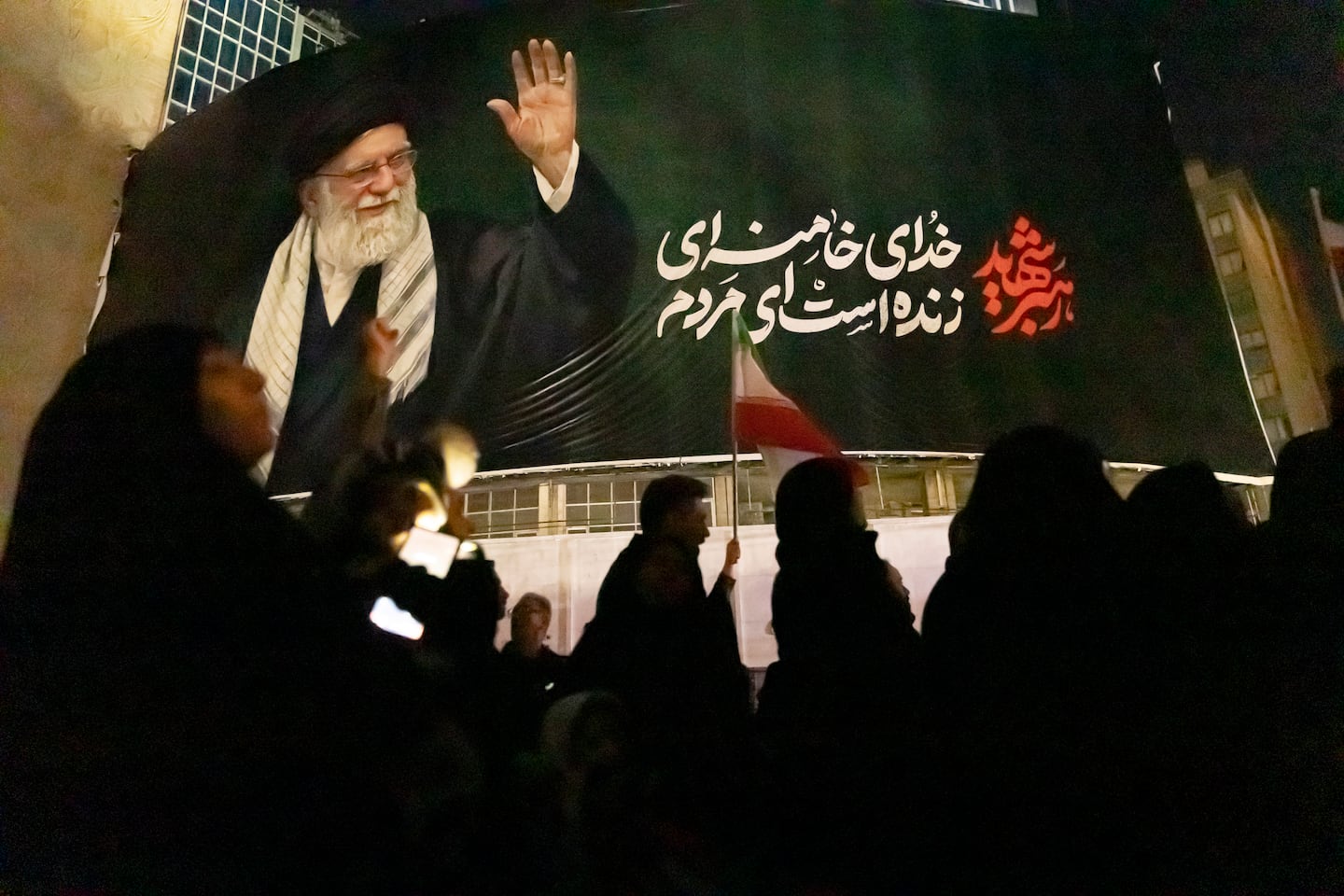
Now the United States and Israel have gone well beyond the Soleimani assassination, killing Ayatollah Khamenei and several other top Iranian officials. It is too early to say what will happen, and there may yet be negative consequences for the greater Middle East and perhaps some terrorist attacks elsewhere, like the shootings that just occurred in Austin, Texas. But note that anti-interventionists no longer discuss “World War III” or make such apocalyptic forecasts, which generally depended on the assumption that Russia or China might come to the aid of the target of American intervention. And although a broader regional war is possible, Iran would fight it practically alone against the United States, Israel, and the Gulf Arab states. Trump’s latest gambit may be ill-considered, but through the killing of Soleimani, the decimation of Hezbollah, and our maximum pressure campaign, over time we’ve learned that the Iranian ability to inflict significant harms on the United States is quite limited.
Cuba looks to be next on the list, and few seem to doubt that the United States has the power to impose its will on that island nation at little direct cost.
While it would be premature to consider Trump’s interventions successes, we can say that Venezuela has released political prisoners and welcomed foreign investment, Israel is now less threatened by its immediate neighbors, and the more catastrophic outcomes that have been predicted to result from interventionist policies have not come to pass.
All of this indicates that Americans may have drawn overly broad lessons from Afghanistan and Iraq. Each of these interventions can be broken down into two components: regime change and nation-building. When the Taliban and Saddam Hussein were overthrown, many in the Bush administration advocated for, or at least assumed there would be, relatively fast handovers to local authorities. Instead, the president decided on prolonged nation-building efforts, trying to micromanage transitions to completely new kinds of societies, which eventually would involve establishing a free press, female quotas in parliament, sexual harassment policies for reconstituted police forces, postmodern art exhibits, and study groups to examine misogyny among Afghan locals.
In the end, the United States had no idea how to import Western institutions and attitudes into poor Muslim societies. Yet this does not mean that American power cannot be used decisively for more limited ends. The US military is bad at nation-building and social engineering, but as we’ve seen recently, it is very good at killing people.
How far can that get you toward accomplishing American goals? We are in the process of finding out.
There is a straightforward argument as to why a leader-decapitation strategy can work. If we focus on the incentives of foreign leaders, there is no simpler way to align those incentives with American interests than by credibly threatening to kill or arrest those leaders if they act up. There are of course limits to such an approach. For example, it probably cannot work on China and Russia, which are too powerful to be pushed around like Iran and Venezuela, and such a strategy is likely too risky in North Korea, where nuclear weapons and massive conventional war capabilities could be turned on Japan and South Korea, both US allies. But for most other rogue regimes, it is difficult to come up with many reasons why a strategy of decapitating bad leaders cannot significantly change behavior.
In the case of Venezuela, some have asked what’s the point of replacing Maduro with his chosen successor, Delcy Rodriguez, and many will say the same if Iran ends up ruled by a new general or supreme leader. Yet throughout history, we’ve seen how simply changing the leadership of a government can affect behavior for the better even without uprooting the entire system. Think of the transitions from Mao to Deng and from Stalin to Khrushchev.
The benefit of killing leaders is that for little cost, one removes bad actors while shaping the incentive structures for their successors and leaders of other rogue regimes. Of course, the incentive argument can cut in the other direction. To ensure regime survival, wouldn’t it make sense for other dictators to simply try to get nuclear weapons? Yet such a path puts a nation in conflict with much of the rest of the world, not least the United States. In practically all cases, it will make more sense to simply try to please Washington by respecting human rights, no longer threatening neighbors, or complying with whatever other demands the United States makes. The rest of the world can understand that Iran’s quest for a nuclear weapon has not ended well for the regime.
This leaves arguments about international law and America’s moral standing in the world. But it is far from clear that the United States gains more moral credibility by making deals with the worst dictators in the world than by removing them. In the Middle East, regional rivals to Iran have often pushed the United States to take a more aggressive stance, and few in Latin America who were not already rabidly anti-American seem to be shedding tears for Maduro. In recent years, there have been so many violations of international law that we may well ask: What is the value of it remaining as a shield for the worst regimes in the world? An approach to international law that gave protections to governments as long as they complied with the most fundamental norms surrounding human rights would perhaps leave it stronger than it was before.
From that perspective, the worst possible scenario is that after Trump has taken out a series of foreign leaders, the next US president goes back to a less aggressive posture. With the threat of force temporarily removed, we will have created incentives for rogue nations to develop nuclear weapons. National leaders may seek to quickly become as powerful as they can to head off the possibility that they will be deposed by a future American president who wants to return to the Trump doctrine. This is why, if Trump’s strategy appears to be working when he leaves office, his successors would be advised to acknowledge that fact and continue the same policy rather than return to the status quo ante.
