
Japan asks U.S. not to slap higher tariffs in weeks before Takaichi’s visit
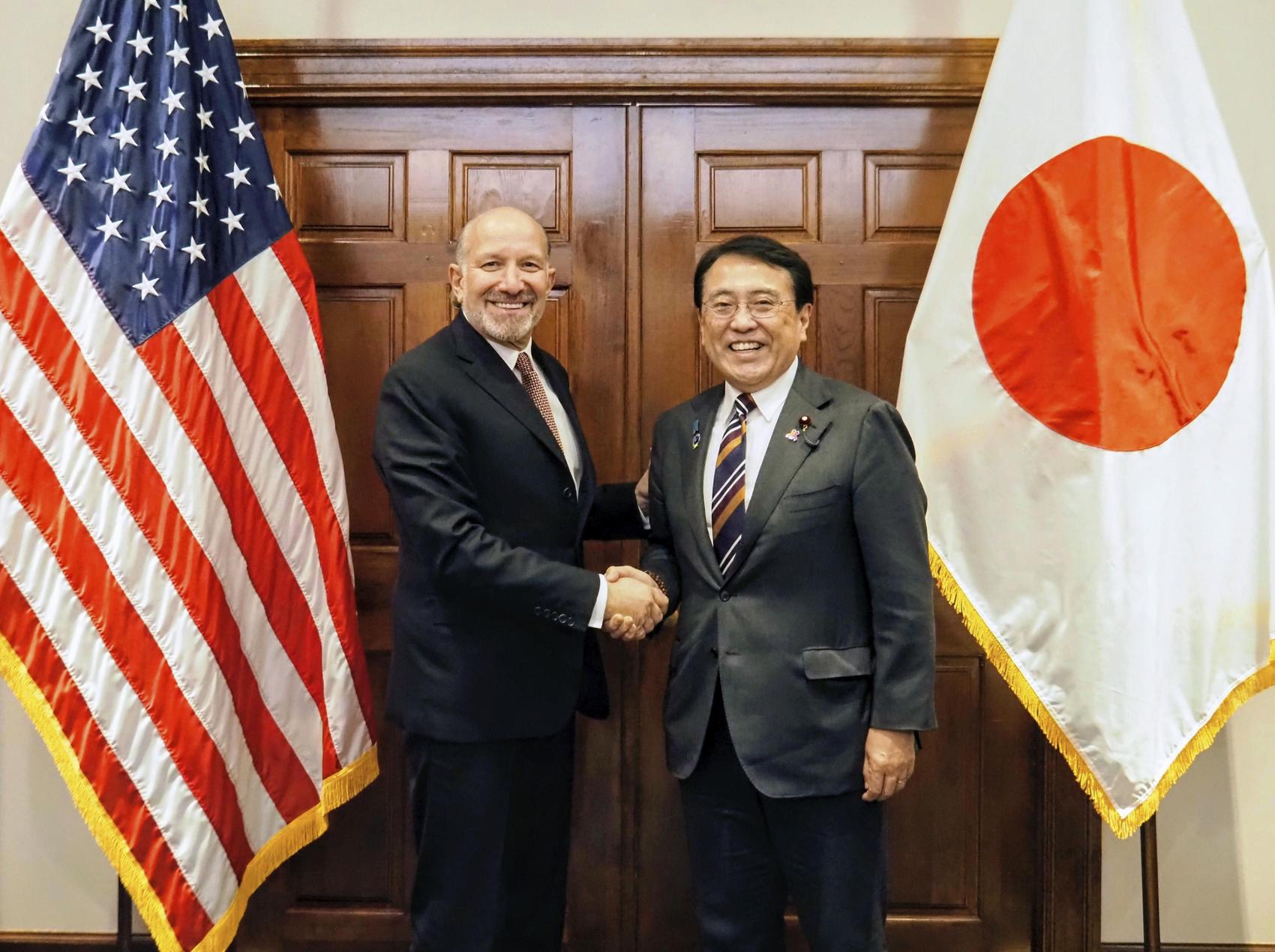
Japan’s industry minister Ryosei Akazawa on Friday urged the United States not to impose higher tariffs than those agreed last year, as the two countries advance preparations for a meeting between their countries’ leaders later this month.
Following talks with U.S. Commerce Secretary Howard Lutnick in Washington lasting about two hours, Akazawa told reporters they also discussed the next round of joint business projects, as well as cooperation in the strategically important fields of energy, critical minerals and artificial intelligence.
With Japanese Prime Minister Sanae Takaichi set to meet with U.S. President Donald Trump at the White House on March 19, the minister said the two countries will continue to work closely to make her visit “fruitful.”
The U.S. Commerce Department said on social media that the two sides reaffirmed a “shared commitment to building on” last month’s deal on the first set of projects selected under a $550 billion investment pledge that Tokyo made in the summer of 2025 following months of tariff negotiations.
The meeting between Akazawa, minister of economy, trade and industry, and Lutnick came after the U.S. Supreme Court invalidated Trump’s sweeping global tariffs about two weeks ago.
Despite Trump’s legal defeat over a large chunk of his far-reaching tariff agenda, Japan has shown a willingness to follow the terms of a trade agreement it reached with the United States in July last year.
Under the deal, Japan promised to invest $550 billion in U.S.-based strategic industries by the end of Trump’s second term in January 2029, in return for his administration lowering tariffs on Japanese imports.
A few days before the top court’s ruling, Japan and the United States announced the first three projects, valued at $36 billion, including building a gas-fired generating facility in Ohio, the largest of its kind in U.S. history, to power AI data centers.
Among the second batch of projects under discussion is the construction of small modular reactors for AI data centers, according to officials familiar with the matter.
Meanwhile, the confusion over Trump’s tariff strategy has intensified following the Supreme Court ruling.
A new 10 percent global tariff intended to temporarily replace the invalidated duties, which Trump announced shortly after the legal defeat, took effect on Feb. 24, relying on a different statute.
Trump and senior administration officials have said the rate of the new blanket tariff will be raised to 15 percent, and they will consider more durable country-by-country duties while imposing the temporary levy, set to last 150 days.
On Friday, Akazawa, when he met the press, said he requested that the United States not subject Japanese imports to the envisaged 15 percent tariff or other potentially higher duties in the future.
Under the trade deal prior to the court’s decision, Japanese imports were subject to a 15 percent country-specific tariff.
Japan ultimately received “no-stacking” special treatment from the Trump administration, under which imports from the country with preexisting tariffs of 15 percent or higher were exempt from further levies, while duties on other items were at 15 percent.
© KYODO
