
What does the lobster have to do with AI? | Column
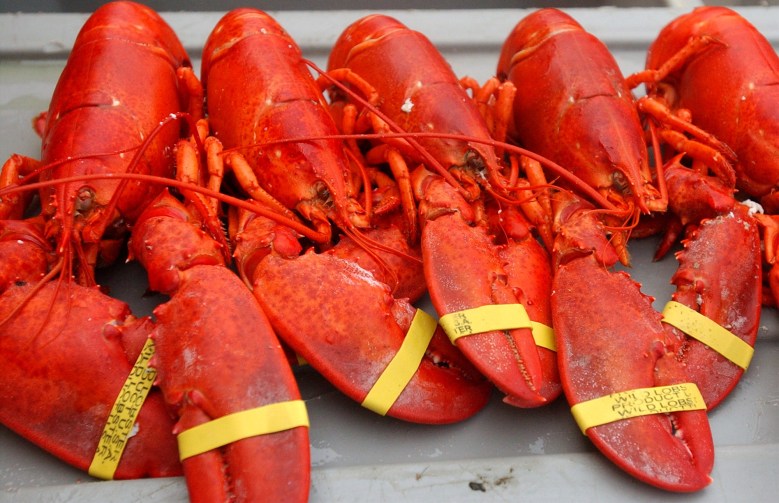
On the morning of March 10, two men hauled a 9-foot sculpture of a lobster off a pickup truck parked in New York City’s Financial District and positioned it face to face with the Charging Bull statue in Bowling Green Park.
With no obvious explanation for the display, people started speculating in comments on videos posted online about its intent: Was it art? A symbol of financial resiliency? Commentary on Secretary of Defense Pete Hegseth’s lavish spending?
Later, the chief executive officer of international fintech company Taktile revealed that it was a marketing stunt, announcing the launch of an internal research group testing AI tools for use by financial institutions.
The campaign, said Taktile CEO Maik Taro Wehmeyer in a LinkedIn post, was meant “to ask the question: are banks ready for autonomous agents?”
Why a lobster? It appears the crustacean emblem of Maine is emerging as a symbol in the AI sector, initiated by its use as the logo of OpenClaw, software that operates as a personal assistant capable of completing tasks like sending emails, ordering groceries, booking flights and even writing code for itself.
Originally ClawdBot, the name was supposed to be a play on the previously developed AI assistant Claude. Trademark concerns led to the name change, but the lobster logo remained, and its users have latched onto it.
“ClawCons” are being held around the world to bring together OpenClaw users, including one in New York City this month that featured a spread of free lobster tails. “Raising lobster” is the term used for training the AI agents, and other platforms developed as offshoots of OpenClaw, such as QClaw and MaxClaw, are perpetuating the theme.
A more unnerving result of the new technology: these AI agents have reportedly formed their own online community where they developed a religion called the Church of Molt, its disciples known as Crustafarians.
Although it started as a pun, the lobster symbol is taking on deeper meaning — the claw embodying the bots’ ability to complete tasks and the molting process representing the constantly evolving nature of the open-source software (which has recently come under scrutiny over security concerns).
Lobster emojis are now popping up all over social media in association with the phenomenon, which has taken off fastest in China.
Perhaps we should let its fans know they have Mainers to thank for getting the digital icon added to the library of pictograms (and in anatomically correct fashion).
It’s not the first time the lobster has stood for something other than seafood. Since a “Friends” episode in which Phoebe declared that Rachel was Ross’ “lobster,” inaccurately explaining that the crustaceans mate for life, it’s come to be used as a synonym for a soulmate. Because they can display both male and female characteristics, it’s been adopted as a symbol of the transgender community.
Its use by the tech world hasn’t surpassed the others — yet, at least. Even asking AI itself about what the lobster represents, “autonomous agents” is not among its answers. The state of Maine is.
