
After Iran okays ‘safe passage’ of Philippine-flagged ships, will things get better now?
MANILA, Philippines – Not necessarily, but it certainly reduces the risks to the Philippines’ supply of fuel.
That’s what Energy Secretary Sharon Garin said late on Black Saturday, April 4.
In a statement on her Facebook page titled “A little more clarity on the Strait of Hormuz Safe Passage,” Garin said the assurance that Department of Foreign Affairs (DFA) Secretary Theresa Lazaro got from Iranian Foreign Minister Seyed Abbas Araghchi last week, “is not a perfect solution” and “does not eliminate all risks,” but “is an important step that “improves our position in a highly uncertain global environment.”
“What we have secured is a safe and preferential access,” she added.
Many netizens had wondered how many ships carrying the oil the Philippines needs were Philippine-flagged, with many commenting that this was probably just a handful. Garin recognized the questions and concerns regarding the “scope and impact” of the arrangement with Iran, saying it was “part of a healthy and informed public discourse.”
Without saying how many Philippine-flagged ships bring oil to the country, Garin acknowledged most of the nation’s fuel “is sourced from regional hubs like Singapore or Korea.”
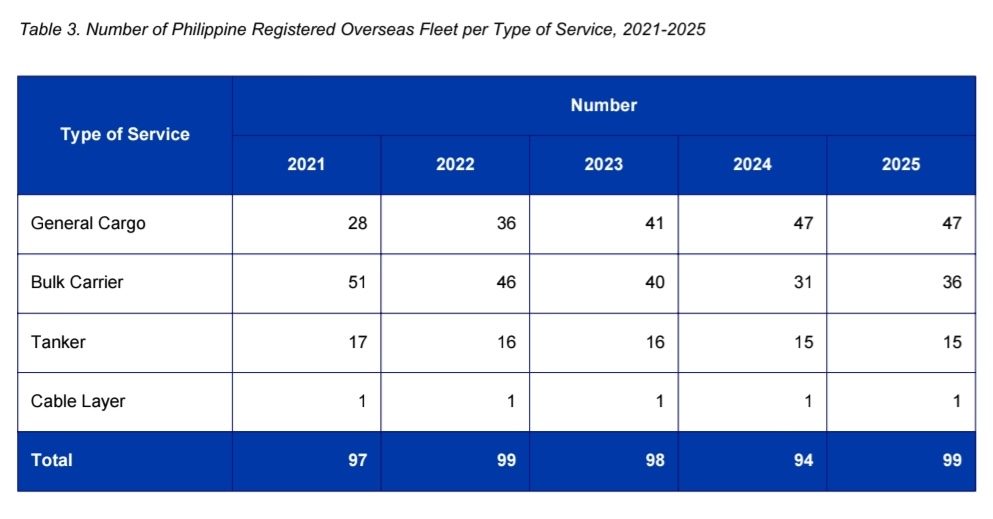
According to data from the Maritime Industry Authority (MARINA), as of 2025 there were 99 Philppine registered overseas fleet: 47 general cargo ships, 36 bulk carriers, 15 tankers, and 1 cable layer. It does not say whether any of these are used to import petroleum from the Middle East.
Only Petron Corp. imports crude oil for refining in the Philippines. All of the other private petroleum companies buy finished products, mostly from the Middle East, and import these via global shipping companies.
With the help of the Philippine National Oil Company (PNOC) and PNOC Exploration Corp., Ramon Ang-led Petron recently imported Russian crude oil that was brought into the country via a Sierra Leone-flagged vessel. It was part of 2 million barrels of crude oil worked out with the help of PNOC, good for around 10 days of diesel demand.
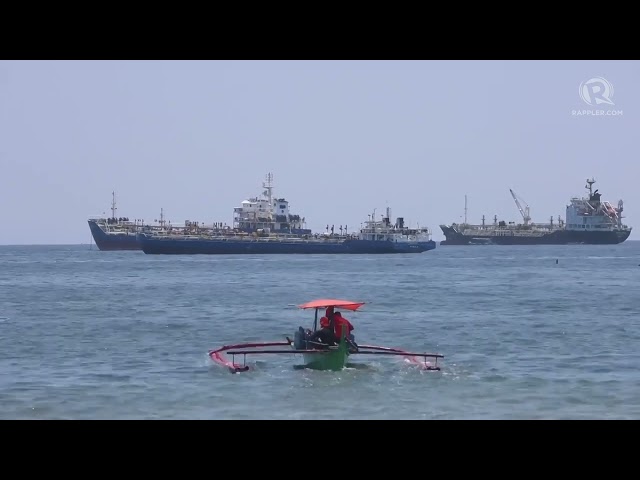
Philippine ships come into play mainly in distribution to ports throughout the country, which are then transported by trucks to more than 14,000 gas stations.
Garin said Iran’s assurance reduces the “risk of disruption to our supply,” strengthens protection for Philippine-linked cargo, and improves the safety of Filipino seafarers.
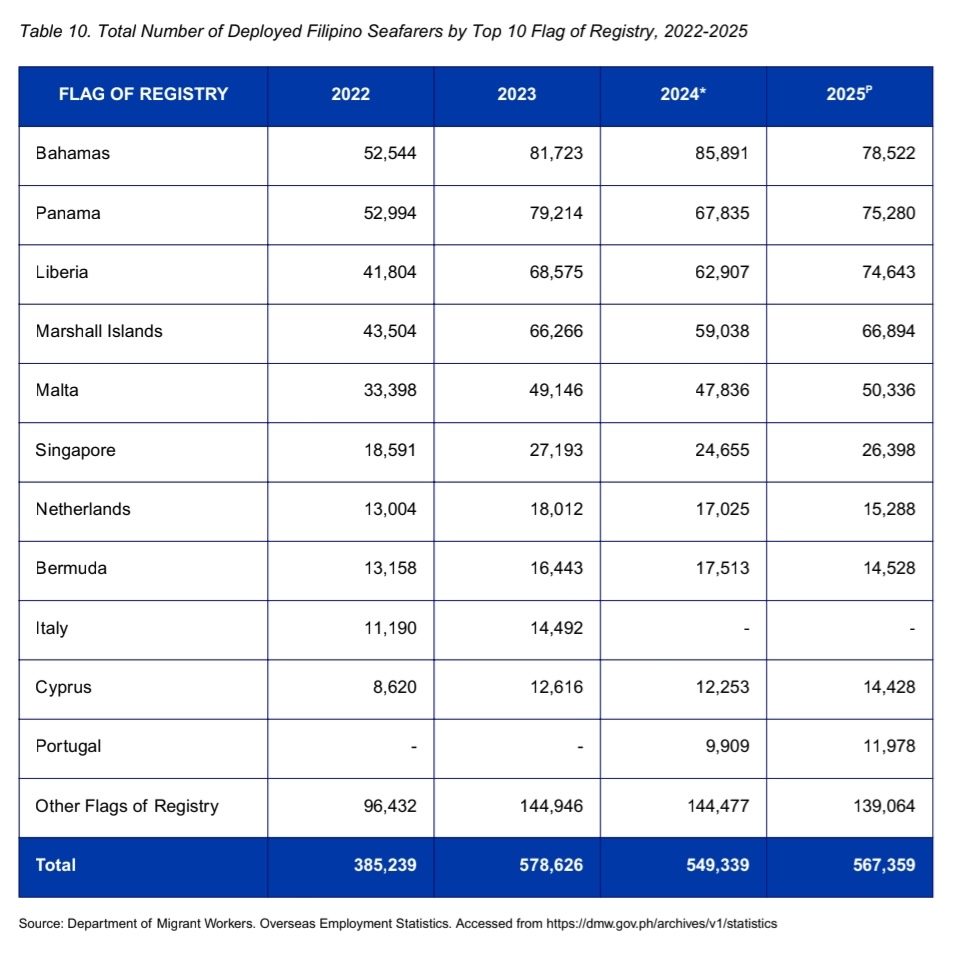
In terms of how Iran’s assurance may benefit Filipino seafarers, government data show that as of 2025, there were 567,359 Filipinos working on foreign ships. The biggest deployments were in the following flags of registry: Bahamas (78,522), Panama (75,280), Liberia (74,643), Marshall Islands (66,894), Malta (50,336), Singapore (26,398), Netherlands (15,288), Bermuda (14,528), Cyprus (14,428), and Portugal (11,978).
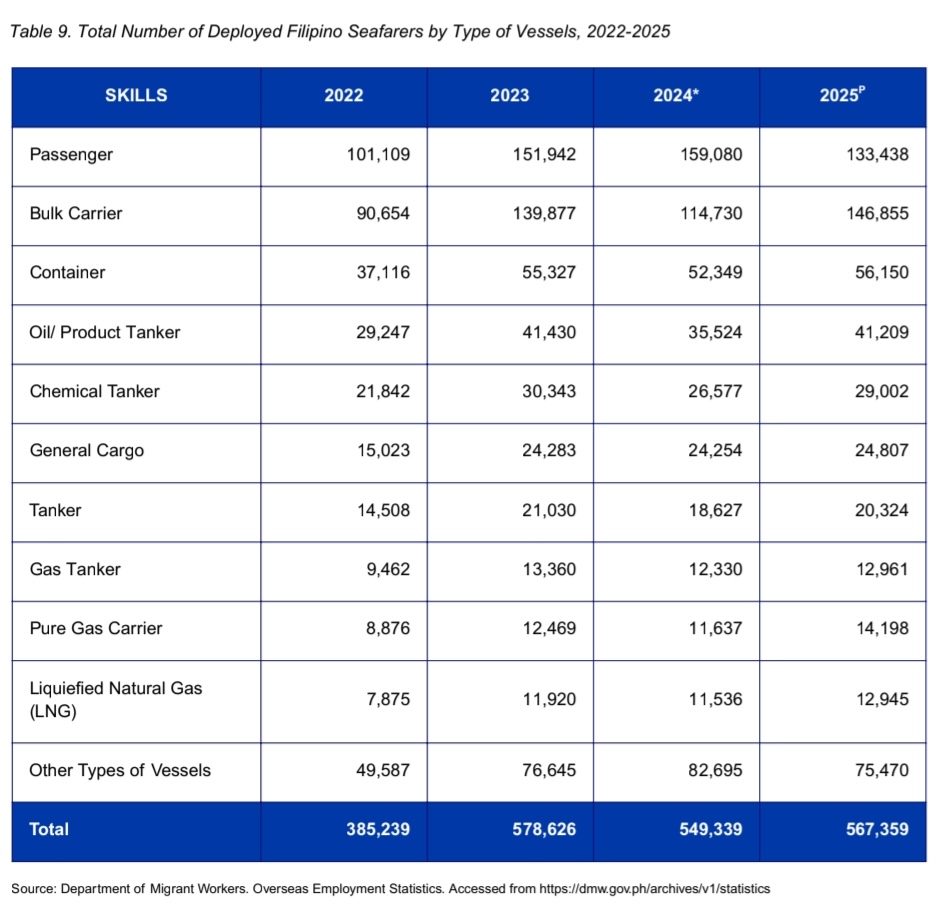
There were 41,209 Filipino seafarers working in “oil/product tanker(s)”; 12,945 in LNG vessels; 12,961 in gas tankers; 14,198 in pure gas carriers, as of 2025.
In its Maundy Thursday, April 2 statement, the DFA said Iran’s assurance would “greatly facilitate the steady delivery of critical oil and fertilizer supplies to the Philippines.”
“This is Risk Management, because in a time of global tension, risk reduction is already a meaningful gain,” Garin said in her post.
She also clarified that the arrangement with Iran will not immediately bring down fuel prices,” but that it “helps ensure continuity of supply and stability, especially at a time when further disruptions could significantly affect our economy and our people.”
As of Thursday, 375 out of 14,519 gas stations have shut down temporarily “due to non-delivery of petroleum products,” based on monitoring by the Philippine National Police (PNP). This was a slight improvement from the 409 closures as of 9 pm on March 27. The PNP said some stations “reopened after restocking.”
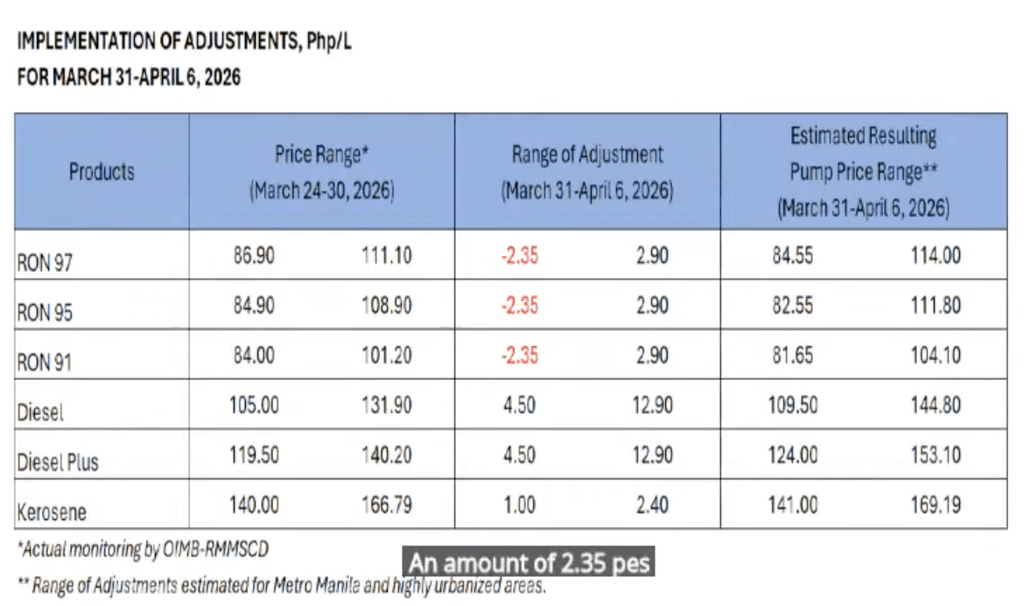
Pump prices have reached historic highs with diesel ranging from P109.50 to P144.80 per liter as of March 31 to April 6, around three times it was prior to the US-Israel war on Iran. The cheapest gasoline was between P81.65 to P104.10 per liter. Another big increase is expected this week.
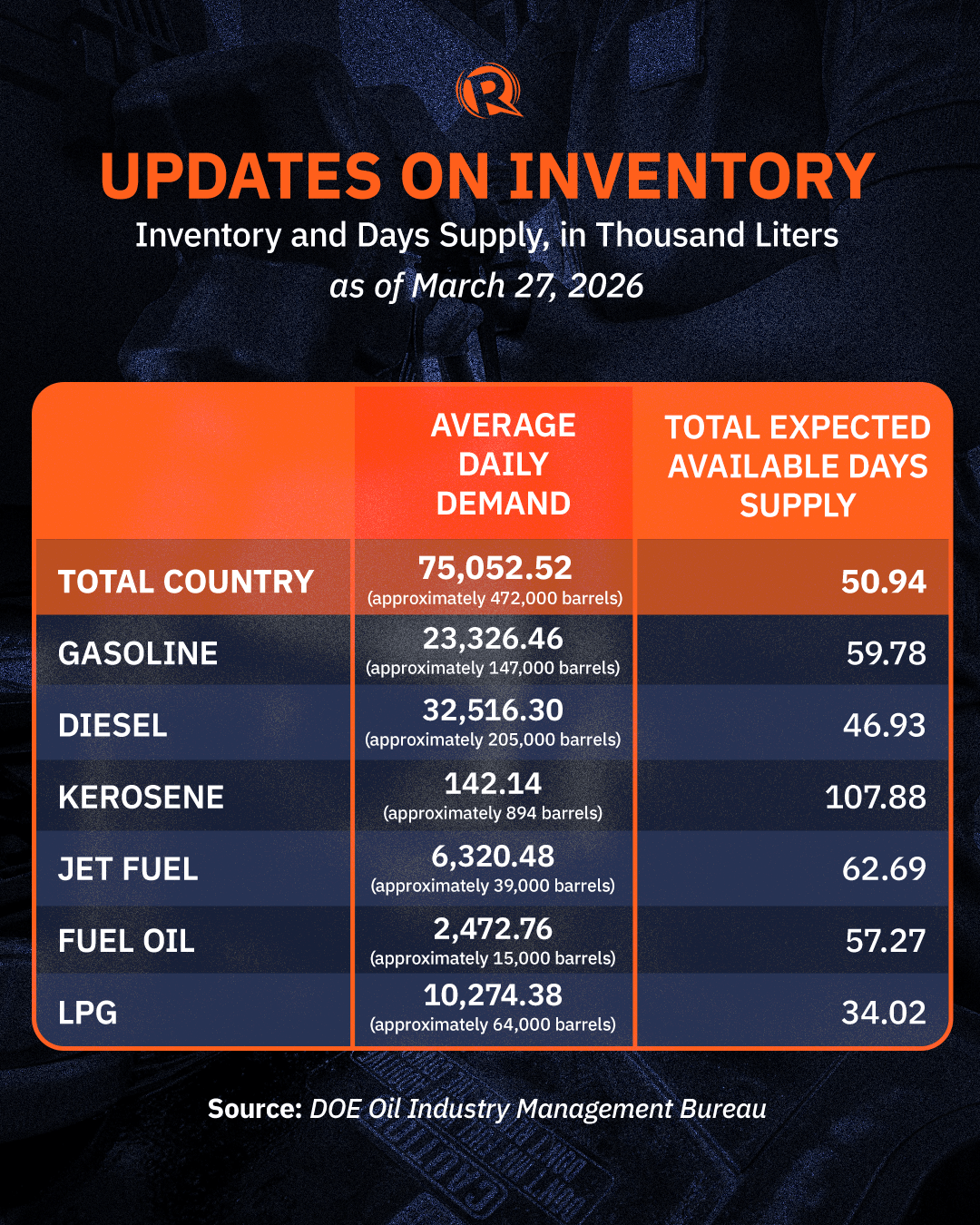
The DOE said the Philippines’ “total expected available days supply” had gone up from 45 days on March 20 to an average of nearly 51 days as of March 27: 59 days for gasoline, 46 days for diesel; 107 days for kerosene, 62 days for jet fuel; 57 days for fuel oil; 34 days for LPG.
The Philippines has an average daily petroleum demand of 75 million liters or around 470,000 barrels. See image below:
Fuel prices will remain high and in short supply even if the war ends today, given the damage to oil facilities in the Middle East, according to oil industry experts.
Garin said during a Senate hearing on March 24 that the Philippines was negotiating to buy fuel from other countries such as the US and Canada (Liquefied Natural Gas), and was exploring other sources from countries in South America.
She said she did not expect the worst-case scenario of supply going down to only a couple of weeks since it’s not “lack of [fuel] supply but a matter of price.” She said the Philippines is “willing to pay” even at $200 per barrel, although it was “on the lookout for cheaper options.” – Rappler.com