
‘Justice for Zubeen Garg’ Becomes a Poll Sop in Assam Elections 2026
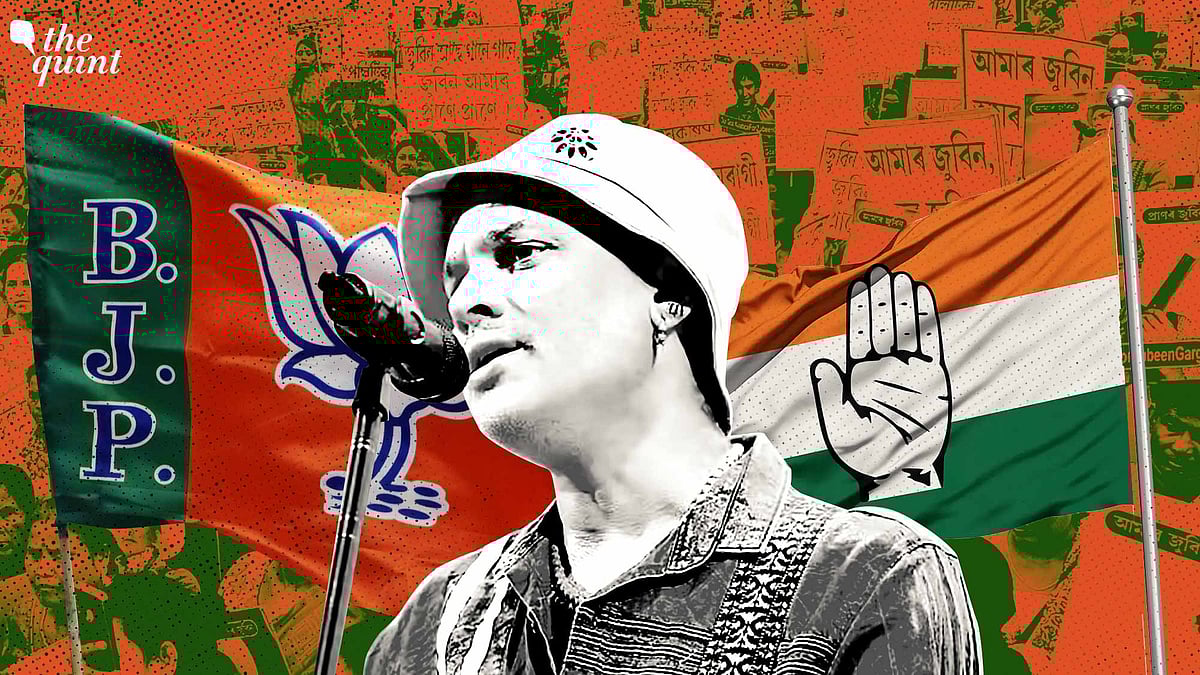
With the Congress definitively jumping on the “Justice for Zubeen” campaign and announcing it as a poll promise, the BJP is now the one accusing the Opposition of politicising the singer’s death.
Reacting to the development, CM Sarma said the Congress had “committed an unpardonable crime” by including Zubeen’s name and his death in its election manifesto. If they truly want justice, they can engage a lawyer and argue the case in court,” Sarma said.
Garg’s wife, Garima Saikia Garg, told the media, “I hope the issue of justice for Zubeen Garg will not be politicised.”
Fans, however, remain deeply attached to the issue.
“This is not just an online emotion, it reflects a deeper collective consciousness. Therefore, this issue is no longer merely legal, it has become deeply ethical and political,” Hemanta tells The Quint.
Another fan, Saurabh Garg, said, “The social media movement is mainly spearheaded by young voters. Therefore, the impact of the movement on election outcomes will depend on the percentage of young voters who exercise their franchise in this election. However, the movement will continue even after the election”.
Garg nevertheless added that beneficiaries of government schemes may not consider this issue while choosing their candidates during voting. The sentiment was echoed by analysts as well.
Despite the singer’s death remaining a potent emotive issue, experts and analysts feel it is difficult to determine if it would significantly impact the election results.
Terming it as a “liminal issue,” political commentator Professor Akhil Ranjan Dutta told The Quint:
Another analyst, Dr Pranjal Borah, noted that it is still too early to assess its electoral impact.
“The issue remains more prominent among youth, and Gen Z voters are highly unpredictable. It is not easy to determine whether the movement will influence the election results. At the same time, beneficiary politics is likely to have a strong impact. The overall picture remains unclear, and outcomes may vary across constituencies. Additionally, the recent shortage of household LPG cylinders may also influence voter behaviour,” Borah added.
(The author is an Assam-based journalist.)
